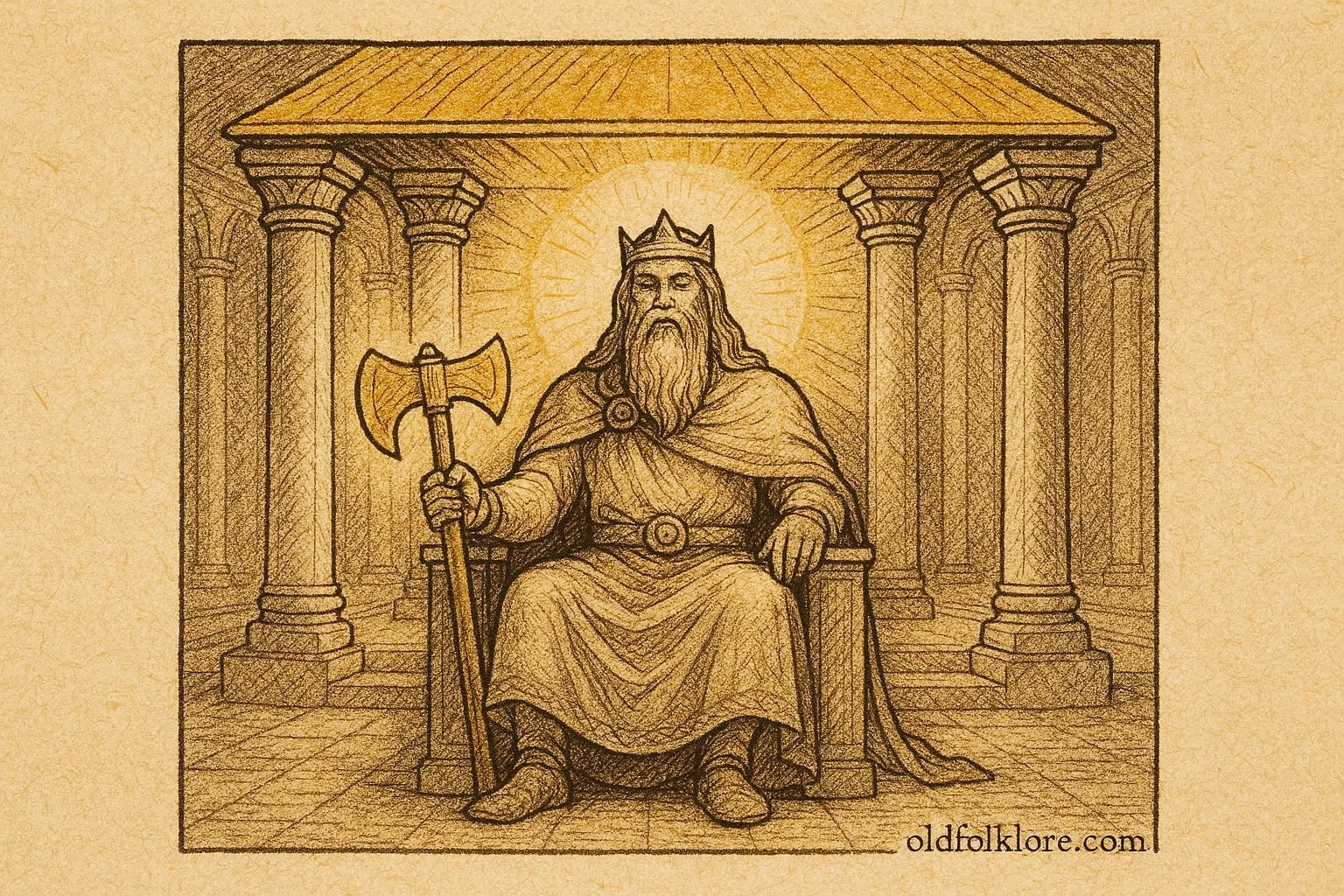
Forseti is the Norse god of justice, mediation, and sacred law, a deity of calm authority in a pantheon often marked by storm, chaos, and war. His hall, Glitnir, is described as radiant with silver pillars and a roof of shimmering gold. It is said that its glow can be seen from great distances, symbolizing the clarity of a fair verdict.
He is generally understood to be the son of Baldr, the god of light and innocence, and Nanna, the gentle goddess associated with purity and devotion. From Baldr he inherits brightness; from Nanna, compassion. Forseti’s nature reflects a harmony between wisdom and empathy, qualities necessary for resolving conflicts in a world where gods and humans alike often clash in pride or impulse.
Relive the heroic sagas of every age – stories of triumph, tragedy, and timeless valor
Forseti is not a warrior, but he holds a power greater than strength: the authority to settle disputes so thoroughly that no one leaves his presence unsatisfied. Old Norse sources describe him as a master of law-speaking, one whose words carry persuasive force without threat or command. His divine symbols include the golden axe of arbitration, the shining hall of Glitnir, and the balanced scales, representing his even-handed judgments.
Worship of Forseti is attested in place-names throughout Scandinavia, suggesting local cults that sought his blessing in disputes, land agreements, and legal assemblies. Though not mentioned as frequently as Odin or Thor, his influence endured through the cultural emphasis on law, oath-taking, and communal justice in Norse society.
Mythic Story: The Hall Where No Lie Survives
The old skalds tell that there is a place in the realm of the gods where no anger can enter. It is neither battlefield nor feast hall, for it is silent except for the measured voices of those seeking truth. This is Glitnir, the radiant hall of Forseti, god of justice.
Its floor gleams like a polished wave. Its pillars rise like frozen sunlight. No shadow clings to its walls. Those who approach Glitnir say that the air around it grows strangely calm, as though the hall itself hushes all turmoil in the hearts of travelers.
One morning, long after the great quarrels of the Aesir had shaken the skies, two visitors arrived at Glitnir’s door. One was Hroarr, a mortal chieftain known for fierce pride. The other was Gunnar, a farmer whose life depended on a narrow strip of land between their territories. Both men claimed the land by ancestral right, and their quarrel had grown so bitter that even the local thing (assembly) could not settle it. With tempers rising and swords nearly drawn, the elders urged them to seek Forseti.
Inside, Forseti sat upon a seat of polished silver. His face was calm, youthful, and bright, not with the harsh blaze of the sun, but with the soft glow of clear reason. Before him lay no weapons, only a single golden axe resting across his knees, its blade unsharpened, its purpose symbolic rather than violent.
He listened as the two men made their cases. Hroarr spoke with the force of authority, insisting his grandfather had cleared the land. Gunnar countered that his own father had tended that soil since long before Hroarr’s tribe settled nearby. Their words tangled, their memories clashed, and soon frustration rose between them like a storm.
But Forseti raised one hand.
The room stilled.
His voice, when it came, was soft, not commanding, but grounding. “Truth,” he said, “does not hide behind pride. Let us uncover it together.”
He asked questions neither man had considered. When did the land last change hands? Which boundaries had shifted with the river’s course? Who had offered or withheld help during a past famine? Bit by bit, with patience deeper than the roots of Yggdrasil, Forseti drew out the truth not only of the land, but of the lives tied to it.
Gunnar’s father had indeed tended the field, but records showed that the land was originally cleared by Hroarr’s family generations earlier. Their ancestors, it turned out, had once made a verbal agreement, one forgotten in anger but preserved in fading runes on an old boundary stone. The land belonged to Hroarr’s line, but Gunnar’s family had a rightful claim to its harvest for three generations, granted long ago as repayment for aid in a famine.
When Forseti finished speaking, both men stood silent.
The god’s judgment honored the ancient agreement but adapted it for a new age.
Hroarr would own the land, but Gunnar would retain shared harvest rights for the remaining years of the ancestral promise. Each man gained justice without losing dignity.
Forseti rose and placed his golden axe between them. “Let its brightness remind you,” he said, “that justice is not the triumph of one over another. It is the restoration of right balance.”
And so it was that the two men left Glitnir not as rivals, but as neighbors able to speak again without bitterness. No oaths were broken. No spirits were darkened. And the hall of Glitnir shone on, a beacon of fairness in a world where even gods often disagreed.
For it was said by the old storytellers that no one leaves Forseti’s presence without a just settlement, and that truth, once spoken in his hall, becomes as enduring as the silver pillars that hold up his roof.
Author’s Note
The tale of Forseti reveals a unique vision of strength in Norse mythology, one rooted not in battle but in mutual understanding. His myth invites reflection on the sacredness of fairness, the courage required to listen, and the enduring power of justice that restores harmony rather than deepening division.
Knowledge Check
Q1: What is the name of Forseti’s hall?
A: Glitnir.
Q2: Which qualities does Forseti inherit from his parents, Baldr and Nanna?
A: Light, clarity, compassion, and gentleness.
Q3: What symbolic object rests on Forseti’s lap?
A: A golden axe representing arbitration.
Q4: What is Forseti’s primary role in Norse mythology?
A: Mediating disputes and ensuring fair judgments.
Q5: Which two mortals appear in the mythic story?
A: Hroarr and Gunnar.
Q6: What is the central lesson of Forseti’s myth?
A: Justice restores balance without humiliating either side.
Source: Norse Mythology, Scandinavia.
Source Origin: Scandinavia (Norse Mythology)