The Dugu ritual originates with the Garifuna people, an Afro-Indigenous community formed after the blending of West African, Arawak, and Carib peoples during the colonial period in the Caribbean. Following forced relocations from St. Vincent to Central America in the late 18th century, the Garifuna developed the Dugu to preserve ancestral connections despite upheaval. Today, Dugu ceremonies are observed along the coasts of Belize, Honduras, Guatemala, and Nicaragua, representing both continuity of spiritual heritage and communal resilience.
The ritual emerged as a means to maintain equilibrium between the living and the spirits of ancestors (günügü or guba), especially in times of illness, misfortune, or social discord. By invoking the ancestors’ guidance and protection, the Dugu reaffirms the community’s spiritual, social, and moral order.
Description
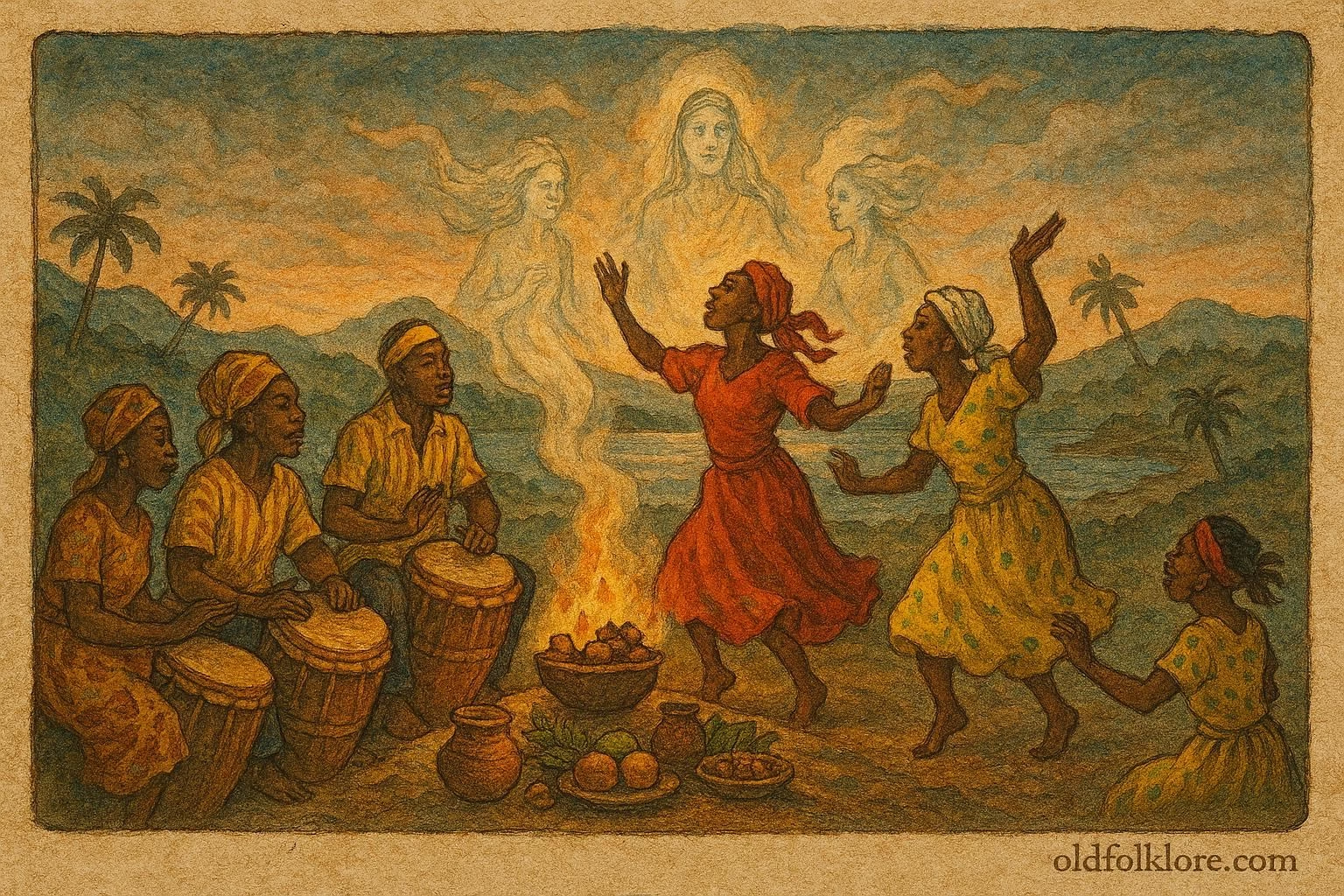
Dugu is a multi-day ceremony, sometimes lasting three to seven days, led by a buyei (priest or spiritual leader). Preparations involve setting up an altar with offerings such as food, rum, and symbolic gifts, as well as arranging ritual space where drumming and dancing will occur.
During the ceremony, rhythmic Garifuna drumming guides participants through dances and songs, including call-and-response chants that summon the spirits. Families and community members participate actively, presenting offerings, exchanging gifts, and observing ceremonial etiquette to show respect.
Spirit possession is central: ancestors may enter selected participants, offering guidance or healing messages. The ritual seeks to restore balance between the living and deceased, resolving spiritual or social disharmonies. Meals and feasts provide communal reinforcement, highlighting reciprocity and shared responsibility.
In some families, the Dugu is held annually or every few years, depending on need and resources. Although costly and labor-intensive, the rite remains a powerful instrument of social cohesion and spiritual affirmation.
Mythic Connection
Dugu ceremonies are anchored in the Garifuna cosmology of ancestral mediation. Ancestors are active agents in daily life, capable of rewarding or punishing based on how the living observe moral and ritual obligations. The ritual embodies the principle that neglecting ancestors can manifest as illness, misfortune, or family discord.
The buyei serves as a mediator between the physical and spiritual worlds, translating ancestral messages and directing communal acts to restore harmony. Spirit possession during the ceremony is a direct link to the divine and ancestral plane, reflecting a mythic understanding that humans are interconnected with spiritual forces governing health, prosperity, and moral order.
Through drumming, dance, and offerings, the Dugu enacts the mythic narrative of reciprocity with ancestors: humans honor spirits, and spirits protect and bless human communities. This relationship also reinforces ethical behavior, social bonds, and intergenerational continuity.
Variants & Notes
-
Regional Variation: Ritual sequences, musical patterns, and ceremonial foods vary between Belize, Honduras, Guatemala, and Nicaragua.
-
Frequency: Some families hold Dugus only during major crises due to the ritual’s extensive requirements; others practice them regularly to maintain ongoing spiritual equilibrium.
-
UNESCO Recognition: Dugu, along with other Garifuna cultural expressions, is recognized as intangible cultural heritage, preserving language, music, and spiritual traditions.
-
Syncretism: While retaining core ancestral practices, some contemporary Dugu incorporate Christian prayers or references, reflecting the adaptive syncretism of Garifuna spiritual life.
Despite local differences, all Dugu ceremonies share the core purpose: ancestral engagement, communal healing, and spiritual-social balance.
Author’s Note
The Garifuna Dugu illustrates how ritual serves as both a spiritual and social instrument. By honoring ancestors through offerings, drumming, and dance, the Garifuna maintain a living dialogue between the living and the dead. The ceremony preserves cultural memory and ethical responsibility while sustaining social cohesion. In a broader sense, Dugu embodies the principle that spiritual and communal health are intertwined: ancestral respect ensures protection, guidance, and prosperity. The ritual demonstrates the enduring vitality of Afro-Indigenous cosmologies in Central America, offering insight into how human societies maintain balance with unseen forces.
Knowledge Check
-
What is the primary purpose of the Dugu ceremony?
-
To restore balance between living members and ancestral spirits, and ensure spiritual and social harmony.
-
-
Who leads the Dugu ritual?
-
A buyei, a spiritual leader or priest responsible for guiding the ceremony and mediating with ancestors.
-
-
Which communities practice the Dugu?
-
The Garifuna people across Belize, Honduras, Guatemala, and Nicaragua.
-
-
How are spirits believed to interact with participants?
-
Ancestors may possess participants, providing guidance, healing, or messages to the living.
-
-
What role do drumming and dance play in Dugu?
-
They summon spirits, structure ritual interaction, and facilitate communal engagement and spiritual focus.
-
-
Why are offerings and feasts important in the Dugu?
-
They honor ancestors, ensure reciprocity, and reinforce social cohesion and collective responsibility.
-