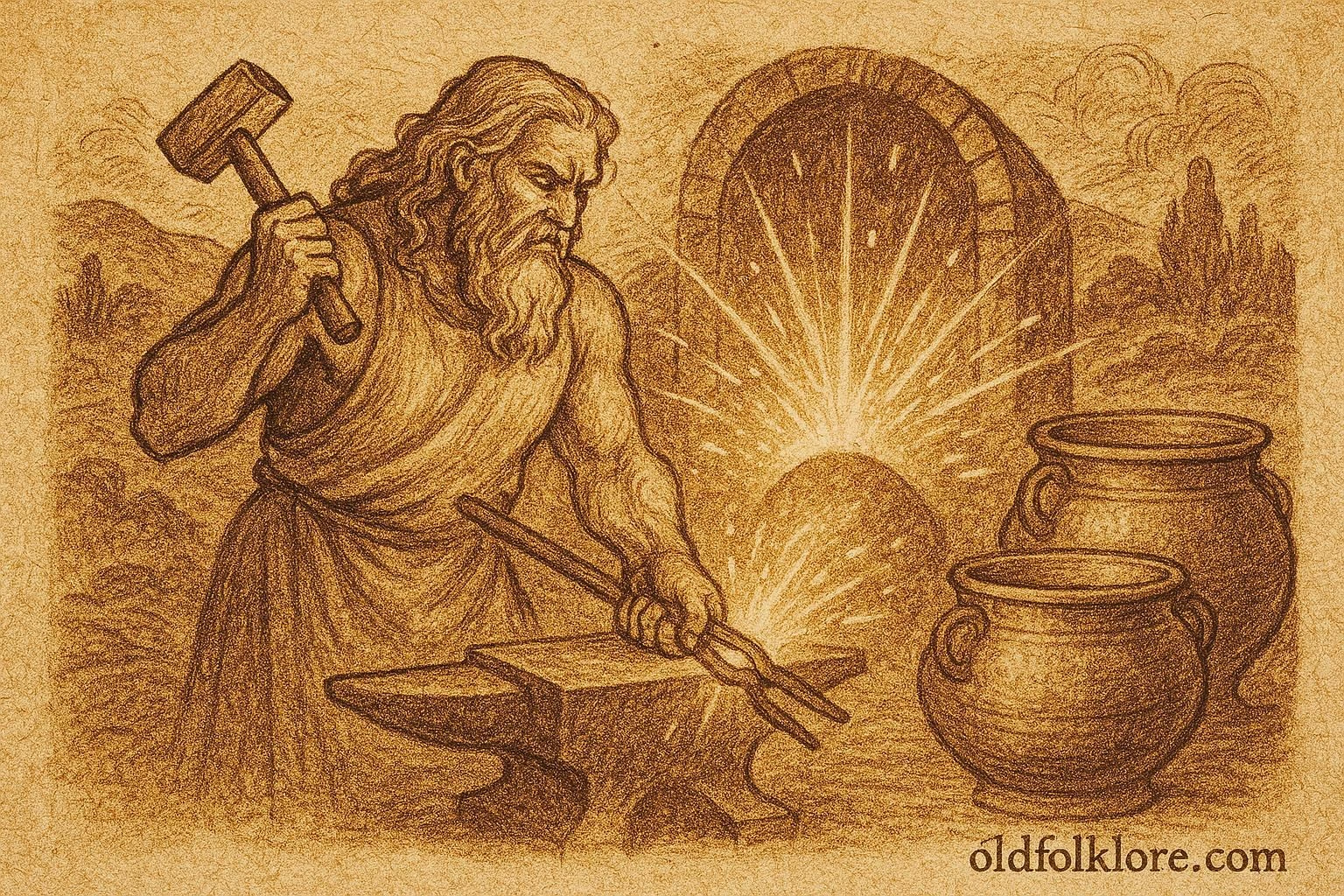
Goibniu, the master smith of the Tuatha Dé Danann, embodies craftsmanship, protection, and sustenance. Renowned for forging weapons that never miss and brewing ale that grants immortality, he serves as a pivotal figure among the divine artisans who maintain the balance of life, war, and community. His skills symbolize the sacred intersection of human ingenuity and divine providence.
In myth, Goibniu is closely allied with Lugh, the warrior and kingly god, and Ogma, the deity of eloquence and learning. Together, they ensure that the Tuatha Dé Danann are equipped with both the physical tools and the strategic wisdom to protect Ireland. Goibniu’s workshop, a place of fire, sparks, and molten metal, is a sanctuary where the gods’ weapons and immortal ale are meticulously crafted.
Worshippers honored Goibniu through rituals involving smithing, offerings of food and drink, and celebrations during times of communal gathering or preparation for battle. His presence signifies protection, abundance, and the sustenance necessary for both mortal and divine affairs. As the eternal artisan, he also represents the transformative power of creation: turning raw material into objects imbued with divine purpose.
Mythic Story: Goibniu and the Ale of Immortality
In the earliest days, before the rise of kings and the settlement of clans, the Tuatha Dé Danann descended upon Ireland, bringing with them the wisdom of the ancients and the craft of the divine. Among them was Goibniu, whose hands could coax fire into shape, whose hammer could strike metal into forms both functional and sacred.
Goibniu’s skill was unmatched. It was said that the weapons he forged never missed their mark, that the shields he shaped could repel any foe, and that the ale he brewed conferred upon gods and heroes the gift of immortality, sustaining them through battles and the passage of centuries. His work ensured the survival of the Tuatha Dé Danann, who faced threats from the Fomorians, the chaotic and monstrous beings of the wild.
One tale recounts the preparation for a decisive confrontation with the Fomorians. The Tuatha Dé Danann, though powerful, knew that their enemies would not be defeated by strength alone. Goibniu labored through the night in his forge, the walls glowing with molten metal, sparks dancing like fireflies against the dark. With hammer and tongs, he shaped swords that gleamed as if kissed by sunlight and shields that sang when struck. At the same time, he brewed vats of ale in cauldrons so vast they could nourish entire armies.
But Goibniu faced a challenge unlike any other. A Fomorian spy, shapeshifting and cunning, had infiltrated the hills near the forge, intending to steal the ale of immortality. The spy, in the guise of a mist, crept toward the cauldrons. Goibniu, whose senses were as honed as his craft, perceived the threat. With a single blow of his hammer, he forged a chain that sprang from the forge floor, binding the intruder in glowing iron, unyielding and eternal. The Fomorian could not escape, and the Tuatha Dé Danann’s ale remained safe, a reservoir of life and vitality.
When morning broke, Lugh and Ogma arrived to inspect Goibniu’s work. They beheld swords that sang in the wind, shields that reflected the sky, and cauldrons steaming with golden ale. “Truly,” Lugh said, “Goibniu, you are the hand that sustains our strength, the shield that protects our lives, and the fire that ensures our survival.” Ogma nodded, noting that skill and vigilance together ensured victory over chaos.
With Goibniu’s weapons and ale, the Tuatha Dé Danann marched into battle. Swords never missed, shields withstood the mightiest blows, and the warriors who drank Goibniu’s ale moved with the swiftness and endurance of gods. Victory was theirs, and Ireland’s safety was secured. The tale of the ale became a lesson that sustenance, protection, and craft are inseparable: without nourishment, even the strongest fall; without skill, even the brave can be undone.
In later tales, Goibniu continued his work quietly, ever present in the background of divine affairs. He was both protector and provider, ensuring that each season, each feast, and each battle was guided by skill and wisdom. His hammer and cauldron symbolize the eternal cycle of creation and renewal, reflecting the sacred rhythms of life itself.
Through generations, Irish storytellers recounted Goibniu’s dedication to craft, protection, and hospitality, embedding his image in both the hearts of warriors and the rituals of common folk. The forge of Goibniu became more than a place of work; it was a symbol of divine vigilance, where creation and sustenance intertwine to safeguard the world.
Learn the ancient stories behind deities of light, storm, and shadow from cultures across the world
Author’s Note
Goibniu’s myth underscores the sacred value of skill, protection, and provision. He teaches that creation, whether crafting weapons, brewing ale, or sustaining community, is both an art and a responsibility. Life, defense, and nourishment are bound together, reminding us that ingenuity, vigilance, and care are divine qualities that sustain both gods and humans.
Knowledge Check
Q1: What domains does Goibniu preside over?
A: Smithcraft, metallurgy, protection, and hospitality.
Q2: What items did Goibniu forge?
A: Weapons that never miss and shields of exceptional power.
Q3: What special property did Goibniu’s ale have?
A: It granted immortality to gods and heroes.
Q4: Which other deities is Goibniu closely associated with?
A: Lugh and Ogma.
Q5: What challenges did Goibniu face in his myths?
A: Protecting his ale from intruders and ensuring the survival of the Tuatha Dé Danann.
Q6: What does Goibniu’s work symbolize?
A: The sacred union of creation, sustenance, and protection in both human and divine affairs.
Source: Lebor Gabála Érenn, Cath Maige Tuired, Ireland.
Source Origin: Irish / Celtic (Tuatha Dé Danann, Ireland)