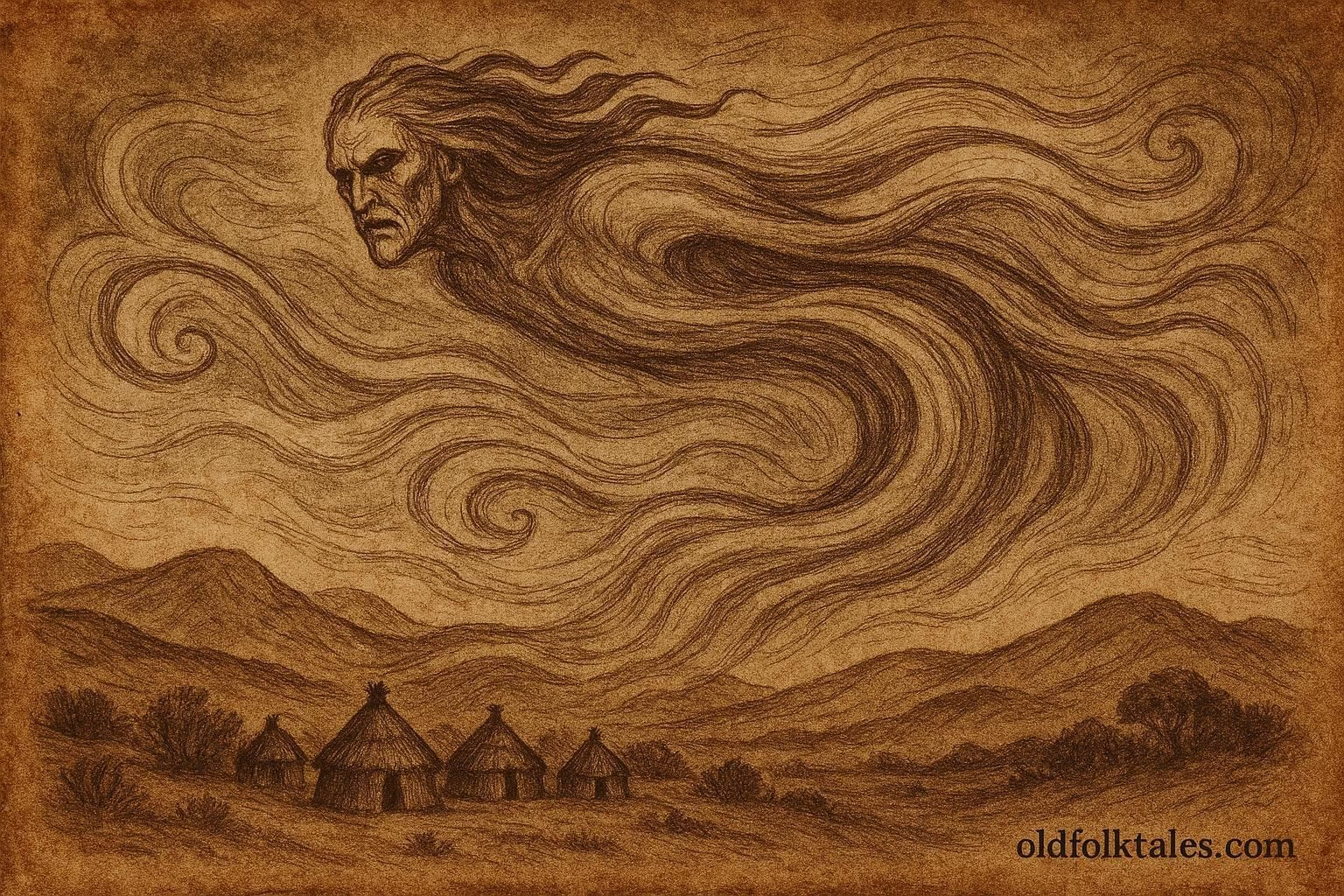
The winds of Patagonia are unlike any others in the world. They sweep across the plains in long, mournful breaths and rise suddenly into spirals that carry dust, branches, and stories of ancient spirits. Among the Mapuche, there is one name whispered whenever these winds turn violent or unpredictable. Gualichu. The unseen bringer of misfortune, sickness, and disorder.
To speak of Gualichu is to speak of all that disrupts harmony. He is not a spirit that appears with a monstrous form or a clear face. Instead he moves in whirlwinds, disguising himself within the chaos of nature. When the dust begins to spin without warning or when the breath of the wind chills the bones more than it should, the elders say that Gualichu is near.
Long ago, in a small Mapuche settlement tucked between hills and bending trees, the people lived in close balance with the rhythms of the land. They respected the rivers, honored the forest, and offered prayers to the good spirits who tended to their needs. But in this village, there came a time when harmony broke. The air grew heavy with sickness, and an unsettling wind blew every night without rest.
The first sign was the illness of a young girl named Amulen. She was strong, full of laughter, and known for her long black hair that streamed behind her as she ran across the plains. One evening, as she collected firewood, a sudden swirl of wind rose around her. It tugged at her clothes and hair, circling her twice before sinking into the ground. She returned home feeling dizzy. By morning, she could not rise from her mat.
Encounter dragons, spirits, and beasts that roamed the myths of every civilization
Her mother wept as she watched Amulen tremble with chills. The healers tried medicines of herbs and warm stones, but the sickness clung to her like a shadow. At night her breathing weakened whenever the wind howled outside the hut.
Soon, other families felt the disturbance. Chickens stopped laying eggs. Horses refused to approach the river. Infants cried relentlessly whenever the evening breeze picked up. Every time the sky clouded and the air began to spin, people shut their doors and whispered prayers, knowing the presence of Gualichu could slip through even the smallest crack.
One morning, the village shaman, an old woman named Pire Mapu, gathered the people by the sacred fire. Her hair was silver and her voice steady, carrying the authority of generations of spirit watchers.
“The harmony of our land has been broken,” she said. “Gualichu is among us. He rides the winds that circle our homes and brings illness to our children. We must cleanse ourselves and restore balance.”
The villagers listened, fear and hope mixing within their hearts. When the shaman spoke, her words carried weight. She told them that Gualichu seeks weakness, not only in the body but also in the spirit. If quarrels arise, if disrespect grows, if the rituals of gratitude are forgotten, he enters through these cracks like the cold wind of winter.
The villagers lowered their heads, remembering moments of anger and neglect. Some had argued over grazing lands. Others had skipped offerings at the morning fire. Slowly they realized the disorder among them had created the perfect doorway for Gualichu to enter.
Pire Mapu instructed them to prepare for a ceremony of purification. For three days the villagers fasted from certain foods, refrained from arguments, and spent time in silent reflection. They collected sacred herbs from the hills, gathered clean water, and brought small offerings of seeds and woven cloth.
On the night of the ceremony, the wind roared louder than it had in weeks. The flames of the sacred fire bent and swayed, as if pushed by an unseen hand. The villagers formed a circle while Pire Mapu stepped into the center holding a bowl of burning herbs.
She raised her arms.
“Gualichu who rides the winds, hear us. We restore the order you seek to break. We reclaim harmony. You may not remain among us.”
Her voice echoed against the hills. The villagers repeated her words, their voices rising and falling like the rhythm of the wind itself. Pire Mapu walked from person to person, brushing them with smoke, murmuring chants that cleansed their spirits and strengthened their hearts.
As the ceremony continued, a sudden gust of wind rushed through the circle. It lifted ashes, shook the ground slightly, and carried a haunting whistle. But instead of fear, the villagers felt a shift. The air, once heavy, began to lighten. The wind softened. Even the flames steadied as if the unseen presence had finally loosened its grip.
At dawn, Amulen opened her eyes. Her fever had broken. She sat up slowly, feeling the warmth of the rising sun on her face. Her mother called out in relief, and soon the whole village gathered to witness the sign that the balance had been restored.
In the days that followed, the winds returned to their natural rhythm. They still roared through the Patagonian grasslands, but no longer carried the same sense of dread. The villagers kept the memory of Gualichu alive, not out of fear, but as a reminder. Disorder invites misfortune, but unity brings protection.
Whenever whirlwinds now rise unexpectedly along the plains, the people pause. They remember the old tale and whisper words of harmony, knowing that respect for the land and for one another keeps Gualichu at bay.
Explore the shadows of world mythology, where demons test the soul and spirits watch over mankind
Author’s Note
The tale of Gualichu reflects one of the Mapuche’s deepest spiritual lessons that misfortune is not random but connected to the imbalance within a community. Through ritual, unity, and respect for the land, the people reclaim harmony. This story reminds us that many of the forces that trouble us begin with fractures in the human spirit.
Knowledge Check
-
What does Gualichu represent in Mapuche belief?
Gualichu represents misfortune, sickness, and chaotic forces in nature. -
How did the villagers first realize Gualichu was present?
They noticed unexplained sickness, restless winds, and disturbances among animals and children. -
Why was Amulen affected by Gualichu?
A whirlwind surrounding her created a spiritual vulnerability that allowed misfortune to enter. -
How did Pire Mapu guide the villagers to restore balance?
She led a purification ceremony involving fasting, reflection, sacred herbs, and communal unity. -
What happened during the purification ceremony that showed Gualichu was weakening?
A sudden wind gust passed through the circle, then softened, and the atmosphere lightened. -
What confirmed that harmony had been restored?
Amulen woke healed at dawn, and the winds returned to their natural rhythm.
Source
Adapted from The Mythology of the Americas by Hartley Burr Alexander, 1920
Cultural Origin
Mapuche Peoples, Patagonia