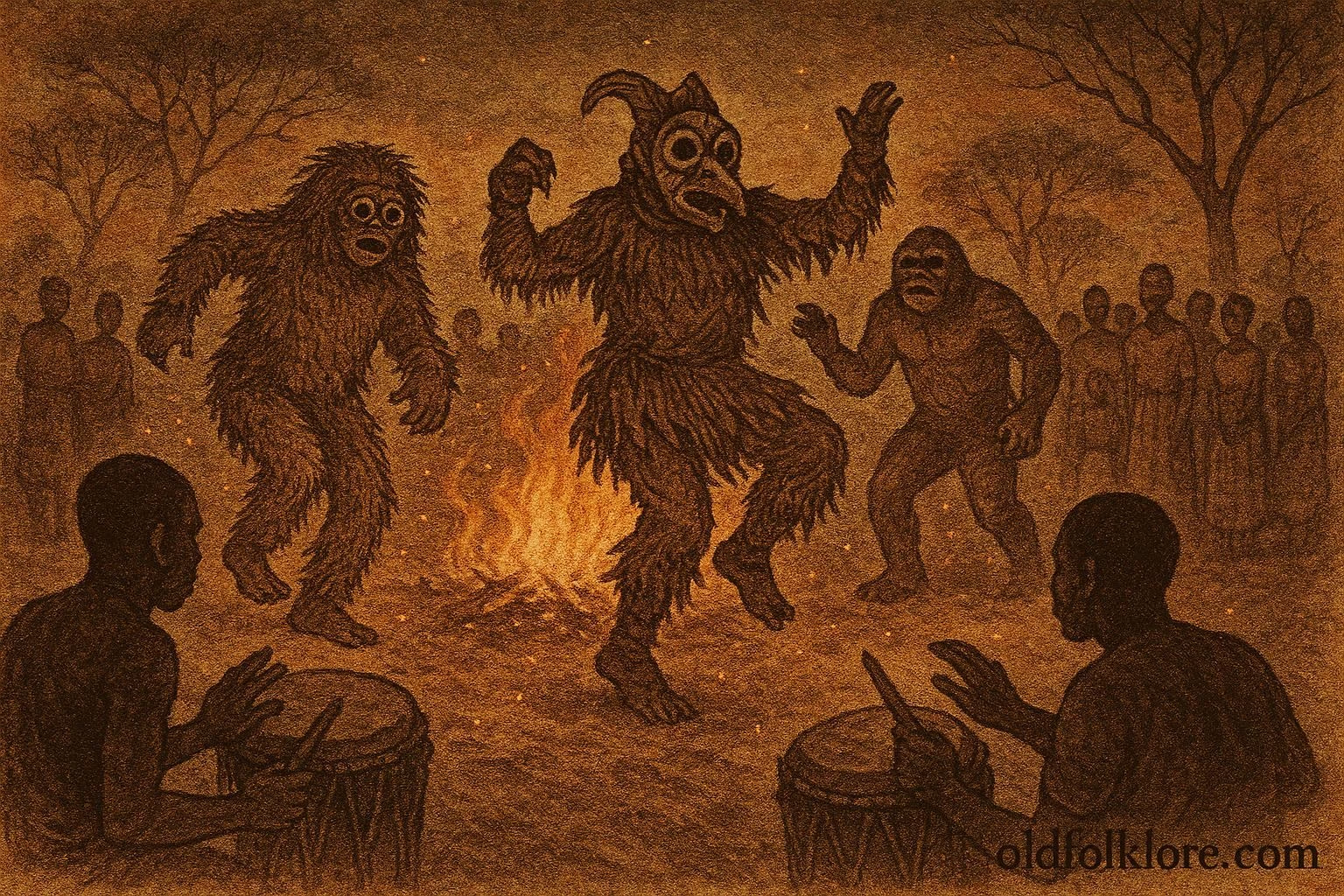
Gule Wamkulu, “the great dance”, is the Chewa people’s sacred masked-dance tradition across Malawi, parts of Zambia, and Mozambique. It grew from long-standing beliefs that ancestors remain active guardians of family and community. Nyau societies preserve the dances, passing their knowledge through initiation and practice. Over generations the performances became central to funerals, initiations, harvest rites, and communal dispute resolution.
Description
The performance begins at threshold moments: a funeral, an initiation, a chief’s installation, or a seasonal festival. Dancers emerge in full disguise. Their faces are hidden by carved masks; their bodies are shrouded in leaves, woven fibers, or layered cloth. This anonymity matters. It makes the dancer an embodiment of an ancestor or spirit rather than an individual performer.
Music drives the ritual. Drummers set steady pulses. Singers chant call-and-response lines. The dancers move in patterns that shift from solemn procession to sudden, sharp motion. Sometimes they provoke laughter. At other times they enact stern admonitions. Each mask has a role, elder, trickster, hunter, animal spirit, and the choreography communicates moral lessons.
Performances are structured and coded. Elders interpret meanings for the crowd. Children watch from safe distances so they learn etiquette and respect. The community interacts with performers through clapping, ululation, and ritual silence when required. Although Nyau societies guard some practices, the public aspect of Gule Wamkulu remains visible and instructive.
How It Was Practiced
Preparation begins days ahead. Costumes are made or refurbished. Mask-carvers charge ancestral designs into wood. The society chooses which masks will appear and in what sequence.
During the event, dancers often enter from a sacred grove, an important staging area that marks ritual space. Drummers lead. A dancer wearing an elder mask might walk slowly, nodding as if offering counsel. A trickster mask, by contrast, will mock ostentation to teach humility. Movement, sound, and timing are carefully coordinated.
After the performance, the community typically holds a debriefing led by senior Nyau members. They explain moral teachings implied by the dances. This helps the audience connect the spectacle to everyday conduct.
Mythic Connection
Gule Wamkulu rests on the Chewa conviction that the boundary between the living and ancestral realms is thin. Ancestors called mizimu, are guardians. They bless good conduct and correct misdeeds. The masks are not mere images; they represent mythic personae with agency.
Some masks evoke origin stories. Others recall animal-spirits or historical figures who once guided the people. Trickster characters replay cautionary tales about pride and greed. Elder masks embody calm, continuity, and lawful authority. By embodying these roles, Nyau dancers make mythic principles tangible. The performance thus renews the social compact: the living honor ancestors, and ancestors protect the living.
Social and Spiritual Meaning
Gule Wamkulu functions on several levels at once. Socially, it enforces norms. People see examples of virtue and vice enacted before them. Spiritually, the ritual renews the community’s covenant with its ancestors. Psychologically, it helps people process grief, resolve tensions, and celebrate new social roles.
Furthermore, the dance links the community to place. Many masks and characters recall local landscapes, hunting practices, or historical events. In this way, Gule Wamkulu preserves memory, both practical and cosmological, across generations.
Author’s Note
This revised article emphasizes clarity and readability while preserving cultural detail. Gule Wamkulu remains a profound example of how performance, ritual disguise, and ancestral belief shape moral order. The Chewa keep a living archive of values through mask, movement, and music.
Knowledge Check
1. What is the literal meaning of “Gule Wamkulu”?
It means “the great dance,” a sacred masked ritual of the Chewa.
2. Why are performers fully disguised?
Disguise transforms the dancer into an ancestral or spirit presence, not a person.
3. When is Gule Wamkulu typically performed?
At funerals, initiations, harvest festivals, and other communal rites.
4. What roles do different masks play?
They depict elders, tricksters, hunters, animal spirits, and moral archetypes.
5. How does the ritual reinforce community norms?
By dramatizing moral lessons and prompting elders to explain meanings afterward.
6. Why is Gule Wamkulu important for cultural continuity?
It transmits ancestral teachings, local history, and social values to each generation.