In the islands of Polynesia where lush forests rise from the ocean and the winds carry whispers from ancient ancestors, every tree and every stream holds memory. The people knew that the land was alive with spirits who watched over the world with care. Among the most revered of these beings were the Hākuturi, the forest guardians. They protected the sacred trees and ensured that those who entered the forest walked with humility, gratitude, and knowledge of ancient customs.
The elders often reminded the young ones that the Hākuturi watched every movement. Though few saw them directly, their presence was known. Some described them as small beings shaped from living wood. Others believed they were guardians who could take the form of birds, insects, or shifting lights among the leaves. Regardless of descriptions, all agreed that the Hākuturi defended the forest fiercely and could bring both blessings and warnings.
There lived a woodcarver named Rongo. Among his people he was known for shaping canoes and ceremonial figures with great skill. Every carving began with a chant of gratitude, for Rongo understood that each tree held a spirit. Yet his younger brother, Manaia, did not share the same patience. Manaia admired Rongo’s work but believed the rituals took too long. He wanted the beauty of crafted wood without the discipline that went with it.
Discover the gods, goddesses, and divine spirits who ruled the heavens and shaped human fate
One season, a great voyage was planned across the open sea. The people asked Rongo to carve a ceremonial canoe to bless the journey. Such a canoe could only be made from a sacred tree deep within the forest. Rongo prepared himself with prayers and offerings, but Manaia, eager to prove himself, ran ahead into the forest before the rituals were complete.
The forest grew denser as Manaia walked deeper. He carried an axe and confidence in equal measure. When he found a tall straight tree suitable for carving, he lifted his axe without making any offering. The moment the blade touched the bark, the forest responded. Birds erupted from the branches. The wind shifted. The sound of the axe striking the trunk echoed strangely, as if the forest itself cried out.
Manaia paused but then struck again. This time a shower of leaves spiraled down in a way that felt unnatural. Shadows moved at the edges of his vision. The air thickened, humming with unseen energy. Suddenly the ground beneath him trembled, and the roots of the tree seemed to pulse with life.
From the undergrowth came the Hākuturi.
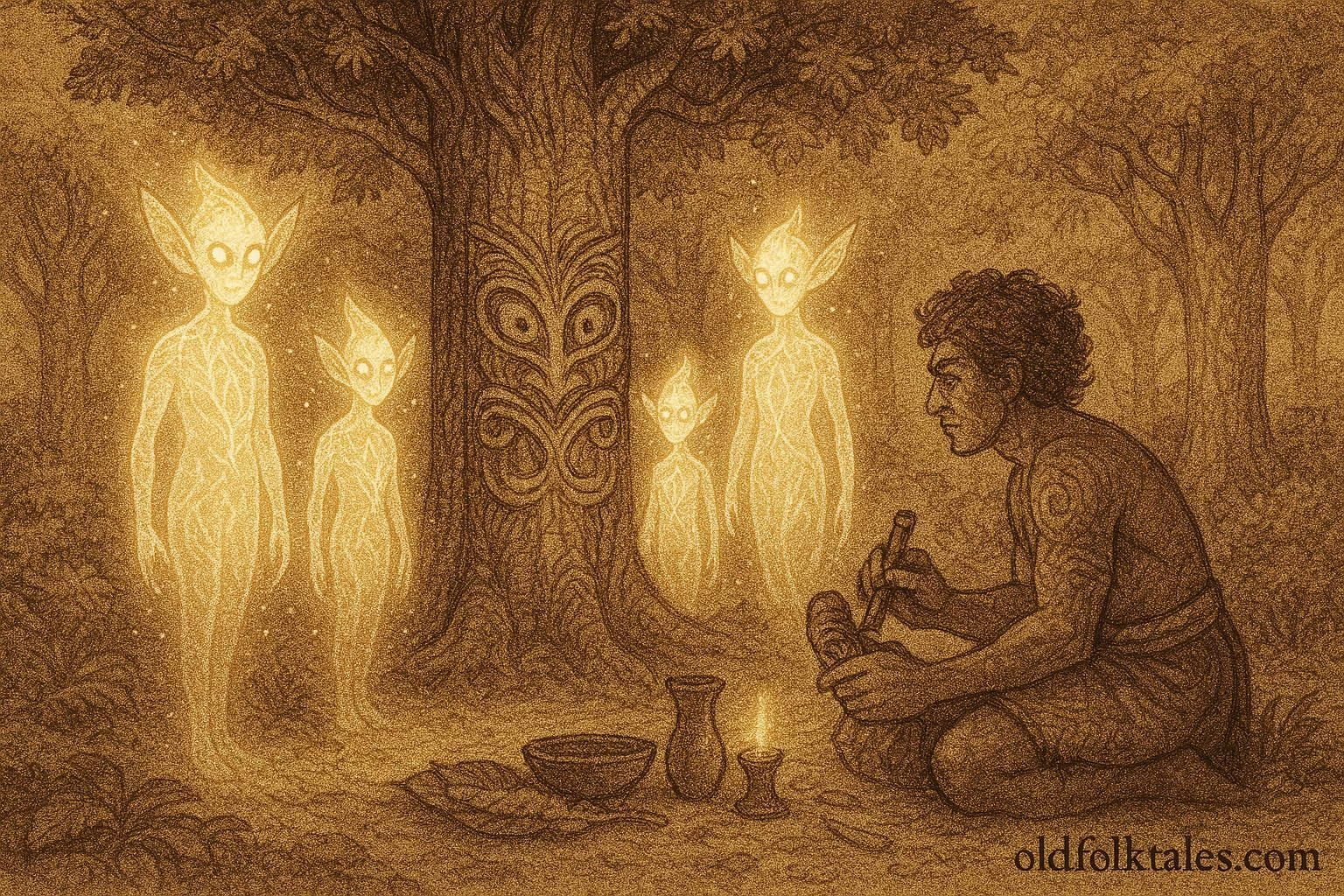
They appeared like moving patterns of bark, moss, and shifting forest light. Some were small as children, others tall as young trees, but all carried the weight of ancient authority. Manaia stumbled backward in fear. He tried to apologize, but the guardians circled him, and their voices filled the air like wind passing through countless leaves.
“You struck a sacred tree without respect,” they said. “You forgot the customs that bind the people to the land. You walked with pride rather than gratitude.”
Manaia dropped his axe and bowed deeply. “I wanted to help my brother. I meant no harm.”
The Hākuturi studied him. Their eyes glowed with the green light of long memory. “Intention alone does not protect the balance. Action with humility protects it. Action with arrogance harms it.”
The guardians lifted the axe from the ground. They touched the wounded tree, and the bark closed slowly as though healing. Then they turned to Manaia. “You will stay until you learn what your brother honors.”
Manaia felt the forest shift around him. Paths he had once known disappeared. The trees grew taller and darker. He called for help, but the sound became soft, swallowed by the canopy. Time moved strangely. Hours felt like days.
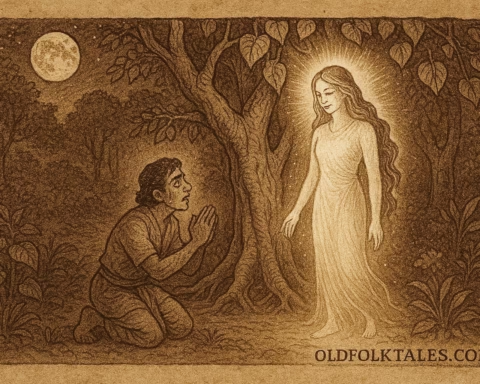
Meanwhile, Rongo entered the forest searching for Manaia. When he saw the signs of disturbance, he knew the Hākuturi were involved. Rongo knelt on the forest floor, placed offerings of food and woven leaves, and called out with reverence.
“Hākuturi guardians, I ask forgiveness for the actions of my brother. He is young and eager. Guide him so that he may understand the sacredness of the forest.”
The guardians appeared with gentle rustling. They stepped forward and returned Manaia to him. Manaia was humbled, exhausted, and deeply changed. The Hākuturi addressed them both.
“Respect the land and the ancestors who shaped it. Speak with gratitude before you take from the forest. Honor the spirit within every tree.”
Rongo and Manaia bowed deeply. With the guardians watching, Rongo performed the full ritual of asking permission from the forest. Only after this did he take the chosen tree, using careful chants to ensure the spirit would journey with the canoe.
The Hākuturi assisted silently. Some say that night the forest glowed softly, and the sound of carving seemed guided by invisible hands. When the canoe was finished, it was more beautiful than any Rongo had made before. Manaia helped with humility, grateful for the second chance given by the guardians.
The voyage blessed by the canoe was successful, and the people spoke for generations about how the forest had guided and protected them. They also spoke of the Hākuturi, the guardians who defended the sacred places and reminded all who walked the earth that respect brings balance, and balance brings life.
And from that time on, Manaia shared the lessons he learned. He became a protector of the forest, teaching others that the trees are not only resources but ancestors, teachers, and living companions who must be honored always.
Explore the shadows of world mythology, where demons test the soul and spirits watch over mankind
Author’s Note
This story honors the Polynesian belief that forests are living relatives guided by unseen guardians. The Hākuturi remind us that ecological respect is not a choice but a responsibility carried through generations.
Knowledge Check
-
Who are the Hākuturi in Polynesian tradition?
Forest guardian spirits who protect sacred trees. -
What mistake did Manaia make in the forest?
He cut a sacred tree without performing the proper rituals. -
How did the Hākuturi respond to Manaia’s actions?
They confronted him and taught him humility. -
How did Rongo approach the forest differently?
He offered prayers, rituals, and gratitude before touching the trees. -
What lesson did Manaia learn?
To respect the land and follow ancestral customs. -
Why was the canoe successful in blessing the voyage?
Because it was created with respect and guided by the Hākuturi.