The Hākuturi are among the most intriguing and morally instructive spirit-hosts in Māori mythology, guardians of the forest who embody the living mana of every tree, fern, root system, and winged creature beneath the canopy. Their role is made most famous in the story of Rātā, whose attempt to build a canoe without proper ritual results in the Hākuturi restoring his felled tree overnight. This act positions them not as hostile or violent beings, but as agents of cosmic balance, defenders of tapu, and custodians of the forest’s rightful order.
Appearance
Descriptions of the Hākuturi vary widely among iwi. They are sometimes said to be:
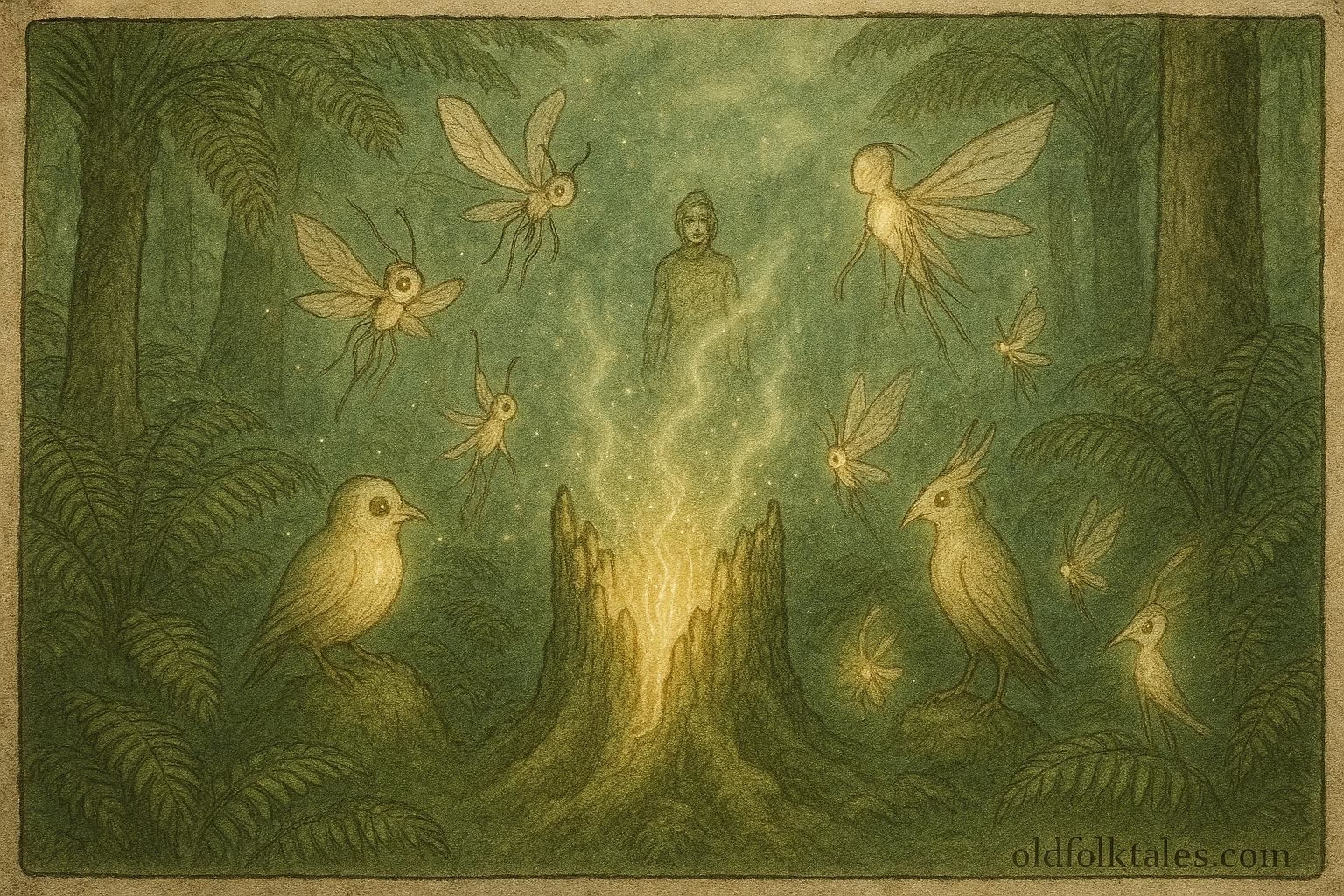
- Bird-shaped guardians, flitting through branches in bright flashes of plumage
- Insect-like beings, crawling through the leaf-litter and whispering along tree roots
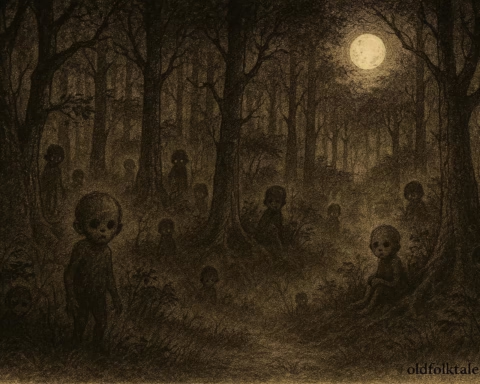
- Tiny humanoid forms, like forest fae, light-footed and quick, glowing faintly at night
- Shifting spirits, appearing only as rustles, sudden movements, or shimmering presences
A recurring idea is that the Hākuturi are the children or kin of Tāne-mahuta, the god of forests and birds. Therefore, they often take forms resembling the forest’s living community, from the chirp of a tīeke to the glimmer of a weta’s carapace, or the silent drift of a ruru at dusk. The multiplicity of their forms emphasizes that they are not a single species but a collective of spirits, each representing a fragment of the forest’s life force.
Their movements are quick and coordinated, like a host of birds in synchronized flight. When angered or activated, the forest itself seems to move with them, branches shifting, leaves trembling, animals calling in chorus.
Powers
The Hākuturi’s power lies in their ability to restore, reshape, and rebalance the forest. Their most famous ability is:
- Reassembling trees that have been improperly felled, returning them to their upright, living state
This act, performed in the Rātā story, is not merely magical repair; it reflects the Māori principle that the forest has its own laws, and when humans violate them, the spirit-guardians intervene.
Other powers attributed to the Hākuturi include:
- Shapeshifting between birds, insects, and spirit-forms
- Mimicry of forest sounds, speaking through rustles or calls
- Collective labor at supernatural speed
- Restoring balance after human wrongdoing
- Summoning forest creatures to their aid
In some traditions, their collective voice is like a buzzing hive or a roaring flock, a sound that instills awe and reminds visitors that they are never alone.
Behavior
The Hākuturi are not malevolent, but they are fiercely protective. Their behavior follows a moral logic:
- Respectful humans are untouched, sometimes even aided by the forest spirits.
- Those who violate tapu, especially by cutting sacred trees without karakia (ritual incantation), face their displeasure.
- They punish through restoration, not destruction, a deeply symbolic form of correction.
- They uphold tikanga, ensuring that forest spaces are treated as living beings, not resources.
Their behavior emphasizes accountability. When Rātā failed to perform the ritual acknowledging Tāne-mahuta, the Hākuturi did not harm him; instead, they reversed his actions. This correction teaches humility and reverence.
Myths and Beliefs Surrounding Them
The Story of Rātā
In this narrative, Rātā seeks a canoe to avenge his father’s death. He selects a great tree and fells it swiftly, forgetting the karakia required to request permission from the spirit-world. That night, the Hākuturi gather. Birds, insects, and spirits swarm through the forest, restoring the tree piece by piece, singing their incantations and weaving the trunk back together.
When Rātā returns and finds the tree standing tall, he realizes the depth of his mistake. The Hākuturi confront him, not violently, but with words of correction. Once he apologizes and performs the correct rituals, they help him build the canoe, this time with spiritual approval.
The story teaches that skill and strength alone are not enough; one must respect the unseen relationships that bind humans to the natural world.
Guardianship and Kaitiakitanga
The Hākuturi embody the Māori principle of kaitiakitanga, guardianship and stewardship of the land. They watch over forests to ensure:
- Ethical harvesting
- Respectful entry
- Ritual acknowledgment
- Preservation of ecological balance
Because forests were central to Māori life, providing wood, food, medicine, and spiritual refuge, the Hākuturi serve as reminders that use must always be accompanied by gratitude and ritual.
Symbolism
The Hākuturi symbolize several interwoven cultural values:
- Respect for Nature: Their restorative power reminds humans that nature is not inanimate; it has agency, memory, and guardians.
- Ecological Balance: Cutting a tree is not wrong in itself, but doing so without acknowledgment disrupts the spiritual and ecological order.
- Spiritual Reciprocity: Humans must give back, through ritual, gratitude, or restraint, to maintain harmony.
- Collective Action: The Hākuturi act as a host, reflecting the idea that all elements of the forest are interconnected.
- Consequences Without Violence: Their method of correction (undoing the tree-felling) represents restorative rather than punitive justice.
These spirits therefore serve as a moral compass for the relationship between humans and the natural world.
Cultural Role
The Hākuturi are kaitiaki, guardians whose presence ensures forests remain living realms rather than mere resources. For Māori communities, the forest was home to ancestors, birds, medicines, and sources of craftsmanship. The Hākuturi reinforce the worldview that nature is alive, relational, and deserving of ceremony.
Their roles include:
- Protecting sacred groves
- Ensuring ritual protocol during harvesting
- Teaching respect for Tāne-mahuta
- Maintaining ecological harmony
Because of their connection to birds and insects, they also symbolize the forest’s sensory life, the ways it hears, feels, and responds to human presence.
Encounter dragons, spirits, and beasts that roamed the myths of every civilization
Author’s Note
Because the Hākuturi appear primarily in Māori mythological dictionaries and in the Rātā cycle, this entry expands their character according to Māori forest ethics and kaitiakitanga principles, ensuring cultural accuracy while conveying their deep symbolic importance.
Knowledge Check
- Q: What are the Hākuturi guardians of?
A: Forests, trees, and sacred natural spaces. - Q: What mistake did Rātā make that angered them?
A: Cutting a tree without performing the necessary ritual for Tāne-mahuta. - Q: How did the Hākuturi punish Rātā?
A: By restoring the felled tree and confronting him about his breach of tapu. - Q: What cultural principle do they embody?
A: Kaitiakitanga, guardianship of the forest. - Q: What forms can they take?
A: Birds, insects, tiny humanoid spirits, or shifting forest presences. - Q: Why are they important in Māori ethics?
A: They teach respect, reciprocity, and ritual care for the natural world.
Source: Māori mythological references (Orbell; Tregear; traditional iwi forest-lore).
Origin: Aotearoa New Zealand, Māori cultural world, traditional forest spirituality and ritual practice.