In the age when the gods walked closely among mortals and the earth itself trembled under the wrath of men, there arose a hero whose name would be etched into eternity: Hector, son of Priam, king of Troy. Born of noble blood and blessed by the favor of Apollo, he bore a strength both mortal and divine, a valor that rivaled the fiercest of warriors. His gaze, stern yet compassionate, surveyed the walls of his city, knowing the shadow of war loomed heavy upon the golden plains of Troy.
From his youth, Hector displayed prowess unmatched among Trojan youth. He could wield the spear with the precision of a god and command the shield as if it were an extension of his very being. Yet, it was not mere strength that defined him, it was the moral weight he carried, the understanding that every action in war bore consequences not only for himself but for the innocent families sheltered within Troy’s mighty walls. His mother, Hecuba, whispered of omens and the threads of fate spun by the Moirai, yet Hector, though reverent, bore no fear. He carried the dignity of his people upon his shoulders as if it were a second armor.
The world of men and gods alike trembled when the Greeks, long-scheming and relentless, encircled Troy. Their walls, high and golden, became a crucible of fury and strategy. Hector, commander of the Trojan forces, strode upon the battlefield, his bronze armor gleaming beneath the sun as though kissed by Apollo himself. The clash of spears and cries of warriors became the drumbeat to which his heart marched, each beat echoing a sacred oath to protect his city, his family, and the honor of Troy.
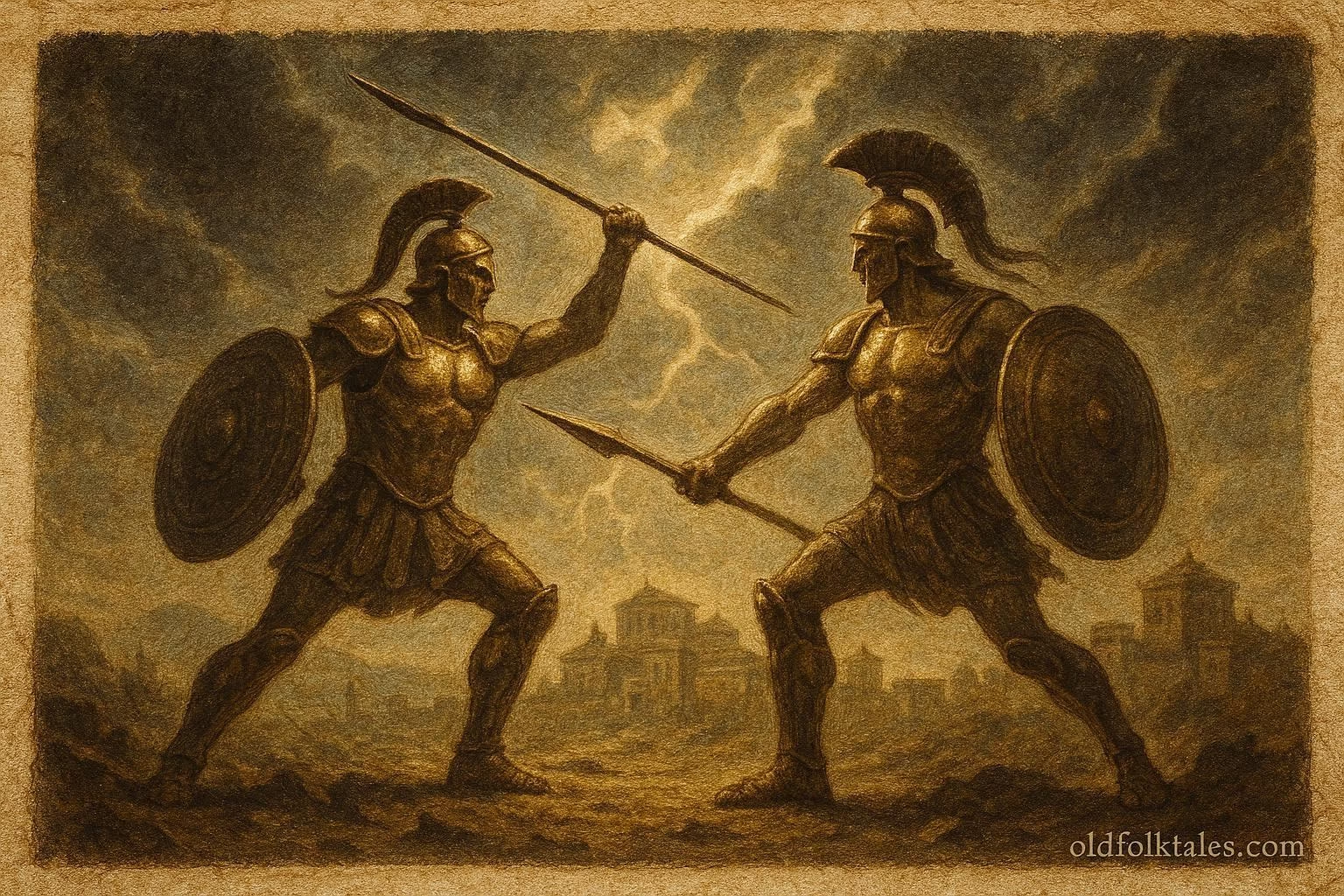
In the heat of battle, Hector faced Achilles, the demigod of Greece, whose wrath was fabled across the Hellenic world. Here lay the mortal and the demi-divine, the son of a king and the favored of gods, confronting destiny with mirrored courage. Hector’s mind was a battlefield of its own: the desire for victory wrestled with the fear of leaving his family fatherless, the duty to fight wrestled with the knowledge of his mortal end. And yet, he charged, unwavering, his spear striking with the righteousness of a warrior who bore not hatred but the duty of defense.
Hector’s heroism was not mere display of strength, but of moral integrity. He respected the vanquished, offered truce when honor permitted, and shielded the weak as a lion shields its cubs. Even in the moments when the tides of battle threatened to overwhelm Troy, he spoke not only as a warrior but as a sage of his people: “Fight we must, yet let our deeds be measured by justice as much as by valor.” His enemies feared him, yet those who knew him respected him; his honor radiated as brightly as the divine light that seemed ever to accompany him.
Yet fate, inexorable and unyielding, cast its shadow. The day arrived when Hector faced Achilles in single combat before the gates of Troy. The world held its breath as the two forces collided—mortal courage against god-touched wrath. Despite every display of skill, Hector fell, struck by the spear of the inevitable. But in that fall, he did not merely perish; he became immortal. For through his courage, his steadfastness, and his unwavering morality, Hector transcended the frailty of flesh. His sacrifice illuminated the essence of true heroism: the defense of one’s people at the cost of one’s own life. His death was not defeat but a testament to the nobility of selfless courage.
Priam, his aged father, exemplifying humility and sorrow, ventured into the camp of Achilles to reclaim the body of his son, offering the wealth of kings in exchange for Hector’s mortal remains. And in that act, Hector’s heroism found resonance not only among the Trojans but even within his enemies. He became the measure against which warriors judged honor, a beacon of virtue amidst the consuming flames of war. Troy mourned, but the legacy of Hector endured, carried in the songs of bards, whispered by mothers to sons, and immortalized in the stone and memory of the city’s walls.
Thus, Hector of Troy remains a figure whose valor transcends mortality, whose moral struggle mirrors the eternal question of duty versus self-preservation, and whose symbolic outcome reminds humanity that heroism is found not merely in victory but in steadfast integrity, courage, and the protection of those we love.
Author’s Note:
Hector’s legacy endures as the archetype of the noble warrior. Though he met death at the hands of Achilles, his honor, moral courage, and devotion to his people have echoed through millennia. He embodies the delicate balance of duty, morality, and heroism, teaching that true greatness lies not only in martial prowess but in the compassion and wisdom that guide it. His story continues to inspire tales of sacrifice, family, and ethical fortitude in the face of inevitable fate.
Knowledge Check:
-
Who was Hector’s father and what role did he play in Troy?
-
Which god favored Hector, according to myth?
-
Describe Hector’s moral struggle during the Trojan War.
-
Who killed Hector, and what was the significance of his death?
-
How did Priam demonstrate respect for Hector after his death?
-
In what ways does Hector’s story symbolize heroism beyond physical strength?
Cultural Origin: Greek (Trojan War Epic)
Source: Homer, Iliad