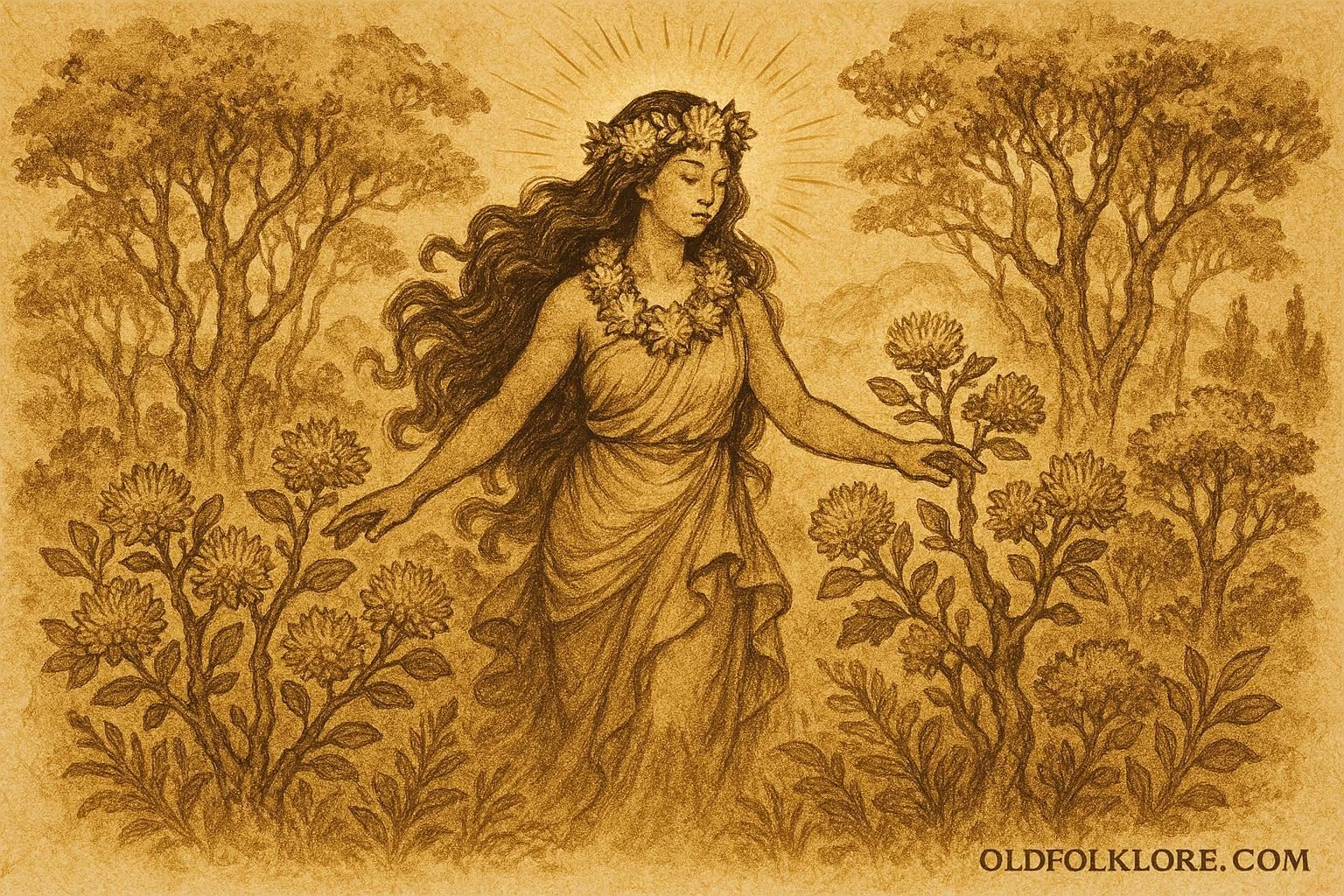
Hiʻiaka, often called Hiʻiaka-i-ka-poli-o-Pele, “Hiʻiaka in the bosom of Pele”, is the Hawaiian goddess of hula, forests, healing, and life-giving energy. She is the beloved youngest sister of the volcano goddess Pele, born from her flames and carried to Hawaiʻi in Pele’s breast as an egg. From this origin she gained her close spiritual link to fire, earth, and the regenerative forces that rise from volcanic land.
She presides over lush forests, native trees, medicinal plants, and spiritual pathways across the islands. Hiʻiaka is known for her mastery of chant and dance, for her power to restore the sick, and for her ability to calm wandering spirits. Her symbols include the lehua blossom, ʻōhiʻa tree, and the rhythmic swaying movements of hula, which she protects and sanctifies. Her companions, often the supernatural paʻo bird, helpful forest spirits, and her loyal friend Wahineʻomaʻo, reflect her sovereignty over nature and healing forces.
Hiʻiaka is honored as a divine mediator who restores harmony between the seen and unseen worlds. Her great journey across the islands, filled with spirits, monsters, storms, chants, and rebirth, became the foundation of many sacred hula traditions practiced today.
Mythic Story: The Journey of Healing and Hula
In the time when the Hawaiian Islands were shaped by gods and winds, Hiʻiaka dwelled with her elder sister Pele upon the volcanic slopes of Hawaiʻi. Though born of fire, she carried within her the gentler power of renewal, a spirit that cooled the land Pele scorched, clothing it with forests and life. From her earliest days she moved like the breeze among the ʻōhiʻa trees, her feet shaping the rhythms that later became the sacred patterns of hula.
One day, a troubling vision stirred Pele. She foresaw a distant calling, an echo tied to her heart. Knowing that the path ahead was dangerous, she summoned Hiʻiaka and entrusted her with a monumental task. She asked her youngest sister to embark on a journey across the islands to retrieve a man who had fallen into a deep, life-drained sleep. Though Hiʻiaka’s journey would test every aspect of her power, she accepted, carrying with her healing chants, ancestral prayers, and unwavering loyalty.
Accompanied by her faithful companion Wahineʻomaʻo, Hiʻiaka set forth from the fiery home of Halemaʻumaʻu. As she descended into the forests, the world shifted. The land grew cooler, and the scent of wet earth rose beneath her feet. Every step awakened the guardians of the wild: shimmering spirits, shape-shifting winds, and ancient creatures born from the primeval time of the islands.
Her first trials came in the dense forests of Puna, where restless spirits wandered between the trunks. Here, Hiʻiaka revealed her nature. Instead of banishing them with force, she used chants, soft, melodic invocations taught by the ancestors. Her voice called them to peace, and the forest calmed. Leaves shimmered as if bowing, acknowledging her authority.
From there she crossed into lands known for their trickster spirits and moʻo, great lizard beings with command over water. At the banks of an inland pool, a moʻo guardian rose, its form towering like a cliff of glistening scales. It challenged Hiʻiaka, testing whether she was truly Pele’s kin. With courage steady as stone, Hiʻiaka stepped forward, reciting a hula chant whose rhythm echoed the heartbeat of the land. Her dance invoked life, harmony, and rightful passage. The moʻo, recognizing the divine power flowing through her gestures, yielded and sank back into the waters.
Hiʻiaka pressed onward into the cliffs of Hāmākua, where the winds roared like ancestral voices. Storms sharpened the air and forced travelers to their knees. But Hiʻiaka lifted her palms and called upon her gift of healing wind, a breeze that soothed pain, cleared vision, and strengthened weary limbs. The storm parted around her, the path opening as though carved by divine intention.
Her journey continued to the island of Maui and then to Kauaʻi, each stretch filled with new tests. She faced ghostly warriors, spectral dancers, and the swirling mists of forgotten valleys. Yet at each crossing, Hiʻiaka transformed hardship into harmony. Her chants revived fallen trees. Her prayers soothed spirits trapped between worlds. In every village she passed, she healed the sick, mended limbs, and lifted the hearts of the grieving. People whispered that she moved like a living breeze, leaving restored life in her footsteps.
When Hiʻiaka finally reached her destination, she found the man Pele had spoken of lying in a sacred heiau, untouched by time yet drained of vitality. Kneeling beside him, she began a chant woven from the elements of her journey, the peace of forests, courage of cliffs, rhythm of waves, and breath of healing winds. Her hands moved in graceful hula gestures, each motion calling life back into the human form before her.
Slowly, color returned to his skin. His chest rose. His eyes opened. Hiʻiaka had restored not only his life but the balance that bound him to the islands.
Her long trek back to Hawaiʻi was filled with further tests, but Hiʻiaka moved with renewed strength. She understood that her journey had become more than a mission, it had transformed into a sacred blueprint for hula, healing, and communion between gods, people, and the living land.
To this day, practitioners say that when hula is danced with purity and intention, Hiʻiaka walks unseen beside the dancer, her presence felt in the wind that circles the halau and the quiet blessing upon every step.
Author’s Note
The story of Hiʻiaka teaches that healing is not merely the closing of wounds but the restoration of balance, between people, land, and spirit. Her journey reveals that compassion, courage, and harmony with nature can overcome forces that seem vast and ancient. Through hula, she reminds us that movement, voice, and prayer can connect us to the living world.
Knowledge Check
Q1: What are Hiʻiaka’s primary domains?
A: Hula, forests, healing, and life-giving energy.
Q2: Who is Hiʻiaka’s elder sister?
A: Pele, the goddess of volcanoes.
Q3: What symbols are associated with Hiʻiaka?
A: The lehua blossom, ʻōhiʻa tree, and sacred hula movements.
Q4: What companion travels with Hiʻiaka?
A: Wahineʻomaʻo.
Q5: How does Hiʻiaka calm spirits in the forests of Puna?
A: Through chants and peaceful invocation.
Q6: What is one major theme of Hiʻiaka’s journey?
A: Restoring harmony between the human, natural, and spiritual worlds.
Source: Hawaiian Mythology, Hawaiʻi.
Source Origin: Hawaiʻi, Polynesia