Long ago, in a world where pigs could speak and animals behaved in the most extraordinary ways, there lived an old sow with three little pigs. She loved her children, but she could no longer provide enough for them all. When the time came, she sent them away to seek their fortunes and build lives of their own.
The three brothers set out, each hoping to find a place where he could live comfortably and independently. However, none of them knew that a hungry wolf was waiting to cross their paths.
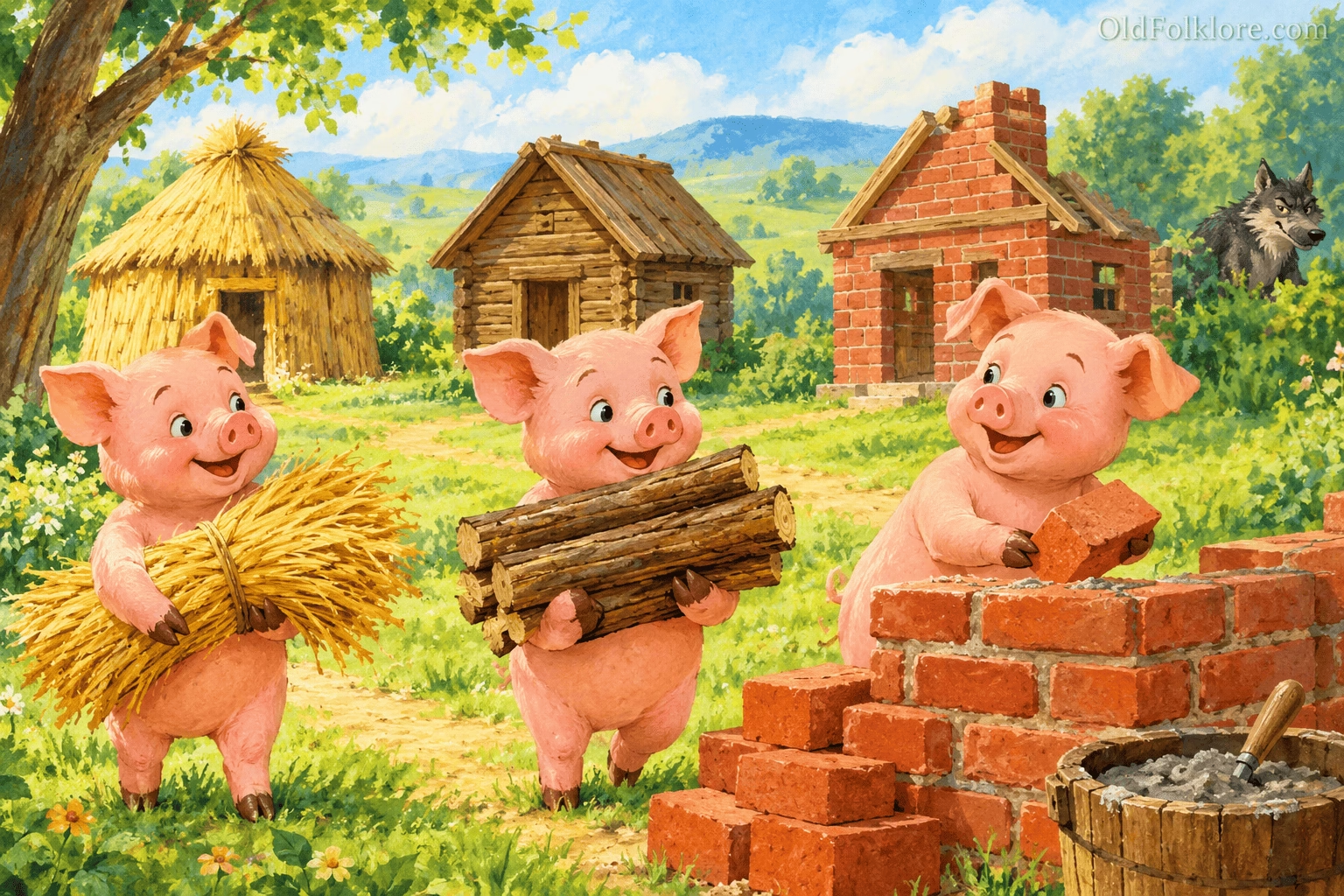
The First Little Pig and His Straw House
The first little pig had not traveled very far when he met a man carrying a bundle of straw. Seeing an opportunity to build himself a shelter, he approached the man and politely asked for the straw.
If you enjoyed this story, explore our full West African folktales collection
The man agreed, and the little pig set to work. Before long, he had made himself a house of straw. It was a quick and convenient solution, and he was pleased to have a home of his own without spending too much time building it.
But his satisfaction did not last.
One day, a wolf appeared at the door and knocked.
“Little pig, little pig, let me come in,” he called.
The little pig refused. “No, no, by the hair of my chinny chin chin!”
The wolf was not accustomed to taking no for an answer. He threatened to huff and puff until the house came tumbling down.
He drew a deep breath and blew against the straw walls. The fragile house collapsed almost immediately, leaving the little pig exposed. Before the unfortunate pig could escape, the wolf caught him and ate him.
The first brother’s journey ended there.
The Second Little Pig and His Furze House
The second little pig continued on his way, unaware of the danger that had already claimed his brother. Along the road, he encountered a man carrying a bundle of furze, a thorny shrub whose branches could be gathered for building.
The little pig asked the man for the bundle, and the man gave it to him. With the materials in his possession, the pig constructed a house of furze and settled inside, believing he had secured himself a home.
Unfortunately, the same wolf soon came looking for another meal.
He knocked at the door.
“Little pig, little pig, let me come in!”
The second pig remembered what had happened to his brother and firmly refused.
“No, no, by the hair of my chinny chin chin!”
The wolf answered with his familiar threat. He huffed and puffed, blowing against the furze house with all his strength. The walls shook, the structure weakened and, at last, the house fell apart.
The wolf seized the second little pig and ate him, just as he had eaten the first.
Now two brothers were gone, and only the third little pig remained.
The Third Little Pig Builds a Brick House
The third little pig was more careful about the home he intended to build. As he traveled, he met a man carrying a load of bricks and asked him for some.
The man gave him the bricks, and the little pig used them to construct a sturdy house. Unlike his brothers, he did not settle for a shelter that could easily be destroyed. He wanted a home strong enough to withstand whatever trouble might come his way.
Before long, the wolf arrived.
“Little pig, little pig, let me come in,” he demanded.
The third pig stood his ground.
“No, no, by the hair of my chinny chin chin!”
The wolf threatened to blow the house down. He huffed, puffed and repeated his efforts, exhausting himself in the attempt. Yet the brick walls remained standing.
No matter how fiercely he blew, he could not bring the house down.
For the first time, the wolf’s usual trick had failed. But he was not ready to abandon his plan. If he could not force his way inside, he would have to find another means of getting the little pig.
The Wolf’s Turnip Trick
After his failed attempt, the wolf pretended to have a friendly suggestion.
“Little pig,” he said, “I know where there is a fine field of turnips. They would make a delicious meal. If you are ready tomorrow morning, I will come for you, and we can go together to gather some for dinner.”
The little pig listened carefully. He knew the wolf could not be trusted, but he was clever enough to see that the offer might give him a chance to outwit his enemy.
“Where is this field?” he asked.
“It belongs to Mr Smith and is called Home-field,” replied the wolf. “I shall come at six o’clock tomorrow morning.”
The little pig agreed to go.
However, he had no intention of waiting for the wolf. He rose at five o’clock, made his way to the field and gathered the turnips before the appointed time. By the time the wolf arrived at six, the little pig had already returned home with a good supply.
“Little pig, are you ready?” the wolf called.
“Ready?” replied the pig. “I have already been there and come back with a fine potful for dinner!”
The wolf was furious. His plan had failed again, and the little pig had made him look foolish. Nevertheless, he refused to give up.
The Apple Tree at Merry-garden
The following day, the wolf devised another scheme.
“Little pig,” he said, “I know where there is a wonderful apple tree at Merry-garden. If you will come with me, we can gather some apples. I shall call for you at five o’clock tomorrow morning.”
The little pig agreed, but once again he intended to reach the destination before the wolf.
He woke at four o’clock and hurried towards Merry-garden. This time, however, the journey was longer than he had expected. He had to climb the tree to reach the apples, and gathering them took time.
Just as he was climbing down, he spotted the wolf approaching.
The sight frightened him. He was trapped in the tree, and the wolf was already on his way.
When the wolf reached the tree, he looked up in surprise.
“Little pig, what are you doing here before me? Are those apples any good?”
“Yes,” answered the little pig, trying to remain calm. “They are very good. I will throw one down for you.”
He selected an apple and threw it as far away as he could. The wolf immediately went after it, eager to retrieve the fruit.
That was the opportunity the little pig needed. While the wolf was occupied, he climbed down, ran home as quickly as he could and reached the safety of his brick house.
Once again, the wolf had been deceived.
The Fair at Shanklin and the Butter-churn
Still determined to catch the little pig, the wolf returned with another invitation.
“There is a fair at Shanklin this afternoon,” he announced. “Would you like to go?”
The little pig agreed and asked what time they should meet.
“At three o’clock,” said the wolf.
As before, the little pig left early. He reached the fair before the wolf and bought a butter-churn. Carrying his purchase, he began the journey home.
Unfortunately, he soon saw the wolf approaching.
The little pig needed somewhere to hide, and he had to act quickly. He climbed inside the butter-churn, hoping to escape notice. But as he moved about inside it, the churn began to roll.
Down the hill it went, spinning and tumbling with the little pig trapped inside.
The wolf saw the great round object racing towards him and was so frightened by the strange sight that he ran away without continuing to the fair.
When the little pig eventually returned home, the wolf came to his house and described the frightening object he had seen rolling down the hill.
The little pig could hardly conceal his amusement.
“Ah!” he said. “So I frightened you, did I? That was me. I had gone to the fair and bought a butter-churn. When I saw you coming, I climbed inside it and rolled down the hill.”
The wolf was enraged. The little pig had escaped him repeatedly, and now he had openly admitted to making a fool of him.
The wolf vowed that he would eat the pig at last. Since he could not break through the brick walls, he decided to enter through the chimney.
The Wolf’s Final Attempt
The little pig knew the wolf was determined to get inside his house, and he understood that the chimney was now a possible point of attack.
Rather than waiting helplessly, he prepared a trap.
He filled a pot with water, hung it beneath the chimney and built a blazing fire underneath it. Then he waited, watching and listening for the wolf.
The wolf climbed onto the roof and began making his way down the chimney. He believed that he had finally found a way past the brick walls that had defeated him so many times.
But the little pig was ready.
As the wolf descended, the pig removed the pot’s cover at precisely the right moment. The wolf fell straight into the boiling water.
Quickly, the little pig replaced the cover, trapping his enemy inside. The wolf could no longer escape, and the little pig had finally defeated the creature who had hunted him from the beginning.
The pig cooked the wolf and ate him for supper.
With the danger gone, the third little pig could finally enjoy the security of his home. He had lost both brothers, but his own careful building, quick thinking and determination had enabled him to survive.
And so the little pig lived happily ever after.
Love this story? Discover our full Southern African folktales collection
Moral
Build carefully, think ahead and prepare for difficulties rather than relying on the easiest solution. When trouble arrives, intelligence, patience and quick thinking can be as important as strength.
The story also warns that persistence without good judgment can lead to one’s downfall.
Knowledge Check
1. Why did the old sow send her three little pigs away?
She did not have enough resources to provide for them all, so she sent them out to seek their fortunes.
2. What materials did the three pigs use to build their houses?
The first used straw, the second used furze, and the third used bricks.
3. Why could the wolf not destroy the third pig’s house?
The brick house was strong enough to withstand his huffing and puffing.
4. How did the little pig escape the wolf at Merry-garden?
He threw an apple far away, distracting the wolf long enough to climb down from the tree and run home.
5. What frightened the wolf at the fair?
The butter-churn containing the little pig rolled down the hill towards him, frightening him so badly that he ran away.
6. How did the little pig defeat the wolf?
He placed a pot of water beneath the chimney over a blazing fire. When the wolf climbed down, he fell into the boiling water, and the pig trapped him inside the pot.
7. What is the central lesson of the tale?
Preparation, foresight and clever thinking can help someone overcome danger, while careless choices and harmful persistence can lead to disaster.
Source
James Orchard Halliwell, The Nursery Rhymes of England, fifth edition, with illustrations by W. B. Scott. London and New York: Frederick Warne and Co., 1886. The assigned tale appears as “The Story of the Three Little Pigs,” pages 37–41, beginning with the entry numbered LV in the collection’s section of tales.
Explore More African Folktales
- The Farmer’s Last Sweet Potato
- The Secret Behind the Forbidden Room
- The Girl Born From Beeswax
- The Impossible Bride Price Challenge
- The Farmer Who Traded His Horse for Rotten Apples: A Tale of Love and Trust
- Bluebeard: The Forbidden Room That Revealed a Terrible Secret
- The Bremen Town Musicians: The Grimm Brothers’ Tale of Four Animals Who Found a New Home
- The Secret of the Little Iron House