Holi is one of India’s most beloved and ancient festivals, celebrated across North and Central India and throughout the global Hindu diaspora. Known as the Festival of Colours, Holi marks the arrival of spring, the renewal of life, and the symbolic resetting of social boundaries. Although now a joyful public celebration, its roots lie in Hindu cosmology, agrarian spring rites, and classical mythology, especially the legends of Prahlada and Holika, and Krishna and Radha. These stories shaped the spiritual meaning of Holi and reveal how communities across centuries understood the drama of cosmic protection, the fire of purification, and the divine beauty of love and play.
The earliest recorded references to Holi appear in ancient Sanskrit texts, temple carvings, and medieval devotional poetry. Holi was once linked closely to first-fruit ceremonies, celebrating the moment when winter’s dormancy broke open into spring’s renewal. Through ages of cultural blending, regional adaptation, and poetic retellings, Holi became a festival in which the spiritual, social, and seasonal worlds converge.
Description
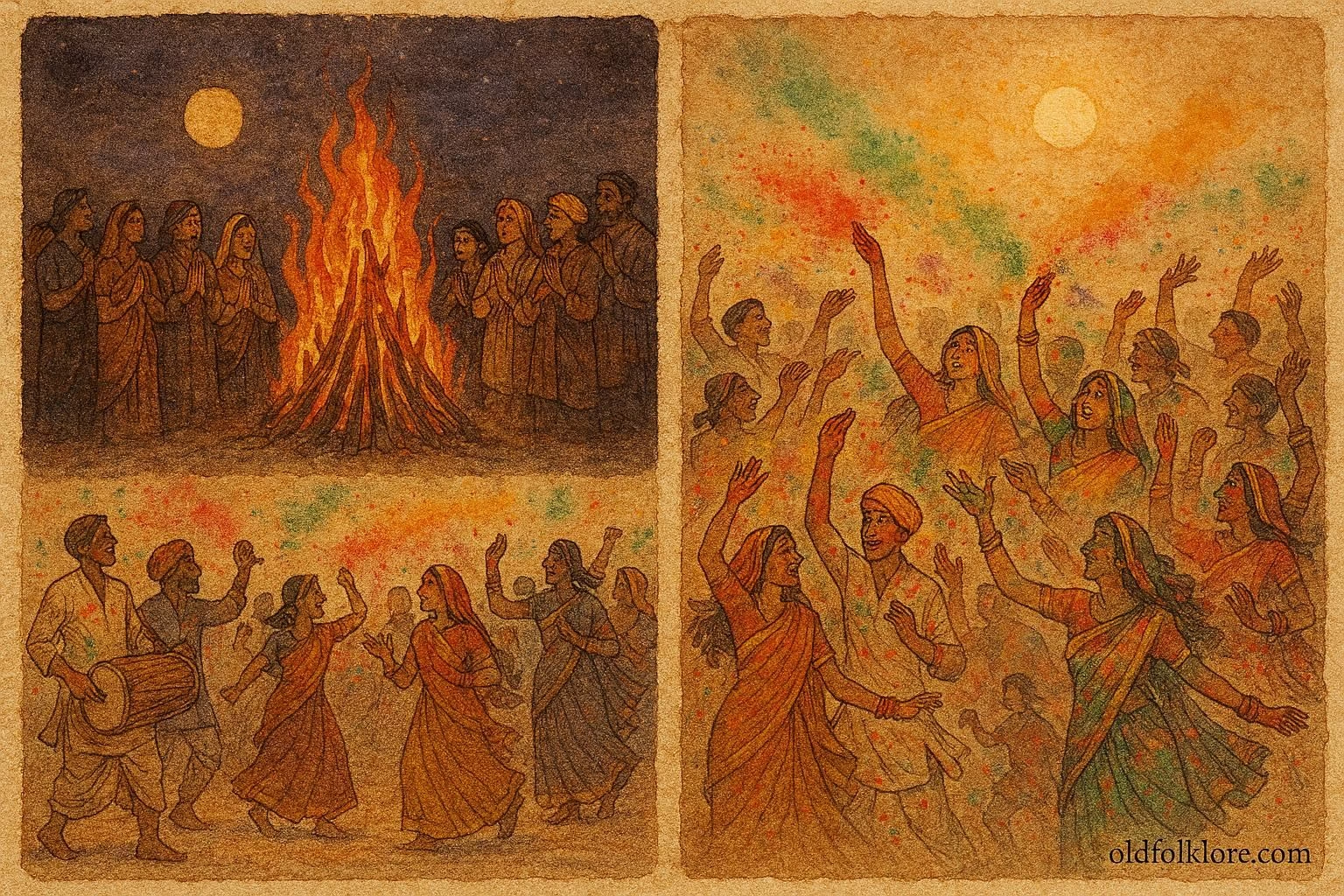
Holi unfolds in two major stages: Holika Dahan, the night of fire, and Rangwali Holi, the day of colours.
Holika Dahan: The Night of Purifying Fire
On the eve of Holi, communities gather around large bonfires built from wood, dried vegetation, and symbolic materials. These bonfires represent the mythical fire that burned Holika, the demoness who attempted to kill the devotee Prahlada. The fire is lit after sunset while people sing traditional songs. Women carry offerings of grains, coconuts, and sweets, circling the fire while praying for protection, growth, and family wellbeing.
Holika Dahan expresses two spiritual themes:
1. Purification, burning away negativity.
2. The triumph of devotion, embodied by Prahlada’s unwavering faith.
The fire also marks the transition from winter to spring. Families take embers home for symbolic protection, and children enjoy the communal warmth as storytellers recount the ancient legends.
Rangwali Holi
The following morning, streets and courtyards transform into vibrant arenas of celebration. People gather with powdered colours (gulal) and coloured water to playfully shower friends, family members, and strangers. Traditional colours were plant-based, created from turmeric, neem leaves, indigo, and flowers such as marigold. Each colour carried symbolic meaning: red for love, green for renewal, yellow for knowledge, blue for divinity.
Drums and music fill the air as communities sing folk songs, dance, and share festive sweets such as gujiya. What makes Holi socially remarkable is its ritual moment of levelling, for a few hours, distinctions of caste, class, age, and status soften. Elders playfully bless the young, friends mend disagreements, and families renew affection through colourful embraces.
Regional Variations
Holi varies widely across North India. In Barsana and Nandgaon, Lathmar Holi reenacts Krishna and Radha’s playful encounters, where women lightly tap men with ritual sticks, surrounded by music and laughter. In Braj, the heartland of Krishna devotion, Holi lasts for days, with temple ceremonies, flower-throwing rituals, and devotional singing. Outside India, the festival survives in communities across Nepal, Mauritius, Fiji, Trinidad, Guyana, and Suriname, where it is often called Phagwa, emphasizing spring’s arrival and ancestral continuity.
Holi’s practice continues to evolve in the modern world, yet its core message remains: joy, renewal, and the shared recognition of divine energy in every person.
Mythic Connection
Holi draws its spiritual power from multiple Hindu mythic traditions that together shape the festival’s meaning.
1. Prahlada and Holika
In the most prominent origin story, the young devotee Prahlada refuses to abandon his worship of Vishnu despite the wrath of his father, the demon king Hiranyakashipu. To destroy him, the king orders Prahlada to sit with Holika, a demoness who possesses a charm protecting her from fire. But the magic fails because Holika acts with malice, while Prahlada’s devotion shields him. Holika burns, Prahlada survives, and the fire becomes a symbol of divine justice and spiritual protection.
This myth shapes Holika Dahan, reminding devotees that righteousness, even in the smallest heart, prevails over tyranny.
2. Krishna and Radha
Another central myth explains the colourful play of Holi. The young Krishna, dark-skinned and mischievous, worried that fair-skinned Radha might not accept his love. His mother advised him to colour Radha’s face in any shade he wished. This playful act became the mythic seed of Rangwali Holi, celebrating affection, union, and divine play (lila).
This myth reveals the intimate love between the divine and the human, between Krishna and his devotees.
3. Agrarian Renewal
Long before these stories crystallized, Holi was linked to early spring and the harvest of new grains. The fire, colour, and communal feast symbolize rebirth, fertility, and the blessing of the fields. The festival thus reflects humanity’s ancient relationship with nature, marking the moment when the earth reawakens.
Together, these narratives weave Holi into a celebration of devotion, renewal, and cosmic love.
Author’s Note
This article presents Holi as a layered ritual rooted in myth, seasonal change, and devotional tradition. Rather than treating it as a simple celebration of colour, the article highlights the festival’s connection to ancient Hindu stories, agrarian rhythms, and social renewal. Holi’s enduring power lies in its ability to balance joy with spiritual meaning, allowing communities to celebrate divine justice, playful love, and the cyclical rebirth of nature.
Knowledge Check
1. Who is the devotee saved in the Holika story?
Prahlada, protected through his devotion to Vishnu.
2. What does Holika Dahan symbolize?
The triumph of devotion and the destruction of harmful forces.
3. Why are colours thrown during Holi?
They reflect divine play, affection, and spring’s renewal.
4. Which deities are linked to Holi’s colour tradition?
Krishna and Radha, especially in Braj.
5. What earlier meaning did Holi hold?
A springtime agrarian rite marking first fruits and renewal.
6. What is a major regional form of Holi?
Lathmar Holi in Barsana and Nandgaon.