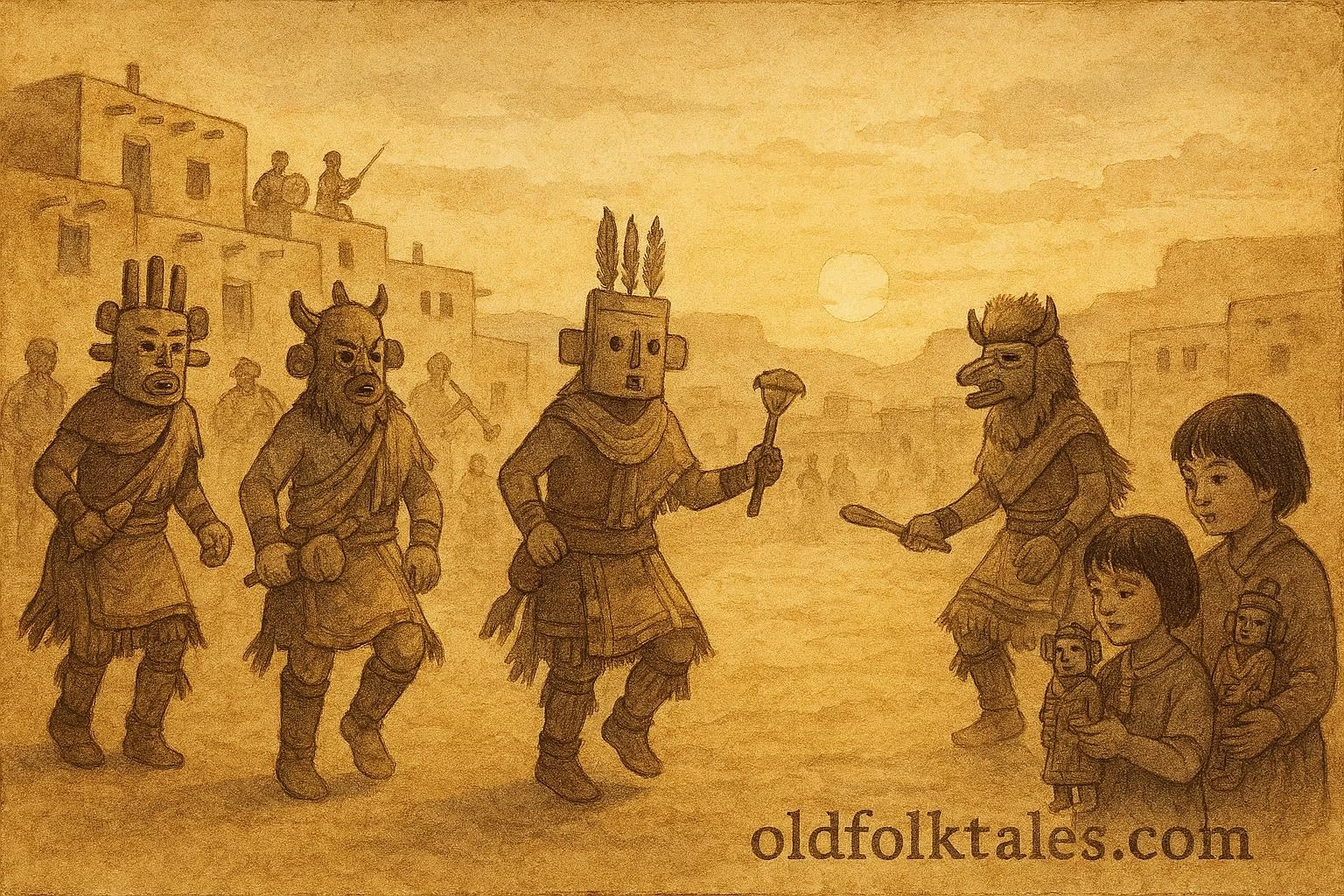
Among the Hopi, a constellation of ritual practices gathered under the name katsina (often rendered “kachina” in older literature) forms the backbone of seasonal life. Katsinam are spirit-figures, ancestral, elemental, or guardian beings, whose presence the Hopi invoke through masked dancers, carved dolls, songs, and ceremonial cycles that map to the agricultural year. In village plazas and kivas, men of certain societies don layered masks and regalia to embody particular katsina; they dance, instruct children, bless fields with prayers and offerings, and carry out rites of initiation and social teaching. Katsina carvings, small painted dolls given to girls and boys, teach children the forms and names of the spirits, so that the community’s memory and relationship with the unseen world are continually renewed.
Katsina season, broadly speaking, spans the late winter and spring into early summer: dancers arrive in neighborhood processions, visit households, and perform in public gatherings where rain, fertility and the health of crops are the prominent concerns. Some katsinam are benign providers, rain-bringers, nurturers, or messengers, while others are chastening figures who enforce social norms. The ceremonies combine music (drumming and flutes), call-and-response songs, choreography, and ritual speech. Many elements, costume, song texts, choreography, are lineage- and village-specific; community protocols determine who may perform, who may view certain rites, and how sacred objects are treated.
Mythic connection
Katsinam are not merely symbolic: within Hopi cosmology they belong to a living order that intersects human affairs. Creation narratives and origin songs describe the migration of peoples into this high plateau, the covenant between humans and spirit-helpers, and the mutual obligations that maintain the balance of life. Rain, the central life-giving force in the semi-arid Hopi homeland, is a frequent focus: katsinam carry, call, and enact the agency of clouds and waters in forms intelligible to the human community. The dances are a form of enactment, myth retold in movement, whereby the community renews its compact with those powers that govern fertility and abundance.
Initiation and pedagogy are also mythically charged. Boys who receive katsina dolls learn the names and manners of the spirits; young men who enter particular societies undergo instruction in ceremonial roles and responsibilities. These rites reiterate a wider worldview: that humans and non-human persons co-participate in the cosmos, that moral conduct and ritual competence preserve the flow of blessings, and that lineage and land are bound by reciprocal duty.
Practice and symbolism
Practically, katsina ceremonies link the village’s calendar to its livelihood. In early spring, when planting decisions are made, dancers appear to bless fields and pray for timely rains. At home visits, katsinam offer blessings to families, health for infants, protection for the elderly, moral admonition for errant behavior. Public dances dramatize myths: migration songs, world-renewal narratives, and dramatized negotiations with spirits.
Material culture matters. A katsina’s mask, carved and painted with specific iconography, signals its identity. Regalia, textiles, feathers, rattles, carries encoded meaning about its role: whether a rain-bringer, a hunting guardian, or a social corrector. Katsina dolls (tithu) are pedagogic objects: they are given to children to learn recognition and respect for the spirit world, and to remind the living of the community’s obligations. The act of gift-giving itself reinforces bonds of reciprocity.
Socially, the ceremonies are integrative: they gather households, clans, and villages into shared performance. They are also regulatory, the presence of certain katsinam can enact social correction, reinforcing norms through dramatized sanction. Yet their primary significance remains restorative: invoking katsinam renews life-cycles, reaffirms identity, and situates Hopi people within a cosmological order that demands humility and care.
Continuity and contemporary context
Katsina practice endures but adapts. Some ceremonies remain tightly regulated by village authorities, while public performances for visitors carefully observe boundaries that protect sacred knowledge. Museums and scholars have documented masks and songs, but Hopi leaders have repeatedly emphasized the importance of local control: not all aspects of katsina life are for public view. Contemporary Hopi continue to teach katsina names and songs to children, balancing cultural transmission with sensitivity to outside audiences and tourism pressures. In so doing they maintain an ethic: katsinam are not mere spectacle but the living grammar of a people’s relationship with land, ancestors, and the weather.
Author’s Note
This entry aims to present the Hopi katsina complex respectfully and accurately, while recognizing that much of its power and meaning lives in village contexts and oral instruction. I have not reproduced restricted ritual texts or private ceremonial details, those remain under Hopi stewardship. The katsina tradition teaches a durable lesson: ritual is both practical and moral, a way communities remain aligned with the weather, one another, and the unseen orders that sustain them.
Knowledge Check
Q1: What is a katsina (kachina)?
A katsina is a spirit-being in Hopi cosmology represented by masked dancers, dolls, songs, and rituals that mediate blessings like rain and social order.
Q2: When are most katsina ceremonies held?
Katsina season commonly runs from late winter into spring and early summer, aligning with planting and rainfall cycles.
Q3: What role do katsina dolls (tithu) play?
Dolls are pedagogic tools given to children to teach the identity, names, and proper respect for specific katsinam.
Q4: How do katsina ceremonies reflect Hopi relationships with nature?
They enact reciprocal bonds: humans honor katsinam who in turn bring rain and fertility, reflecting a worldview of interdependence with elemental forces.
Q5: Are all aspects of katsina practice public?
No, many katsina rites and songs are village-restricted. Community authorities control public access to protect sacred knowledge.
Q6: How have contemporary pressures affected katsina traditions?
Hopi communities manage tourism and scholarly interest by delineating what may be shared publicly, maintaining elders’ authority over transmission and ritual correctness.