
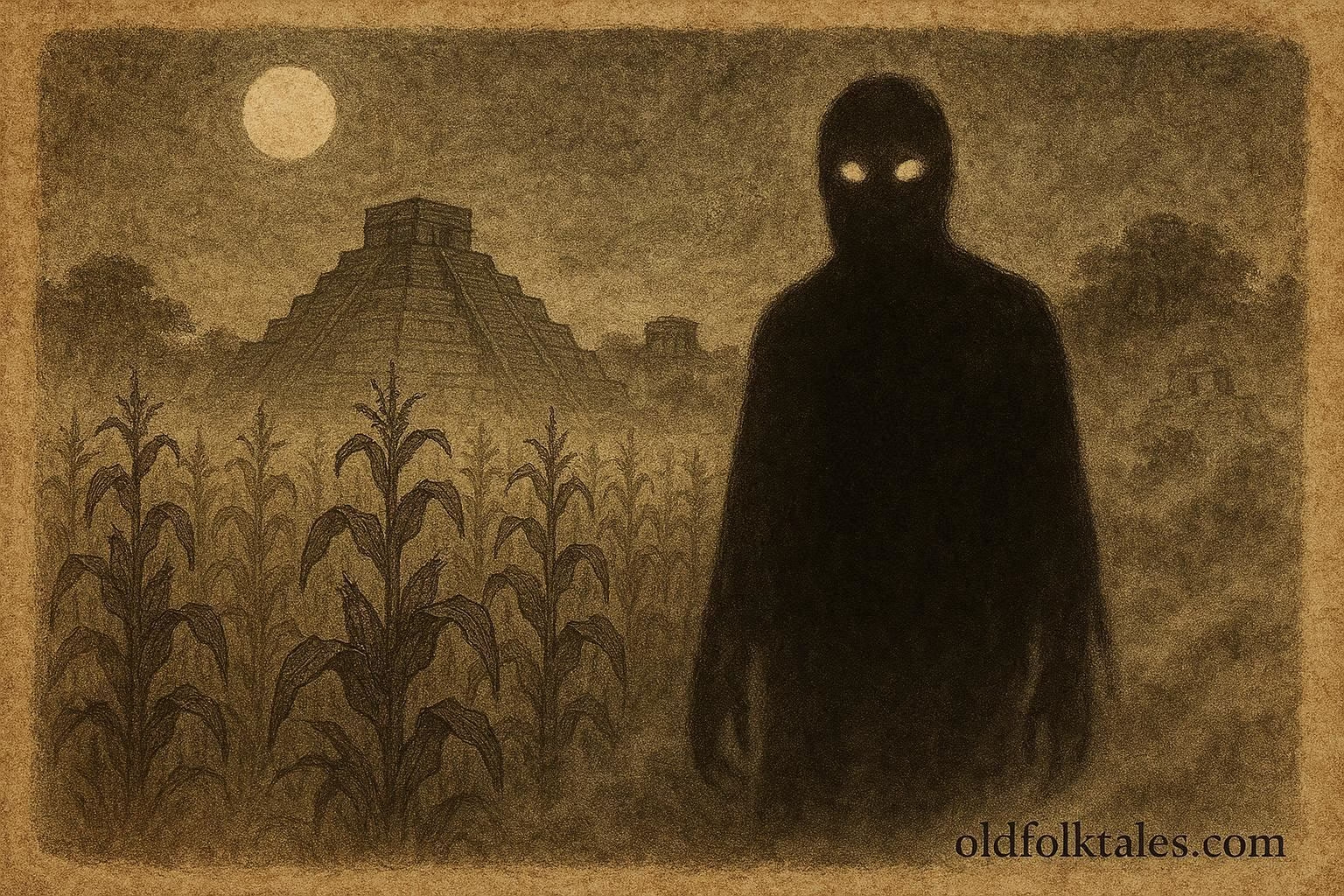
In the deep nights of the Yucatán Peninsula, when the moon glowed pale above the slow moving cornfields and the faint hum of insects carried across the land, villagers spoke of the Huay Chivo. The spirit was said to appear only when humans forgot the reverence owed to the earth and to the wisdom of their ancestors. Some claimed it walked like a man by day yet roamed like a beast by night, its eyes burning with the fire of ancient magic. Others whispered that it was neither man nor animal but a union of both, born from forgotten covenants between humans and the unseen forces of the natural world.
The oldest elders taught that the Huay Chivo was once a powerful sorcerer who had mastered the ways of transformation. Through ritual and sacrifice, he learned to shed his human shape like a cloak and roam the plains with the speed and strength of a beast. Yet such mastery demanded balance. For every power taken from the spirit realm, a duty had to be upheld in return. The sorcerer had vowed to guard the land from exploitation and to walk the boundary between the living and the supernatural. Over generations, his name and form blended into a legend. What remained was the Huay Chivo, both protector and punisher.
The tale was often told to the young, especially during the time when corn was newly planted. The maize fields were sacred, gifts from the gods whose teachings guided the Maya for centuries. Each row had to be blessed and offerings placed at the edge of the land, acknowledging the spirits that watched over the cycles of growth and decay. Those who ignored these customs risked more than a poor harvest. They risked calling upon the Huay Chivo.
Encounter dragons, spirits, and beasts that roamed the myths of every civilization
One season, a young man named Iktan arrived in the village. He was clever and confident, known for boasting about how he could achieve anything without the rituals the elders held dear. He mocked the offerings to the spirits and laughed at the warnings whispered by the grandmothers. To him, corn was simply corn, and the earth was merely soil waiting to be used. When he inherited a plot of land on the outskirts of the village, he decided to sow it without the traditional blessings.
The villagers watched with unease. The fields where Iktan worked bordered a forest known for its silence. No birds sang there, no breeze stirred its leaves. It was said that the Huay Chivo walked those shadows, waiting for arrogance to ripen like fruit.
One night, as Iktan returned home from a long day of working his field, he felt the air thicken around him. The path grew dim although the moon shone bright above the treetops. A strange rustling followed him, soft at first and then louder, as if heavy feet trampled the ground behind him. He quickened his pace. The rustling continued. When he glanced over his shoulder, he saw two burning red eyes staring from the edge of the forest.
He froze. The eyes rose higher, emerging from the shadows until the outline of a tall beast appeared. It moved with the grace of a human yet carried the raw power of an animal. Its breath came in low huffs that seemed to shake the night air. Iktan tried to speak but found his voice trapped in his chest.
The creature approached with slow steps. When it reached the moonlit path, its form was fully visible. It had the legs of a beast, the torso of a man, and the flaming eyes of a spirit born from forgotten rituals. It was the Huay Chivo.
The spirit circled him, studying him with a gaze that seemed to pierce his thoughts. The elders said the Huay Chivo could see the truth that humans hid from themselves. It saw pride, greed, and the careless way Iktan treated the land entrusted to him. Its voice, when it spoke, was neither a growl nor a whisper but something that echoed from deep within the earth.
You have taken from the land without giving, the spirit said. You have sown without honoring the guardians who protect your harvest. You have broken the balance.
When the Huay Chivo stepped closer, Iktan felt the heat of its burning eyes on his skin. His pride drained away, leaving only fear and regret. He fell to his knees and begged for forgiveness. The spirit watched in silence, then lifted one clawed hand and pressed it to the earth. The ground trembled softly.
Return to your field with humility, the spirit said. Restore what you have neglected. Honor the spirits of the land and protect what has been entrusted to you.
With that, the Huay Chivo vanished into the forest, leaving behind only the faint scent of smoke and the echo of its warning.
At dawn, Iktan gathered elders and asked them to teach him the rituals he had ignored. Together they blessed the field, offered maize and incense, and spoke the names of the ancestors. From that day onward, Iktan tended the land with respect, and the harvest grew strong and golden.
The villagers said that the Huay Chivo watched from afar, its eyes glowing only when needed. Some nights, when the moon shone bright and the wind carried the scent of ripe maize, people claimed they saw a shadow moving along the cornfields, ensuring that balance remained unbroken.
Explore the shadows of world mythology, where demons test the soul and spirits watch over mankind
Author’s Note
The Huay Chivo teaches that the land remembers how it is treated. Respect for tradition protects communities, and harmony with nature sustains life across generations.
Knowledge Check
-
What does the Huay Chivo represent in Maya tradition?
It represents a guardian spirit enforcing respect for the land. -
Why did the villagers worry about Iktan’s behavior?
He ignored sacred rituals and disrespected ancestral teachings. -
What sign first warned Iktan that a spirit was following him?
He heard rustling and saw glowing red eyes. -
What lesson did the Huay Chivo teach Iktan?
That balance with nature must be upheld through humility and respect. -
How did Iktan restore harmony with the land?
He performed traditional rituals with the elders and tended his field properly. -
Why do villagers believe the Huay Chivo still roams near the fields?
To ensure balance and protect the land from neglect.









