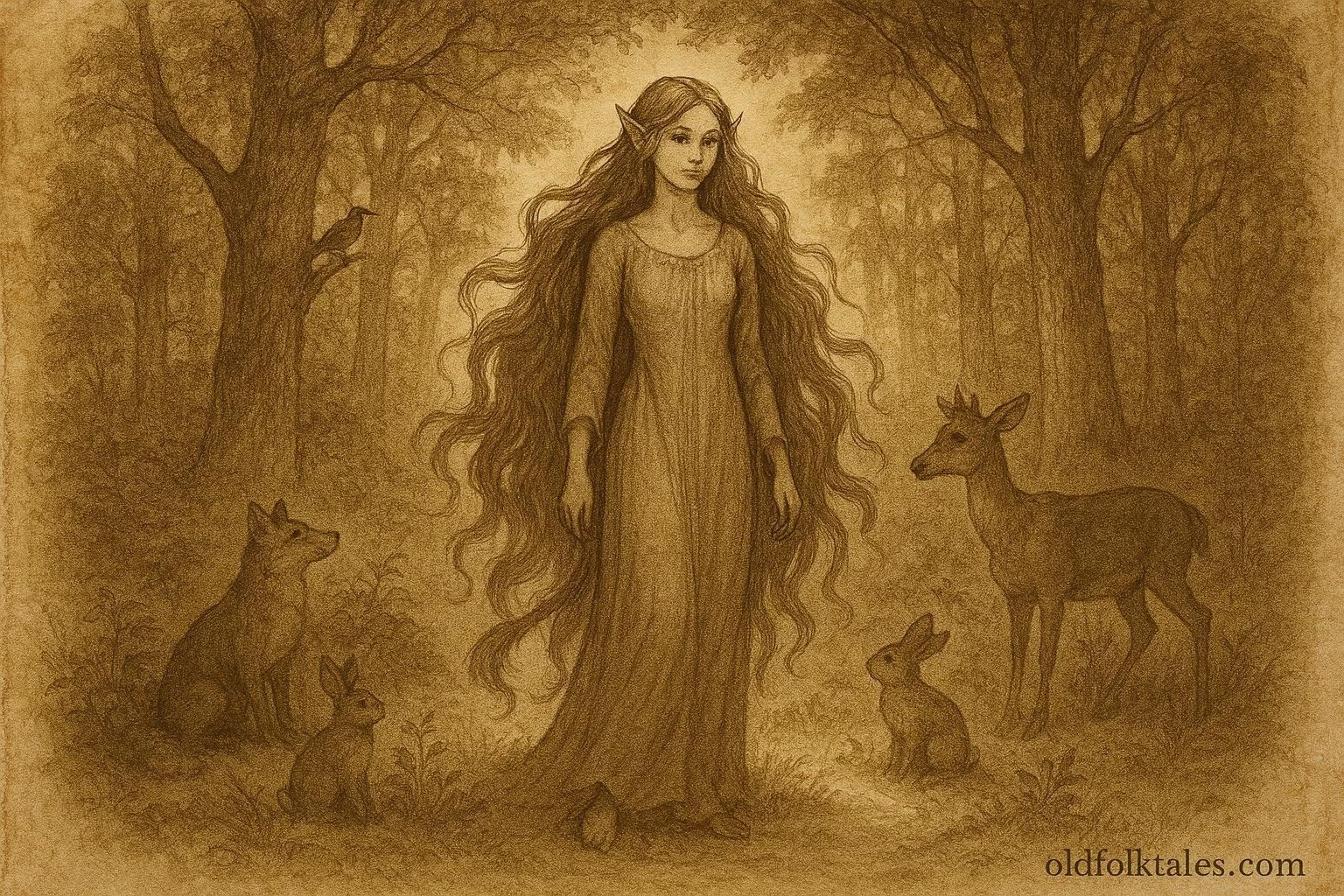
The Huldra (Norwegian) or Huldr / Skogsrå (Swedish) is a legendary forest spirit renowned for her bewitching beauty, mysterious nature, and deep connection to the wilderness. Tales of the Huldra are widespread across Scandinavia, where she is said to inhabit forests, mountains, and river valleys. She embodies the duality of nature itself: enchanting yet dangerous, alluring yet morally instructive, benevolent yet capable of severe punishment.
Appearance
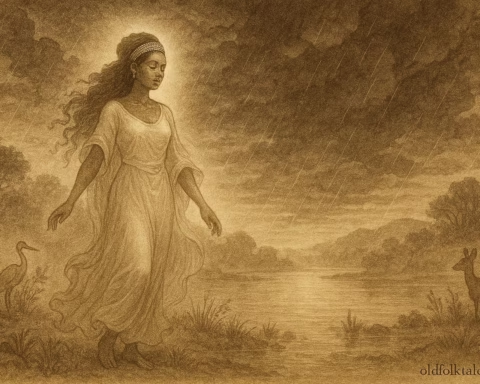
The Huldra’s beauty is often described as strikingly human, with flawless skin, flowing hair, and alluring eyes. She is typically depicted as:
- Tall and slender, with elegance and poise beyond that of mortal women.
- Wearing clothing that blends with the forest, often made of leaves, moss, or fine forest fabrics.
- Occasionally adorned with natural jewelry like amber or small animal bonesin folk tales.
Journey through the world’s most powerful legends, where gods, mortals, and destiny intertwine
However, her supernatural origin is revealed by subtle yet unmistakable features:
- Cow’s tail: Hidden beneath her garments, sometimes revealed to teach a moral lesson or as a warning of her supernatural identity.
- Bark-back (variant): In some tales, her back resembles tree bark, emphasizing her deep connection to the forest.
- Shapeshifting abilities: She may appear completely human to those she seeks to test or seduce but can manifest partial animal traits or forest-like characteristics.
Her appearance is both alluring and liminal, representing the hidden dangers of the wilderness and the blurred boundary between human and natural realms.
Behavior and Powers
The Huldra exhibits a complex range of behaviors, which vary according to the tale and region:
- Protector of the Forest:
- She often rewards hunters, woodcutters, or travelers who respect the forest, guiding lost wanderers or helping those in need.
- Some stories depict her guarding hidden glades or sacred trees, punishing those who destroy or exploit them.
- Seductive Temptress:
- Many tales warn of the Huldra’s ability to lure young men with her beauty, sometimes causing misfortune if their attention is purely carnal.
- In some versions, she marries human men who prove themselves morally upright, illustrating reward for virtue combined with respect for nature.
- Shapeshifting and Magical Influence:
- She can appear as a fully human woman, partially forest-animal hybrid, or entirely supernatural entity.
- She may control forest creatures, summon storms or fog, and vanish instantly, demonstrating her command over the natural realm.
- Knowledge and Healing:
- Some tales depict the Huldra as imparting secret forest knowledge, herbal remedies, or magical insight, particularly to those she favors.
The Huldra’s duality is central: she punishes moral failings or disrespect, but she rewards virtue, reverence, and courage, embodying the ethical lessons of forest life in Scandinavian oral culture.
Myths and Cultural Beliefs
- Forest Guardianship:
- Huldra legends served as a warning and guidefor rural communities interacting with forests for hunting, wood-gathering, or foraging.
- Tales remind people that forests are alive with unseen beings who enforce the natural order.
- Moral Instruction:
- Stories emphasize sexual propriety, respect, and humility. Young men lured by desire or hubris might vanish, illustrating the consequences of temptation and recklessness.
- Seasonal and Environmental Symbolism:
- Her appearance often coincides with natural cycles: long winter nights, midsummer, or times when forests were most dangerous for travel.
- Some tales suggest that encountering a Huldra during certain times could bless the community with abundant game or warn of natural dangers.
- Regional Variants:
- Huldra (Norway): Forest woman with a cow’s tail; protector and tester of humans.
- Skogsrå (Sweden): Emphasis on seduction, sometimes a teacher to skilled hunters or musicians; can be morally ambiguous.
- Aspects in Denmark & Iceland: Less common, but similar “forest woman” figures appear in coastal or mountain forests.
- Ritual and Folk Practice:
- Although Huldra were not central to organized ritual, communities often left small offerings of bread, milk, or tobaccoin forest clearings to gain her favor or avoid her wrath.
- Some tales integrate her into folk dances and songs, immortalizing her beauty and cautionary lessons in community memory.
Symbolism
The Huldra embodies several key cultural and moral concepts:
- Nature’s Duality: Beauty coexists with danger; forests are life-giving but morally and physically hazardous.
- Feminine Power: The Huldra reflects societal attitudes toward female allure, seduction, and hidden power, warning against hubris or lust.
- Ethical Vigilance: Tales reinforce honesty, humility, and respect, especially in human interactions with nature.
- Liminality and Mystery: Her hidden tail or bark-back signals that surface appearances are deceptive, teaching discernment and caution.
- Protection and Reciprocity: She rewards reverent, ethical behavior, illustrating that benefit flows from respect for nature and its guardians.
Cultural Role
The Huldra functions as both a moral and ecological agent in Scandinavian folklore:
- Moral Lessons: Emphasizing virtue, sexual propriety, and humility.
- Environmental Ethics: Encouraging care and reverence for forests and wildlife.
- Storytelling and Community Memory: Tales of the Huldra enriched oral culture, music, and artistic expression, forming part of Norway and Sweden’s intangible heritage.
- Literary Inspiration: Huldra legends appear in 19th-century collections (Asbjørnsen & Moe), 20th-century fiction, and modern fantasy, preserving traditional motifs while adapting them for new audiences.
The Huldra’s persistence demonstrates how folklore encodes ecological knowledge, social norms, and spiritual belief, making her a vital part of Scandinavian mythological heritage.
Explore the mysterious creatures of legend, from guardians of the sacred to bringers of chaos
Author’s Note
The Huldra represents more than a supernatural seductress. She embodies the complexity of human interaction with the wild: ethical, environmental, and spiritual. These tales were practical, entertaining, and instructive, teaching communities how to navigate and respect the forests that sustained them. Studying the Huldra reveals a rich moral ecology where folklore, nature, and social ethics intersect.
Knowledge Check (Q&A)
- Q: What is the Huldra’s most distinctive trait?
A: A hidden cow’s tail or bark-like back, revealing her supernatural identity. - Q: Where does the Huldra dwell?
A: Deep forests, mountains, and river valleys in Norway and Sweden. - Q: What dual roles does the Huldra play?
A: She can reward respectful humans or punish the reckless and disrespectful. - Q: Which supernatural abilities does she possess?
A: Shapeshifting, controlling forest elements, seduction, healing, and magical knowledge. - Q: What moral concepts does she embody?
A: Respect for nature, vigilance, humility, and the consequences of hubris or desire. - Q: How do regional variants differ?
A: Norwegian Huldra emphasizes forest guardianship; Swedish Skogsrå often highlights seduction or teaching hunters.
Source: 19th-century Scandinavian ethnography; folktale collections by Asbjørnsen & Moe
Origin: Norway and Sweden; pre-Christian and early modern Scandinavian folklore, especially rural forest traditions