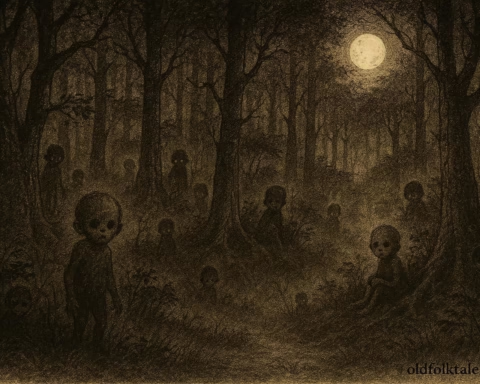
The Hungry Ghost Festival, also known as Zhongyuan or Yulan, originates in China, arising from a fusion of Buddhist cosmology, Daoist ritual, and longstanding ancestral veneration. Celebrated on the 15th night of the seventh lunar month, traditionally called the “Ghost Month”, this festival marks a time when the boundaries between the living and spirit worlds thin, allowing wandering spirits to visit the human realm. It reflects a syncretic worldview that blends ethical accountability, communal cohesion, and respect for ancestral and other unseen forces.
Description
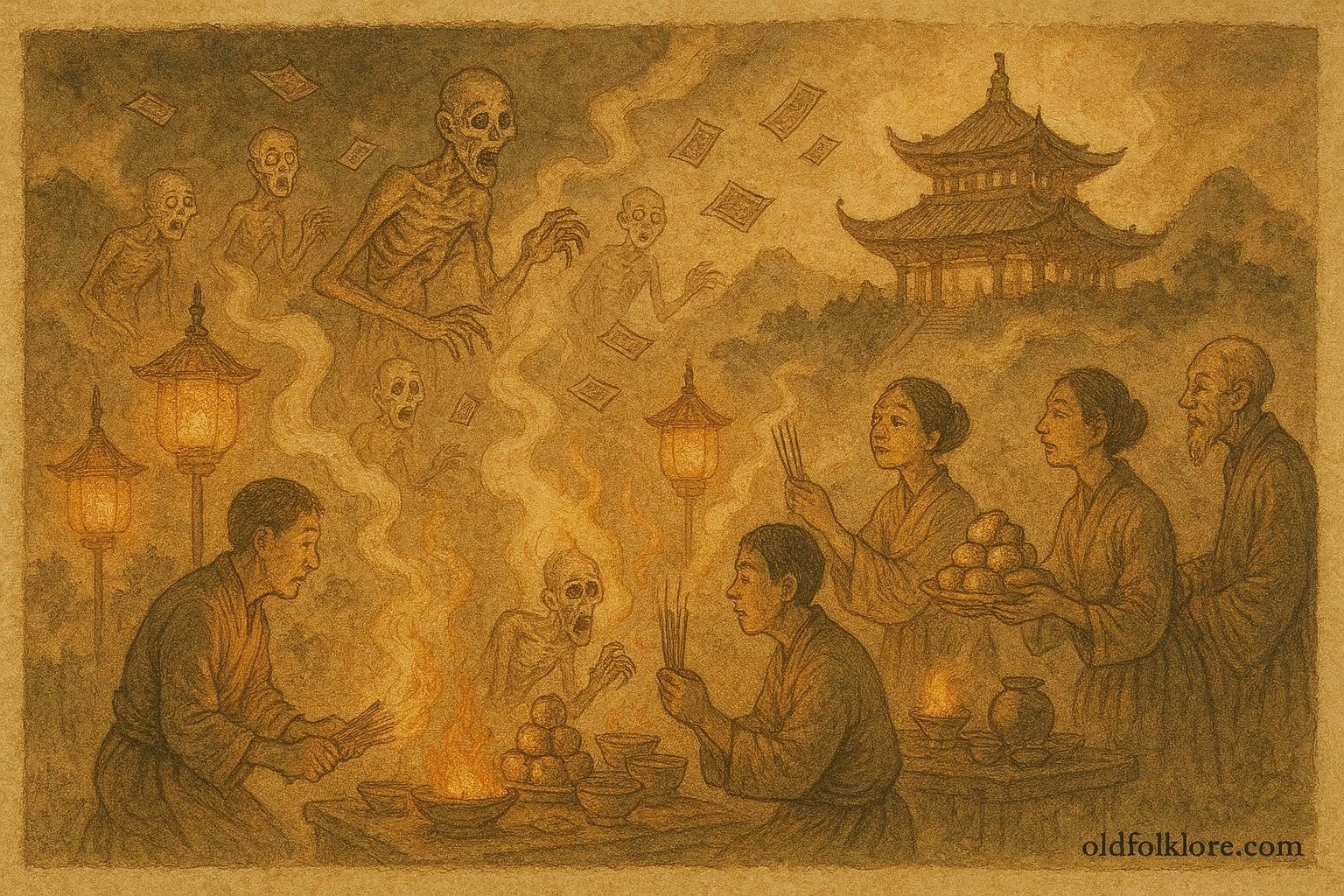
The festival is an intricate tapestry of domestic, communal, and temple-centered rituals. Families establish temporary altars in their homes or courtyards, adorned with offerings such as rice, fruits, and favorite dishes of deceased relatives. Incense is burned continuously, and joss paper—symbolic currency and goods for the afterlife, is offered to nourish wandering spirits. Spirit lamps are lit to guide spirits safely through the temporal realm, illuminating the thin veil between life and death.
Communities often host performances, including traditional Chinese operas, puppet shows, and street theater, deliberately staged for the entertainment of the ghosts. These performances serve a dual purpose: they honor and placate restless spirits while reinforcing moral narratives and communal solidarity. Temple priests or monks may conduct sutra recitations, chanting prayers to secure blessings and ward off misfortune caused by neglected spirits.
Regionally, practices vary. In Hong Kong, grand outdoor ceremonies dominate, with massive lantern displays and ritual feasts. Taiwanese communities emphasize ritual performances and public offerings, while mainland China integrates both Buddhist and Daoist liturgies with folk customs. Across all variations, the festival’s focus is consistent: offering sustenance, acknowledging ancestral influence, and restoring social and spiritual harmony.
Mythic Connection
The festival embodies a profound cosmological and moral framework. Buddhist teachings on karma, rebirth, and the realms of hungry spirits converge with local ancestral cults. Ghosts are seen as both morally accountable and morally influential: the misdeeds of the living or neglect of ancestral duties may leave spirits restless, potentially causing misfortune.
Daoist cosmology adds another layer, framing the universe as a complex network of spirits, deities, and human agents whose actions ripple across planes of existence. Through ritual offerings, humans repair the moral fabric and demonstrate filial piety, ensuring that ancestors and wandering souls are cared for. By feeding and entertaining ghosts, participants maintain cosmic equilibrium, illustrating a worldview where social order, ethics, and the unseen world are intimately connected.
Spiritual and Social Significance
Spiritually, the festival emphasizes moral vigilance, respect for ancestors, and acknowledgment of the unseen forces that govern life. The act of feeding ghosts expresses filial duty, humility, and ethical consciousness, underscoring the belief that humans are accountable not only to the living but also to the departed.
Socially, the festival reinforces communal cohesion. Public offerings, performances, and collective observances foster shared responsibility and mutual care. Rituals act as moral theater, dramatizing the consequences of neglecting duty, dishonesty, or social disunity. Even the youngest participants learn cultural ethics, linking generational continuity with spiritual practice.
Through ritual, the festival embodies the principle that human prosperity and social stability depend upon the respectful acknowledgment of ancestral and spiritual presence. In modern communities, the Hungry Ghost Festival continues to balance reverence, entertainment, and ethical reflection, connecting historical cosmology to contemporary cultural identity.
Author’s Note
The Hungry Ghost Festival is a living testament to China’s intricate cosmology and its syncretic spiritual heritage. By honoring ancestors and attending to wandering spirits, communities create ethical, social, and spiritual continuity. The festival’s endurance reflects its ability to adapt while preserving core values: filial piety, communal harmony, and moral accountability. Observing this festival today allows participants to engage with centuries of layered cosmological wisdom, connecting past, present, and spirit worlds in a single, vivid temporal frame.
Knowledge Check
-
What is the primary date of the Hungry Ghost Festival?
Answer: The 15th night of the seventh lunar month. -
Which spiritual traditions influenced the festival?
Answer: Buddhism, Daoism, and Chinese ancestral veneration. -
What is the purpose of joss paper offerings?
Answer: To provide spirits with symbolic money and goods in the afterlife. -
How do community performances contribute to the festival?
Answer: They entertain spirits, reinforce moral order, and strengthen communal bonds. -
What moral or ethical lesson does the festival convey?
Answer: That humans are accountable to both ancestors and living communities, emphasizing filial duty and ethical behavior. -
Why are spirit lamps used during the festival?
Answer: To guide spirits safely and illuminate the thin boundary between worlds.