The Iele are a class of invisible or semi-visible female spirits in Romanian folklore, known primarily for their supernatural dances, which are simultaneously alluring, enchanting, and potentially dangerous to humans. Often appearing in 19th-century folk ballads collected by Alecsandri and in ethnographic field notes by Hasdeu, the Iele embody a liminal intersection of nature, ritual, and moral order.
Appearance
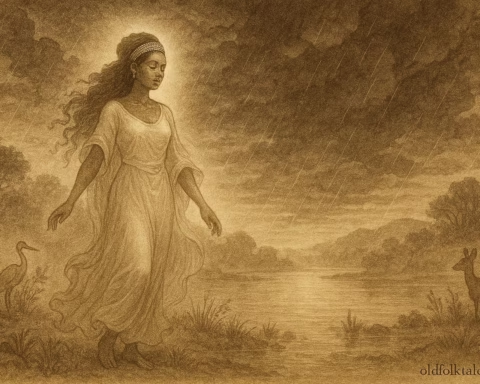
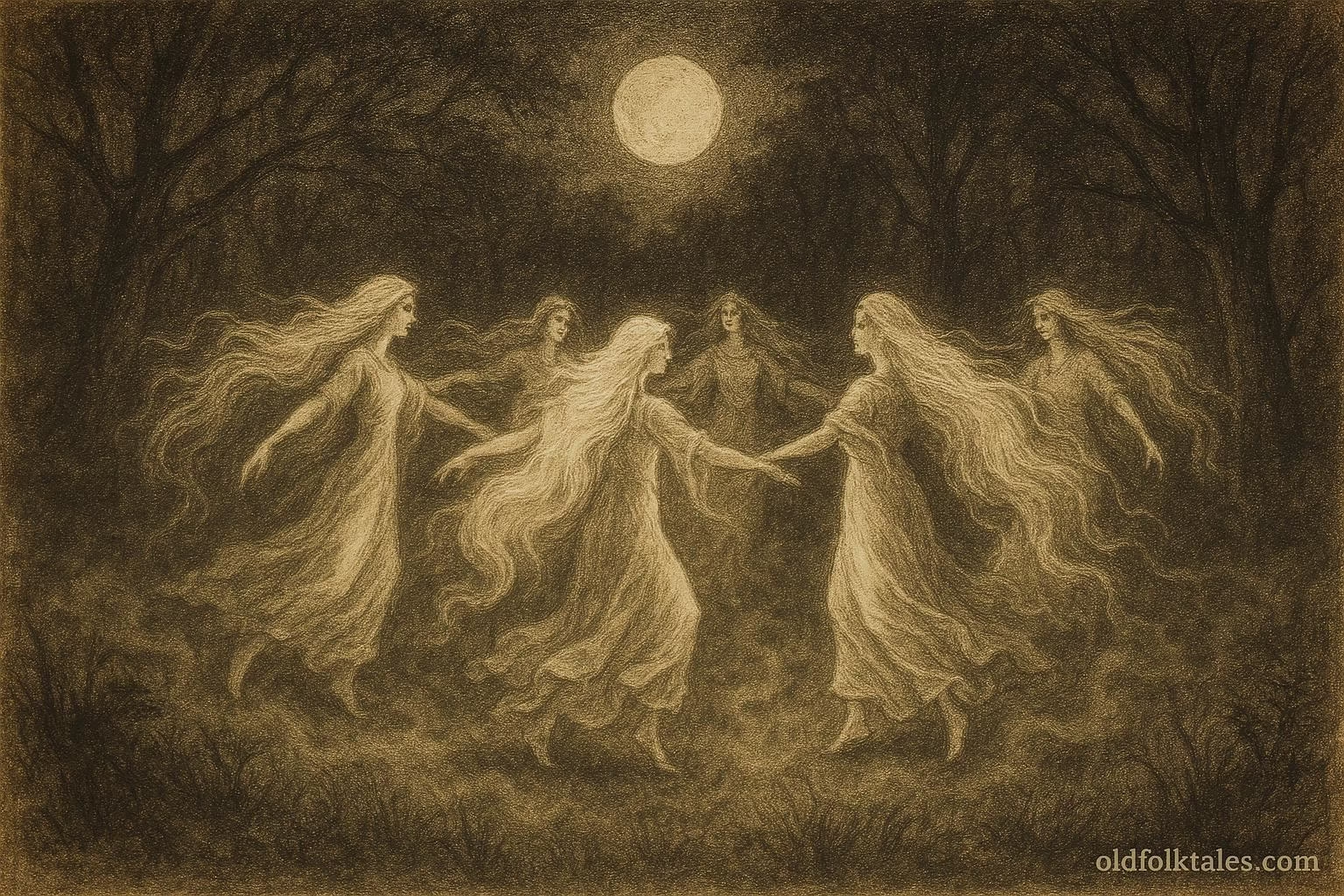
Iele are typically described as beautiful, otherworldly women with luminous skin, flowing hair, and ethereal garments that shift and shimmer in the moonlight. Their semi-visible or invisible nature means that human perception is often incomplete or distorted:
- Sometimes, they are seen as shadowy figures dancing in circles or on hillsides at night.
- Ethnographers report flashes of bright clothing or glowing hair, giving the impression of movement and light without a fully tangible form.
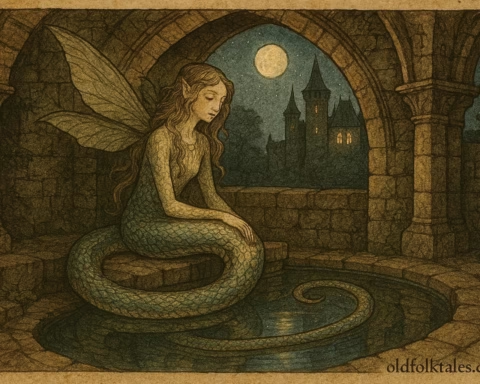
- Legends sometimes describe them as winged or with flowing veils, highlighting their supernatural origin.
Journey through the world’s most powerful legends, where gods, mortals, and destiny intertwine
In local tales, attempting to look directly at them or approach their circle is dangerous, humans may be enchanted, struck with illness, or even die.
Behavior and Powers
The Iele’s primary activity is dance, which can be either benign or harmful:
- Harmful effects:
- Humans who stumble into their nocturnal circles (cântări / hora) may be enchanted, paralyzed, or driven to madness.
- They may strike humans with illness, infertility, or death, particularly if someone breaks taboos (watching, mocking, or interrupting their dance).
- Forests, meadows, or riverbanks where they dance are sacred or dangerous zones in folklore.
- Beneficial or ambivalent effects:
- Respecting the Iele, offering gifts, or avoiding their ritual spaces can lead to blessings or protection from misfortune.
- Some tales suggest that talented humans who witness their dance indirectly may gain poetic, musical, or prophetic inspiration.
- Supernatural attributes:
- They are often associated with night, moonlight, and liminal spaces.
- Their dances form circular motifs, echoing the traditional hora and representing cyclical, cosmic, and seasonal rhythms.
- Iele are sometimes linked to water or forest spirits, blending local pagan motifs with Christianized interpretations (e.g., appearing on Rusalii / Pentecost Monday).
Myths and Narrative Themes
Iele occupy a dual role in Romanian myth:
- Cautionary figures: They enforce social and ritual taboos, particularly respect for night rituals, sacred places, and seasonal observances.
- Agents of fertility and disease: Their presence intersects with human health, agricultural cycles, and reproductive concerns, reflecting a deeply rooted cosmology where human life is entangled with unseen forces.
- Moral lessons: Humans who act arrogantly, recklessly, or disrespectfully toward nature and ritual are punished; those who honor boundaries or observe ritual proprieties are spared or blessed.
Notable in Alecsandri’s ballads are stories of young men who spy upon the Iele’s dance and are struck blind, maimed, or otherwise punished, reinforcing the motif of invisible moral oversight. Hasdeu’s ethnographic notes also link them to rural dance-rituals, demonstrating a continuity of folk practice and poetic representation.
Cultural Role
The Iele occupy several interrelated roles:
- Ritual guardians:
- They enforce community taboos around sacred spaces and seasonal festivals.
- Appear prominently around Rusalii (Pentecost), spring festivals, and solstice celebrations, connecting folklore with seasonal rhythms and agrarian life.
- Inspirational figures for art and poetry:
- Alecsandri’s and Hasdeu’s work show how Iele inspired folk poetry, ballads, and musical motifs, representing the intersection of oral culture and literary codification.
- Personifications of natural phenomena:
- The Iele’s nocturnal dances symbolize the unseen energies of night, wind, and fertility, offering a folkloric framework for understanding environmental cycles.
- Social function:
- The Iele operate as cautionary figures teaching respect for rules, taboos, and communal harmony.
- Stories of human encounters serve as narrative reinforcement of morality and ritual observance.
Symbolism
- Dance and circle: Their circular dances symbolize continuity, cosmic order, and ritual time.
- Danger and beauty: Iele embody the dual nature of attraction and peril, teaching humans about moderation, respect, and humility.
- Nature-human reciprocity: By rewarding or punishing humans, they highlight interconnectedness with the natural and spiritual world.
- Seasonal and agricultural rhythms: Their appearances around Pentecost and other calendar points integrate folk cosmology with practical life cycles.
Variant Notes
- Names and local forms vary: iele, zâne, rusalii, depending on region and source.
- Some traditions link them to pre-Christian water or forest spirits, while others overlay Christianized ritual interpretations.
- Specific tales differ by county: in Oltenia, they are particularly feared as witch-like figures, whereas in Moldavia, stories emphasize aesthetic allure and enchantment.
Authenticity Assessment
- Strong presence in ballads and ethnographic documentation: Alecsandri (19th c.) and Hasdeu provide primary poetic and field-based evidence.
- Consistent across multiple sources: Variants are coherent in theme and function, demonstrating regional folkloric continuity.
- Cross-cultural links: Similar motifs appear in neighboring Slavic and Balkan traditions, reinforcing Central and Eastern European fairy lore continuity.
Transcription / Translation Notes
- Original Romanian: iele; plural retained in English transliteration.
- Variant names (zâne, rusalii) reflect regional lexical differences.
- Translators should note subtle differences in nuance between poetic and ethnographic sources (e.g., zânemay connote broader fairy-type figures).
Encounter dragons, spirits, and beasts that roamed the myths of every civilization
Author’s Note
Iele represent the enchantment and peril of the natural and spiritual world in Romanian folklore. Through dance, beauty, and hidden menace, they teach humans about ritual respect, moral observance, and the liminal space between seen and unseen. Their enduring presence in ballads and ethnography underscores the resilience of folk imagination in shaping cultural and ethical frameworks.
Knowledge Check
- What are Iele primarily known for?
Nocturnal dances that can harm or bless humans.
- Name two 19th-century sources that document Iele.
Vasile Alecsandri’s folk ballads and Hasdeu’s ethnographic notes.
- What are common variant names for Iele?
Zâne and Rusalii.
- What risks do humans face if they encounter Iele?
Illness, madness, paralysis, or death if taboos are broken or dances interrupted.
- What moral or natural concept do Iele symbolize?
The duality of beauty and danger, and respect for ritual, nature, and moral order.
- During which seasonal period are Iele most active in folklore?
Pentecost (Rusalii) and other seasonal festivals connected to agrarian cycles.
Source: Vasile Alecsandri, Poesii Populare Române (19th c.); Bogdan Petriceicu Hasdeu, Arhiva ethnographic notes
Origin: Romania; attested in 19th-century folk ballads, oral legends, and ethnographic collections