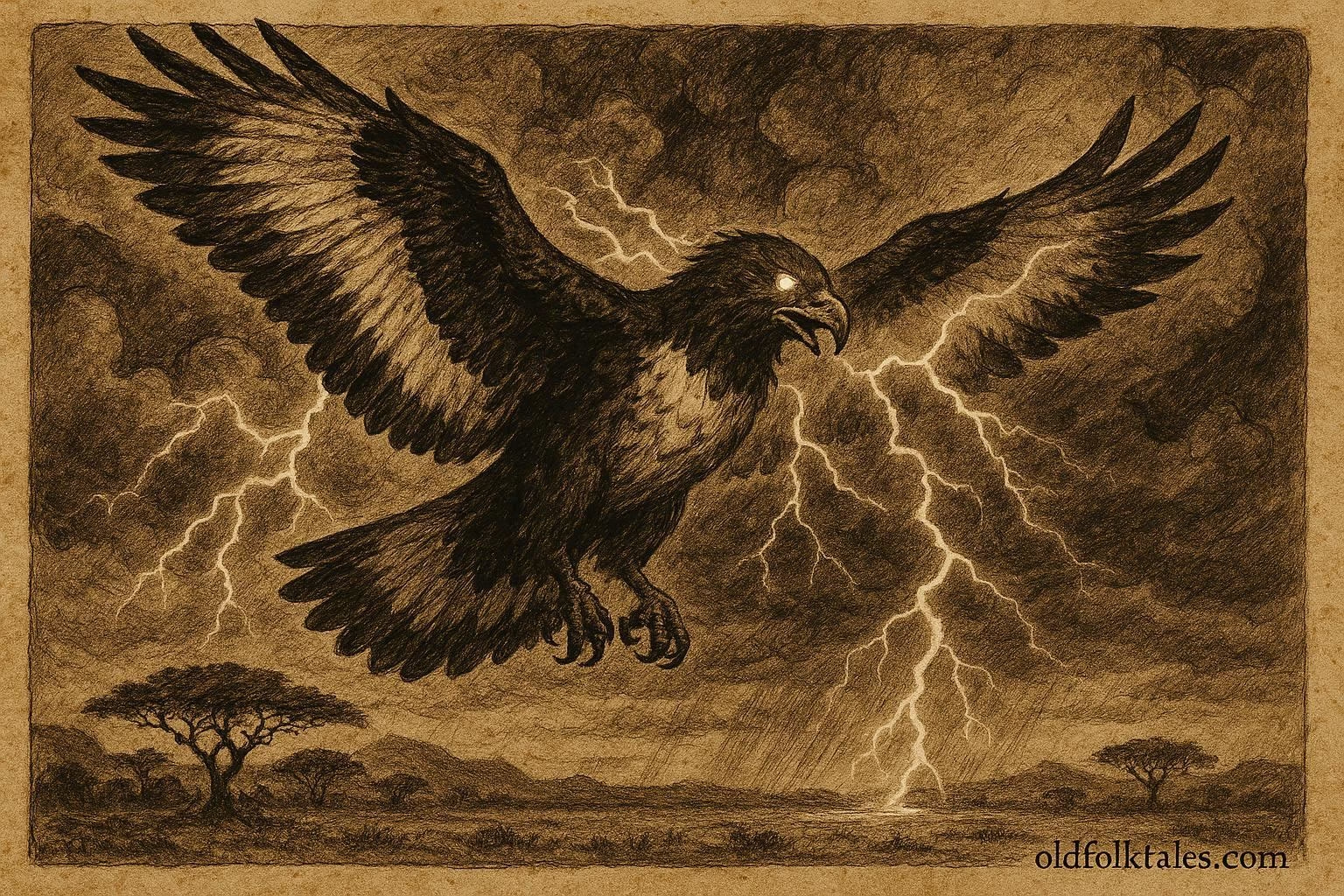
The Impundulu (also Mpundulu or inyoni yezulu, “bird of the sky”) is a formidable lightning spirit and witch’s familiar, central to southern African mythic cosmology. It is most often envisioned as a giant bird that flashes with light as it flies, its wings generating thunder and its eyes and talons striking lightning to the earth.
In the cosmological imagination, it is both a natural and supernatural being, the living embodiment of storms. Its feathers gleam with the iridescence of rainclouds; when it lands, the air crackles. Villagers sometimes identify real birds such as the hamerkop (Scopus umbretta) or the black ibis as earthly manifestations of the Impundulu, linking avian and meteorological symbolism.
Explore the shadows of world mythology, where demons test the soul and spirits watch over mankind
The Impundulu can appear in several forms:
- The Lightning Bird: A massive black-and-white raptor with wings that spark fire and rain. Its descent is heralded by distant thunder.
- The Familiar: In witchcraft traditions, it serves as the personal familiar of a witch or diviner, feeding on blood and carrying out supernatural errands.
- The Shapeshifter: In some oral variants, it can assume human form, often that of a handsome young man, a seductive figure who lures victims or lovers before revealing his true avian nature.
The Impundulu’s powers mirror the forces of nature: destructive and fertile, wrathful and renewing. It embodies the paradox of storms, the same rain that nourishes the land can destroy it with lightning.
Powers and Attributes:
- Thunder and Lightning Control: It rides within storm clouds, summoning thunderbolts with its wings.
- Vampiric Hunger: It drinks human and animal blood, linking it to both predation and magical vitality.
- Witch’s Servant: It obeys witches, carrying out attacks or delivering potions, sometimes inherited through familial witchcraft lines.
- Human Transformation: In mythic accounts, it can appear as an alluring human male, able to seduce or deceive before draining victims’ strength.
Myths and Beliefs
Across Nguni traditions, the Impundulu serves as a meteorological agent and a spiritual warning. Storms are not merely weather phenomena, they are messages from the ancestors or signs of imbalance. When lightning strikes, elders may interpret it as a punishment from the spirit world.
In many oral traditions, witches “own” the Impundulu. When a witch grows old, she passes the familiar to her daughter or apprentice, who continues the lineage of control. This inheritance mirrors the broader matrilineal transmission of esoteric knowledge in many Nguni societies.
Ritual specialists such as izinyanga (healers) or diviners have documented protective measures against the Impundulu’s strikes. Charms made from animal fat, herbs, and burnt feathers are worn or kept in the home to deflect its wrath. Some stories tell of brave healers capturing or killing the lightning bird and using its fat as a potent medicinal charm for protection or fertility.
Despite its dark connotations, not all encounters with the Impundulu are harmful. In certain regional tales, it acts as a weather guardian, bringing essential rain after droughts when propitiated correctly. As with many African spirits, its moral alignment is ambiguous, shaped by context, ritual observance, and human behavior.
Cultural Role and Symbolism
The Impundulu stands at the crossroads of nature, morality, and power. It functions as both explanation and metaphor:
- Natural Symbolism: The bird embodies the sudden, uncontrollable energy of storms, nature’s destructive beauty. Its myth translates meteorology into moral narrative.
- Social Symbolism: As a witch’s familiar, it externalizes fears about hidden power and transgression, offering a cosmological framework for explaining misfortune, illness, or mysterious deaths.
- Moral Instruction: By embodying greed, lust, and uncontrolled desire, the Impundulu cautions against misuse of power, both magical and social.
- Spiritual Balance: Its duality, destroyer and rain-bringer, reinforces the Nguni worldview that every force of nature possesses both blessing and danger.
- Gender and Seduction: The shapeshifting version reflects anxieties and fascination around sexuality and secrecy, especially in colonial-era accounts where vampirism symbolized taboo desire.
In the modern imagination, the Impundulu has evolved beyond folklore into art, literature, and performance. Artists across southern Africa use its image to represent environmental conflict, ancestral power, and the fusion of ancient and contemporary African identity.
Historical Context
Ethnographic documentation from missionary and colonial writers between the 1870s and 1930s provides the earliest textual references. These accounts often conflate local beliefs with European “witch-familiar” concepts, yet cross-verification among Zulu, Xhosa, and Pondo informants reveals consistent oral traditions describing a thunderbird-like creature.
Academic surveys such as “Lightning Birds and Thunder Trees: The Zulu Mpundulu” compile these records and analyze their consistency. Ritual accounts describe healers combating the Impundulu’s attacks through cleansing ceremonies, charms, or by invoking ancestral protection.
In oral tradition, storytellers emphasize that lightning strikes are not random, they are moral events. The Impundulu enacts divine or ancestral justice against those who disrupt social harmony, disrespect elders, or break taboos.
Encounter dragons, spirits, and beasts that roamed the myths of every civilization
Author’s Note
The Impundulu is among southern Africa’s most vivid mythic figures, a creature that bridges meteorology, morality, and metaphysics. Its enduring presence in oral narratives and ethnographic accounts demonstrates how African cosmologies interpret natural forces as expressions of social and spiritual ethics. Far from being a “primitive” explanation of weather, it represents a sophisticated symbolic system connecting humanity, nature, and ancestral authority.
Knowledge Check (Q&A)
- Q: What does Impundulu mean in Nguni languages?
A: It means “lightning bird” or “bird that brings lightning.” - Q: What communities tell stories of the Impundulu?
A: Primarily Nguni-speaking peoples — Zulu, Xhosa, and Pondo. - Q: What are two major powers of the Impundulu?
A: Controlling lightning and thunder, and drinking blood (vampiric behavior). - Q: How is the Impundulu connected to witchcraft?
A: It acts as a witch’s familiar or servant, inherited through familial lines. - Q: What moral lesson does the Impundulu embody?
A: The balance of power and consequence, misuse of spiritual or natural power invites destruction. - Q: How do healers protect communities from the Impundulu?
A: Through charms, herbs, and cleansing rituals invoking ancestral protection.
Source:
“Lightning Birds and Thunder Trees: The Zulu ‘Mpundulu’.” Ethnographic essay and academic PDF compilation (Academia.edu).
Missionary and colonial ethnographic field collections, late 19th–20th century.
Encyclopedic survey “Lightning Bird / Impundulu.”
Origin:
Nguni-speaking communities, primarily Zulu, Xhosa, and Pondo peoples, across KwaZulu-Natal and the Eastern Cape, South Africa. Oral antecedents are older, but written records appear in colonial ethnographies from the late 19th century onward.