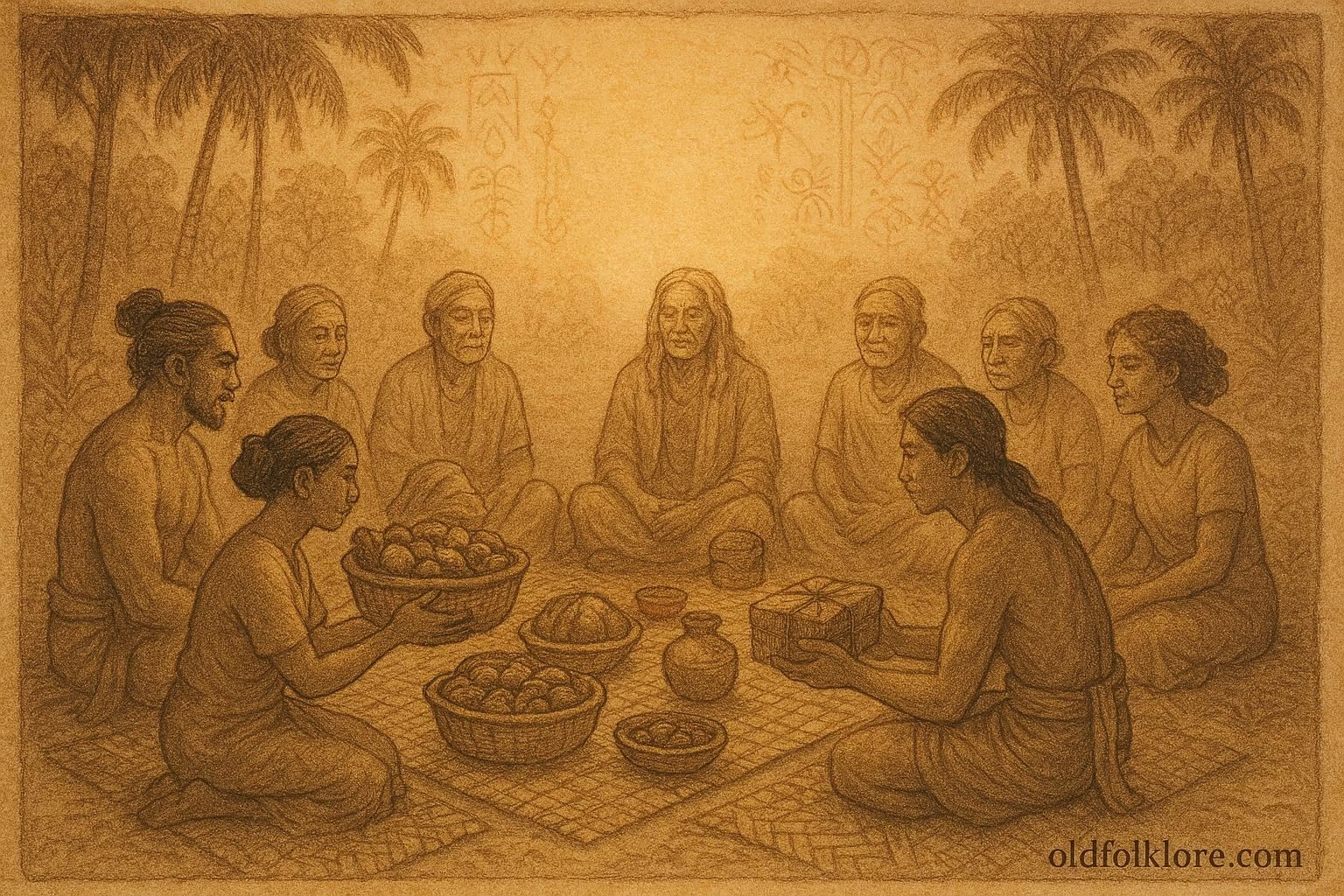
Inafa’maolek, translated as “to make good” or “to restore harmony,” is one of the oldest cultural principles in CHamoru society. Its roots reach into the pre-colonial era, when the people of the Mariana Islands lived in clan-based communities governed by the wisdom of elders and guided by an ethic of balance between humans, ancestors, and the natural world. Long before Spanish contact reshaped the islands, CHamoru oral tradition taught that social conflict, broken agreements, or neglect of communal obligations disturbed both earthly and spiritual harmony. Restoring that balance was not only a social duty but a cosmological one.
The ethic emerges in early legends about the Nånan Biha, the Elder Women, who mediated disputes through calm speech and ritual gestures of offering. Their teachings preserved an understanding that every action, whether a gift, insult, or debt, carried spiritual weight. Inafa’maolek therefore grew as a sacred law that preserved peace within families and villages.
Description
Inafa’maolek is both a social code and a lived ritual tradition. At its heart is the belief that community well-being depends on reciprocal care. When someone falters, harms another, or creates imbalance, the community responds not with punishment but with structured acts of restoration.
The process often begins with mediation. Elders or respected figures gather both sides in a calm setting. The meeting is not confrontational. Instead, each person is given space to speak while others listen with restraint, acknowledging that harmony cannot be built on raised voices. Food plays an important role. Presenting a dish, sharing fruit, or offering breadfruit is a symbolic gesture that says: I come with open hands, not closed fists.
Another key expression of Inafa’maolek is chenchule’, the network of reciprocal giving that binds families together. When a family hosts a wedding, funeral, or village celebration, others contribute gifts, money, tools, labor, or food. These contributions are not optional, they reflect a sacred duty to sustain one another. The cycle of giving continues throughout life, ensuring that no household stands alone.
In a reconciliation setting, chenchule’ may include small gifts to symbolize renewed ties. In some villages, it is accompanied by a spoken apology, a softening of tone, and the reaffirmation of kinship bonds. These actions treat social wounds as shared burdens, reminding the community that healing must involve both sides.
Even in modern Guam, Inafa’maolek shapes relationships in schools, workplaces, and extended families. It guides how CHamorus settle disputes, how villages cooperate after storms, and how elders teach the next generation to treat others with dignity. Though formal rituals are less frequent today, the ethic remains a vital cultural force.
Mythic Connection
CHamoru mythology places harmony at the center of life. Stories describe spirits who guard the land, taotaomo’na, the ancient ones whose presence lingers in banyan groves and limestone forests. Disturbing the peace between people is believed to disturb the peace between humans and these ancestral guardians. Restoration rituals are therefore understood as offerings of respect not just to one another, but to the unseen world that surrounds the community.
Inafa’maolek echoes cosmological themes found throughout early CHamoru belief: balance between land and sea, respect for elder authority, and the cyclical exchange between giving and receiving. Even the movement of seasons reflected the principle, with planting and harvest guided by cooperation rather than competition. Harmony was seen as a sacred alignment with the order established by the Creator and maintained by ancestral spirits.
This worldview continues to inform how CHamorus understand the practice. When two families reconcile, it is not merely social peace but spiritual equilibrium that is restored. The ritual ensures that no shadow lingers between households and that the ancestors witness a community united once again.
Author’s Note
This article explores how Inafa’maolek functions as both an ethical principle and a ritual system that shapes CHamoru identity. It highlights the deep cultural value placed on harmony, reciprocity, and respect for elders, and shows how ancient practices continue to guide social relationships in modern Guam.
Knowledge Check
1. What does Inafa’maolek mean?
It means “to make good” or “to restore harmony,” referring to repairing relationships and maintaining balance.
2. Who traditionally mediated disputes?
Elders, especially respected women known as the Nånan Biha, guided reconciliation.
3. What role does food play in the process?
Food offerings symbolize humility, goodwill, and the desire to restore peace.
4. What is chenchule’?
A system of reciprocal giving that reinforces long-term communal bonds.
5. How is Inafa’maolek tied to mythology?
It aligns social harmony with ancestral spirits (taotaomo’na) and cosmological balance.
6. How does the ethic appear in modern life?
It shapes family relations, community cooperation, and conflict resolution in Guam today.