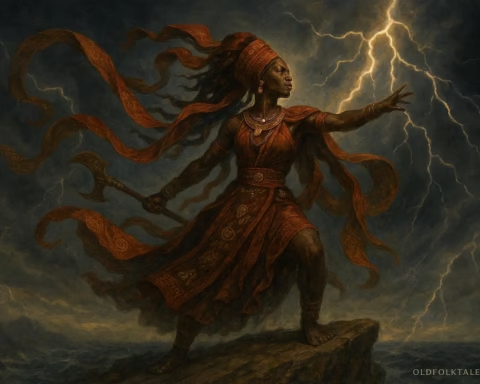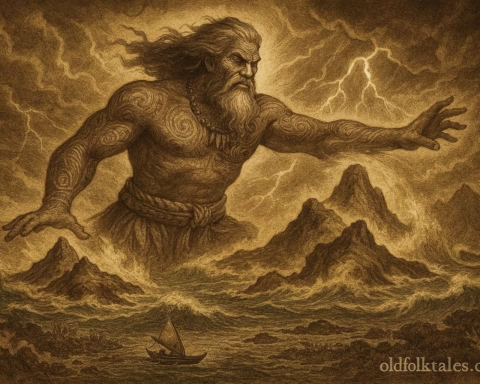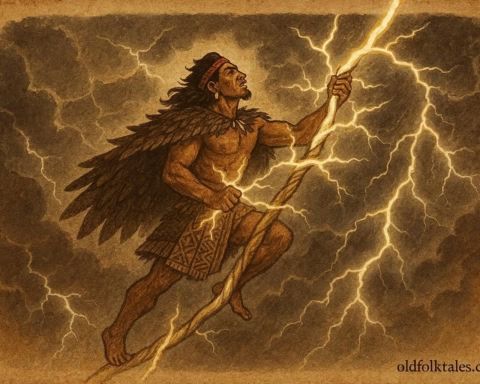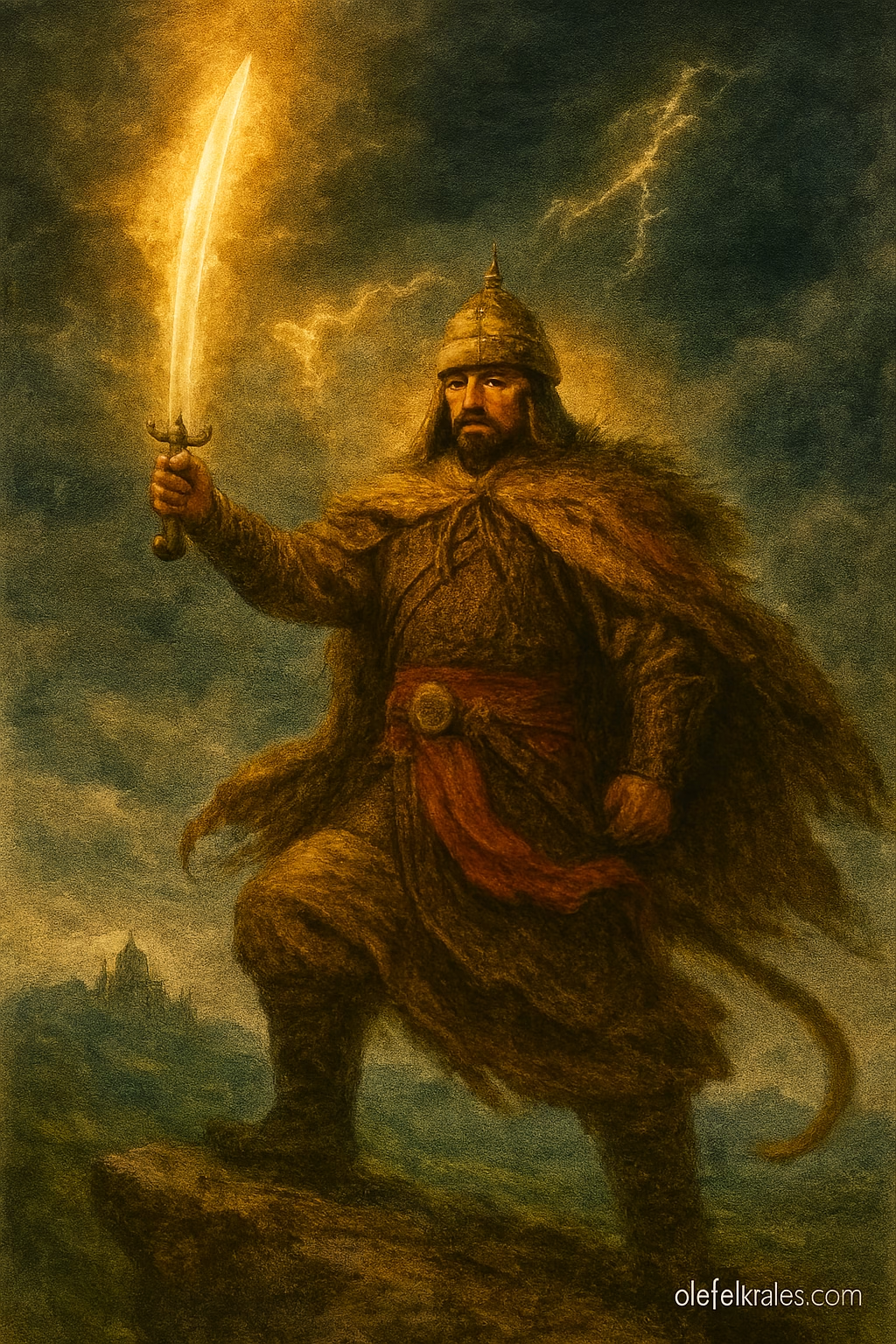
Before the seas learned to rest and the mountains grew their crowns of cloud, a son was born in the radiant citadel of Lanka, a child whose cry shook the banners of heaven. He was Meghanada, soon to be named Indrajit, “Conqueror of Indra,” the storm-crowned prince whose fate shimmered between glory and doom.
His birth was not of ordinary light. When Ravana, lord of Lanka, completed a thousand years of austerities to Brahma, streams of elemental fire spiraled around him. From that blazing boon emerged the promise of a son who would shake the pillars of the world. Thus Meghanada entered creation under an omen of thunder. From infancy, his eyes glowed with the fire of cosmic winds, his hands instinctively shaping the gestures of celestial weapons. Lanka’s sages whispered that the boy had been born already half-armored by destiny.
As he grew, Meghanada mastered arts forbidden to many: astral combat, illusion-craft, and the summoning of weapons forged from the breath of gods. Under Ravana’s guidance and the tutelage of darkly radiant teachers, he descended once into the hidden caverns where time twisted like smoke. There he performed rituals invoking Agni, Varuna, and the spirits between worlds. The gods watched, some with dread, some with awe, for a mortal prince was treading the road of immortals.
His divine trial came when he ascended to heaven itself, riding a chariot of lightning drawn by serpents plated in gold. Indra, king of the gods, met him in battle. Their clash sent tremors through the stars, and the very sky flickered like a dying torch. Meghanada, drawing forth the Brahmastra gifted through his father’s boons, subdued Indra, not in arrogance, but in the fierce pride of defending Lanka’s honor. The heavens yielded, and Brahma appeared in a lotus of calm radiance, granting the prince a new name: Indrajit, the one who conquered the lord of storms.
But with this name also came a prophecy:
He shall be invincible so long as he performs the sacred yagna before battle. Break this ritual, and his star shall fall.
Indrajit accepted both boon and burden, for he believed firmly in his father’s cause. To him, Ravana was not tyrant but king; not abductor but protector of Lanka’s greatness. Loyalty, unyielding, absolute, was the golden chain binding the prince’s heart.
Thus when the war broke upon Lanka like a crimson dawn, Indrajit entered the battlefield not as a marauder, but as a radiant tempest. Against Rama, Lakshmana, Hanuman, and the armies of vanaras, he unleashed sorcery and divine astras that twisted the sky into spirals of fire. With the serpent-weapons Nagapasha, he bound both Rama and Lakshmana in coils of living flame. With the Shakti spear blazing like a newborn sun, he struck Lakshmana down as the armies trembled in despair.
Yet beneath the thunder of war, a moral struggle gnawed at the prince’s spirit. Each time his arrows darkened the sky, he felt the echo of the prophecy’s shadow. He knew Rama to be righteous, knew Sita to be innocent, and sensed that Dharma leaned toward Ayodhya’s exiled prince. But how could he betray Ravana, the father whose pride forged his strength, whose ambitions shaped his destiny?
“Duty is a blade,” he whispered once in the silence of his ritual chamber. “It must cut me before it can cut the world.”
When Lakshmana rose again, saved by medicinal miracles and the devotion of comrades, Indrajit understood that the tide of fate was turning. Even so, he would not abandon his oath. The yagna fires roared in a secret sanctuary as he prepared for his final battle, chanting hymns older than the oceans. Flames parted like curtains to admit Lakshmana and Vibhishana, come to stop the ritual.
Indrajit rose, his face calm as moonlit steel.
“You break the rites that guard my destiny,” he told them. “But I do not break my vow. Come, let the last storm be worthy of the first.”
The ensuing battle was a symphony of cosmic fury. Lakshmana’s arrows blazed with the justice of Rama’s cause; Indrajit’s astras spun with the desperate brilliance of a prince defending all he loved. Illusions shattered, divine weapons roared, and Lanka trembled as though the island were trying to wake from a nightmare it could not escape.
At last, as the dust flickered with fading sparks, Lakshmana’s arrow, guided by righteousness and steadied by Vibhishana’s insight, struck true. Indrajit fell, not in disgrace, but in a luminous stillness. Even the wind paused, bowing to the prince who had carried both the gift and weight of heaven.
As his spirit rose like a final spark from a fading pyre, Indrajit whispered a truth that only heroes in their final breath understand:
“Glory is not victory. Glory is giving oneself wholly to the path one believes.”
And so the storm-crowned prince passed into legend, invincible until he chose to face fate with his heart unshielded.
Author’s Note
Indrajit remains one of the Ramayana’s most complex figures: a warrior of astonishing power whose loyalty bound him to a doomed cause. His tragedy lies not in villainy, but in devotion, reminding us that righteousness requires not only strength but clarity of purpose. His legacy endures as a symbol of martial brilliance, filial duty, and the perilous beauty of unwavering loyalty.
Knowledge Check
-
What divine event marked Meghanada’s birth?
-
Why was he renamed Indrajit?
-
What condition made him invincible in battle?
-
What moral struggle did Indrajit face during the Lanka war?
-
How was his final ritual interrupted?
-
What symbolic truth did Indrajit express in his final moments?
Cultural Origin: Ancient Indian epic tradition; Hindu mythology from the Ramayana cycle.
Source: Ramayana (Valmiki), Classical Sanskrit epic, c. 400 BCE–400 CE.