At the heart of the high Andes, where light itself seems thinner and brighter, the Inca marked the turning of the year by honouring Inti, the sun god. Inti Raymi, literally “Festival of the Sun” in Quechua, was the most important public rite of the Inca state. It marked the winter solstice in the southern hemisphere and the start of the agricultural cycle: a time to pray for fertile fields, to renew political bonds, and to ritually refresh the cosmic order that bound earth, people, and sky.
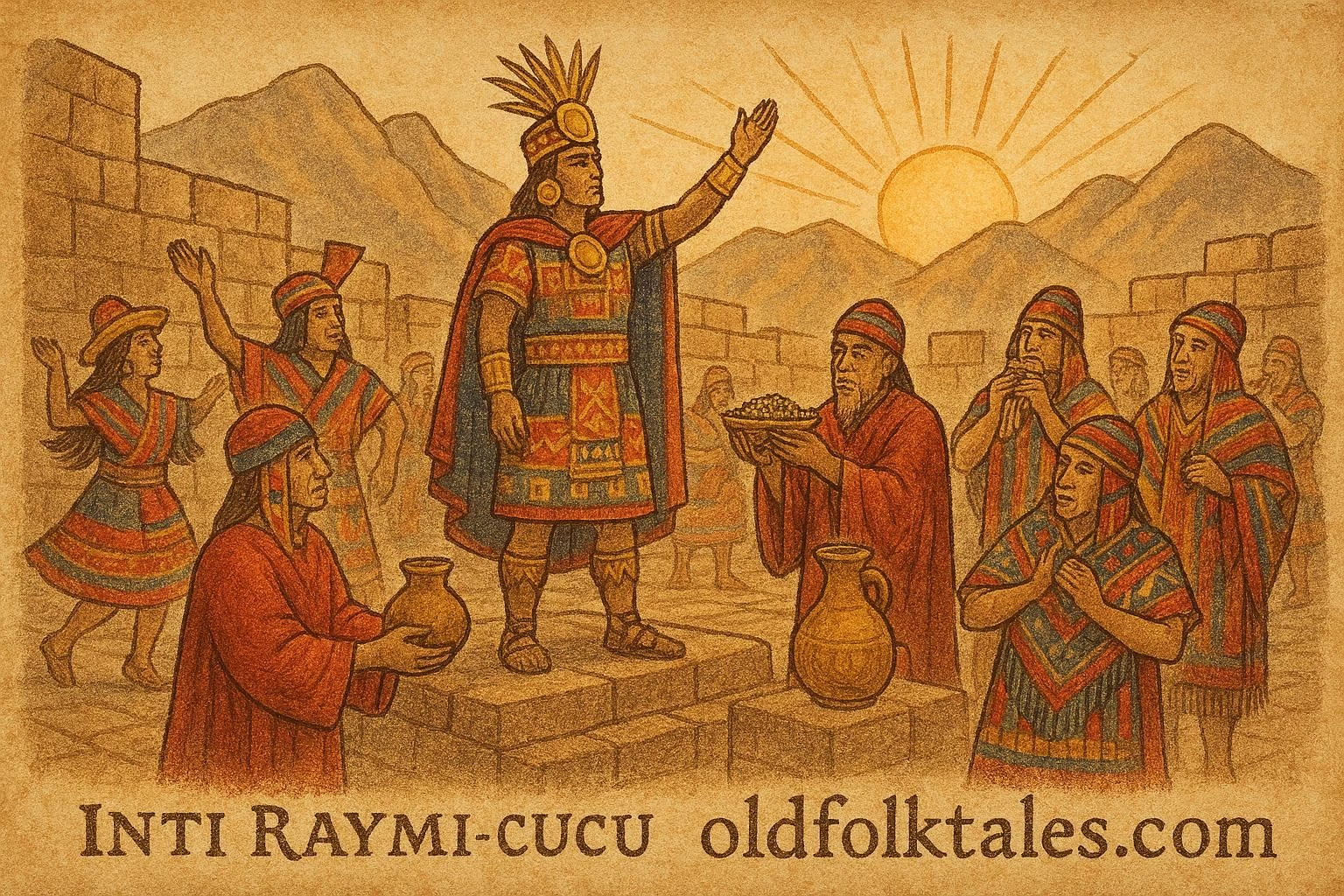
Chroniclers who wrote after the Spanish conquest describe a grand public ceremony in Cusco, the imperial capital. The emperor (Inka) proclaimed the festival from the coricancha, the Sun Temple, and processions carried sacred bundles and offerings to high plazas. Sacrifices and libations accompanied performances, sacred foods were prepared, and priests announced the will of the gods. The ritual sequence affirmed the Inca’s role as intermediary between the people and the celestial order: the Inka’s authority was less a claim of personal power than a duty to maintain cosmic balance.
After the Conquest Inti Raymi was proscribed and the coricancha stripped of its gold. Yet the festival never fully died. Local memory preserved fragments: songs, seasonal rhythms, and the sense that the solstice was a hinge in Andean time. In the early twentieth century a staged Inti Raymi was revived in Cusco as a cultural pageant, drawing from colonial chronicles, local lore, and emerging nationalist sentiments. Today, the public re-enactment on June 24th combines theatricalized ritual, music, costuming, and community celebration. It is at once heritage performance, tourist spectacle, and a living expression of Andean identity.
How It Was Practiced
Pre-Hispanic descriptions emphasize ritual precision. Months before the solstice, priests selected auspicious days, fasts were observed, and preparations for offerings began. On the appointed day, the Inka and his retinue processed through the city, priests invoked Inti and Pachamama (the earth mother), and the people presented the first fruits of their labor. Offerings, corn, quinoa, coca, chicha (fermented maize drink), and animals, were placed at altars; sometimes llamas or other animals were sacrificed as votive gifts meant to secure rainfall and fecundity.
Performance was communal. Musicians and dancers accompanied rituals with panpipes, drums, and flutes. The coricancha, tiled in gold to reflect sunlight, was the spiritual center. Priests read omens and pronounced blessings. Ritual language and cosmological metaphors, the duality of hanan (upper) and hurin (lower), the vertical ordering of the cosmos, structured prayers and gestures. The Festival resolved social tensions by reaffirming reciprocal obligations: rulers provided protection and ceremonial leadership; communities offered labour and tribute in return.
Mythic Connection
Inti Raymi fused cosmology and polity. Inti was not an abstract celestial body but a deity of life and kingship. Myth placed the Inka as a descendant of the sun; thus, sun rites endorsed political legitimacy. Yet the festival’s religious horizon extended beyond dynastic claims. Inti’s light animated crops, warmed herds, and set seasonal time. The winter solstice, when days begin to lengthen, symbolized rebirth. Offerings acknowledged the gift of life and invoked continued reciprocity between humans and non-human powers.
Pachamama and other local mountain deities (apus) were also invoked. The ritual was an ensemble of relationships: sun above, earth below, mountains as active spirits mediating rain and fertility. Ancestral and local cults intertwined with imperial ritual, so Inti Raymi functioned both as state ceremony and as communal calibration of local sacred networks.
Social and Contemporary Meanings
Today’s Inti Raymi in Cusco is polyvocal. For many Quechua and Aymara speakers it is a renewed claim to worldview and seasonal knowledge. For the state and tourism sector it is a heritage spectacle. For scholars and local elders it is a site of negotiation: which elements may be publicly shown, which remain private? The modern festival is not a literal reconstruction but a creative revival that keeps ancient rhythms alive.
Inti Raymi’s endurance speaks to the Andes’ ecological wisdom. In a landscape of sharp seasonal contrasts, ritual calendars coordinated planting, herding, and communal cooperation. The festival encoded that knowledge in mythic language: the sun’s return promised abundance if humans upheld reciprocal duties, care for earth, respect for mountains, and shared labour.
Author’s Note
Inti Raymi reminds us that ritual is knowledge embodied. The festival both celebrates light and preserves the social technologies that let communities live in harsh environments. The contemporary revival is imperfect yet resilient: it preserves fragments of a past while adapting to present needs. In the sun’s return we hear an ancient promise, that life, like light, renews when honoured.
Knowledge Check
Q1: When did Inti Raymi originally occur?
A: Around the southern winter solstice (late June), marking the agricultural year’s turn.
Q2: Who was Inti and why central to the rite?
A: Inti was the sun god; his light sustained crops, legitimized the Inka, and symbolized renewal.
Q3: What role did the Inka play during Inti Raymi?
A: As ritual intermediary, the Inka led ceremonies that affirmed cosmic and political order.
Q4: Which earth power is commonly invoked alongside Inti?
A: Pachamama, the earth mother; local mountain spirits (apus) were also central.
Q5: How did Spanish colonization affect Inti Raymi?
A: The rite was suppressed and the Sun Temple plundered, but local memory and practices survived.
Q6: What does the modern Inti Raymi express for Andean communities today?
A: Cultural revival, identity affirmation, seasonal knowledge, and negotiated heritage performance.