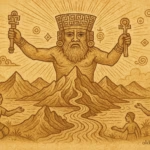
Inti is the vital sun god of the Inca civilization, revered as the giver of life, warmth, and agricultural fertility. His golden rays were believed to nourish crops, sustain human and animal life, and maintain the cosmic balance between earth and sky. Inti is also the divine ancestor of the Sapa Inca, the emperor, linking celestial power directly to political authority.
Temples dedicated to Inti, most famously Coricancha in Cusco, were centers of worship and ritual. These sacred sites gleamed with gold, symbolizing the sun’s brilliance and reinforcing the connection between the divine and earthly rulers. Offerings of food, textiles, and llamas were made to secure favor, and grand ceremonies such as the Inti Raymi festival celebrated the solstice, renewing vows to the sun and ensuring agricultural abundance. Inti is frequently depicted as a radiant golden disk or anthropomorphic figure adorned with sun rays, embodying both protection and providence.
Mythic Story
In the high Andes, where snow-capped peaks kiss the sky and valleys cradle fertile lands, the people looked up to the sun and saw not merely warmth, but a living god, Inti, whose light was both guardian and ancestor. Inti’s presence governed the cycles of life: dawn and dusk, growth and harvest, prosperity and survival. The Inca believed that their ruler, the Sapa Inca, was descended from Inti himself, chosen to embody divine authority and maintain harmony among the people.
The myth tells of Inti’s intimate involvement with the foundation of the Inca Empire. According to tradition, Manco Cápac, the first Sapa Inca, emerged from Lake Titicaca with his sister-wife Mama Ocllo, sent by Inti to bring civilization and knowledge of agriculture to humankind. Guided by the sun’s light, they journeyed until they found fertile ground, where the golden staff gifted by Inti sank into the earth with ease, signifying the chosen land for the new kingdom. In this act, Inti not only provided guidance but confirmed the divine right of rulers and the sacredness of the land itself.
Inti’s light was not merely symbolic; it ensured survival in the harsh Andean environment. Crops such as maize, potatoes, and quinoa thrived under his watchful gaze. The people recognized the cycles of planting and harvesting as reflections of his solar journey across the sky. During winter, when the sun seemed to weaken, rituals intensified. Priests and nobles conducted offerings at Coricancha, adorning statues of Inti with gold and silver, performing dances and prayers to coax the sun’s strength back into the world.
One of the most vivid myths portrays Inti as both nurturer and test of resilience. Once, a drought struck the highlands, threatening famine. The people prayed to Inti, singing songs of supplication, offering textiles, maize, and llamas. Inti’s rays flickered in response, warning that humans must honor their responsibilities. Only when the people redoubled their efforts, working the fields, respecting ritual law, and maintaining social harmony, did Inti’s brilliance return, bathing the land in warmth and fertility once more. This narrative reinforced the moral that divine favor is earned through diligence, respect, and devotion.
In festival and daily life, Inti’s dual role as cosmic and imperial power remained central. During the Inti Raymi, priests led processions, chanted sacred prayers, and presented offerings that symbolized life, prosperity, and loyalty. The Sapa Inca performed rituals atop Cusco’s sacred hills, reaffirming his link to Inti, while the populace celebrated with music, dance, and feasts. Through these acts, Inti’s presence was felt not as a distant deity but as an ever-present guide, protector, and progenitor, sustaining both land and people.
Inti also shared cosmic duality with Mama Quilla, the moon goddess, representing night, reflection, and feminine complement. Together, they maintained the balance of day and night, work and rest, life and spiritual reflection. In this way, Inti’s myth teaches that order, diligence, and reverence for nature and ancestry are inseparable from divine guidance. He is not merely a source of light but an enduring reminder that human survival depends on harmony with cosmic cycles, agricultural practice, and the moral responsibility of rulers and commoners alike.
Through these stories, Inti embodies the radiant power of the sun and the guiding hand of the divine ancestor. His myth illustrates how the celestial, human, and natural worlds intertwine, emphasizing the sacred duty to cultivate, honor, and protect both the earth and social order. By following the paths illuminated by Inti, the Inca learned that life flourishes when humanity walks in alignment with cosmic will.
Learn the ancient stories behind deities of light, storm, and shadow from cultures across the world
Author’s Note
Inti’s myth emphasizes the inseparable bond between celestial power, human leadership, and environmental stewardship. He teaches that life, prosperity, and social order depend on respect for nature, ritual devotion, and moral responsibility. In human terms, Inti encourages attentiveness to cycles, both natural and societal, and inspires the courage to act in harmony with higher principles.
Knowledge Check
Q1: What does Inti symbolize in Inca mythology?
A: Life, warmth, fertility, and divine guidance.
Q2: Who is considered Inti’s earthly descendant?
A: The Sapa Inca, the emperor of the Inca Empire.
Q3: What is the Coricancha?
A: A major temple in Cusco dedicated to Inti, adorned with gold and used for rituals.
Q4: Which festival honors Inti and the solstice?
A: Inti Raymi, the Festival of the Sun.
Q5: How does Inti demonstrate the link between divine and human responsibility?
A: By rewarding diligence and proper ritual observance, and withdrawing favor during neglect.
Q6: Who complements Inti in cosmic duality?
A: Mama Quilla, the moon goddess.
Source: Crónica del Perú (Cieza de León) and Inca oral traditions, Peru.
Source Origin: Inca, Peru