Isis (Aset) and Osiris (Asar) are central figures in Egyptian religion and mythology. Osiris, god of fertility, vegetation, and the afterlife, embodies kingship, regeneration, and cosmic balance. Isis, his sister and consort, is a goddess of magic, protection, motherhood, and wisdom. Together, they represent life, death, and the promise of resurrection.
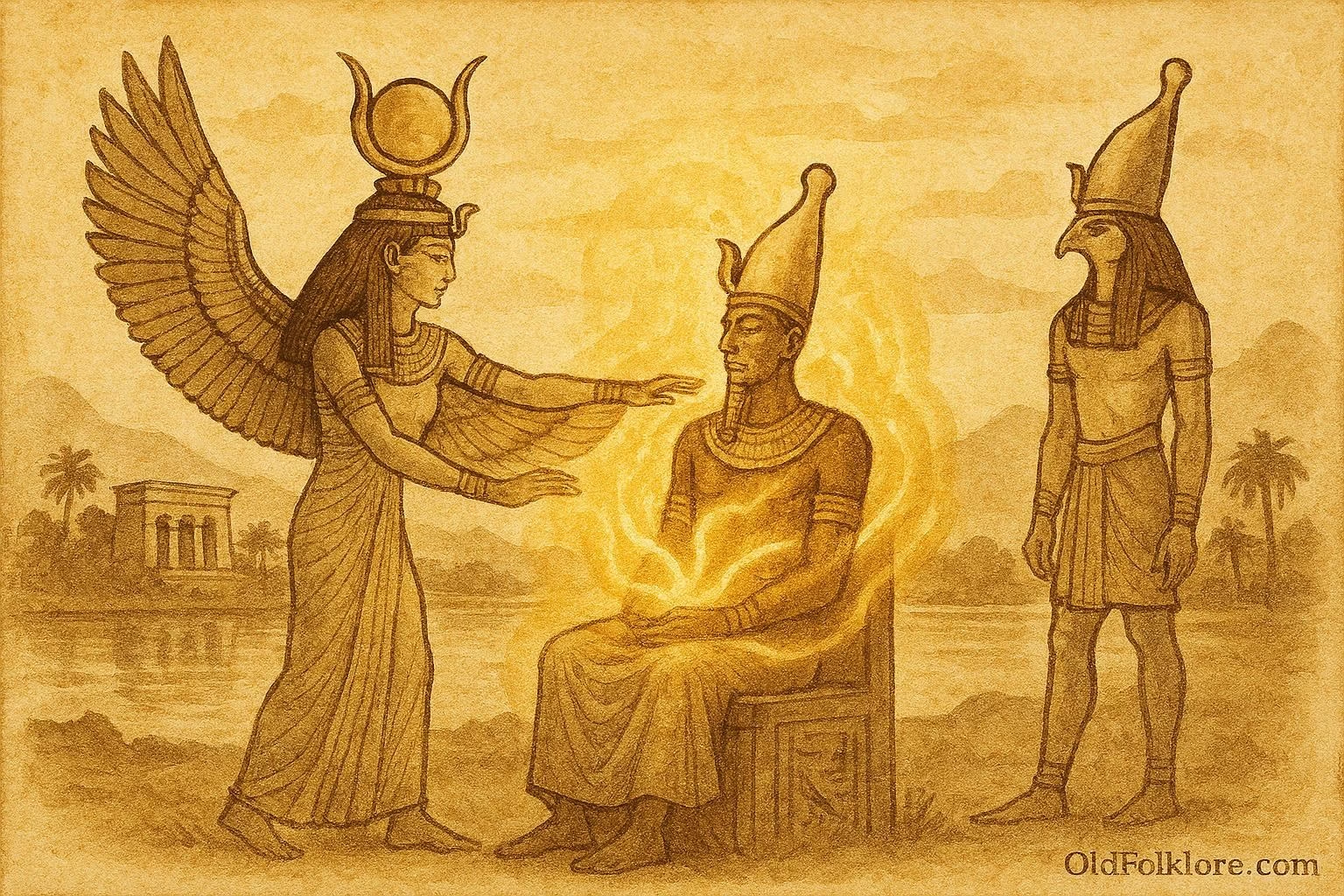
Osiris is usually depicted as a mummified king, wearing the atef crown, holding the crook and flail, symbols of rulership and justice. Isis is shown with a throne-shaped crown or the solar disk flanked by cow horns, sometimes holding an ankh of life. Her magical power, often described as heka, allows her to heal, protect, and even resurrect.
Their myth is foundational for Egyptian funerary belief: Osiris presides over the underworld and judges the dead, while Isis’s devotion ensures continuity, protection, and the transmission of sacred knowledge. Temples at Philae, Abydos, and Dendera commemorate their cults. Rituals involved recitations of spells, hymns, and ceremonial enactments of Osiris’s death and resurrection, emphasizing cyclical fertility and eternal kingship.
Mythic Story: The Death and Resurrection of Osiris
In the earliest days, when Egypt’s lands were young and the Nile still spoke of creation’s mysteries, Osiris ruled as king. He taught humans the arts of agriculture, governance, and moral justice, bringing order where chaos once reigned. But his brother Set, god of chaos, deserts, and storms, coveted the throne and sought to destroy him.
Set crafted a magnificent chest, secretly designed to Osiris’s measurements. At a feast, he invited all the nobles, presenting the chest as a gift. “Whoever fits perfectly may claim it as his own,” he proclaimed. When Osiris lay within, Set slammed the lid and cast the chest into the Nile, carrying the god away. The waters bore Osiris to distant lands, where he was dismembered into fourteen pieces, scattered across Egypt.
Grief-stricken yet determined, Isis embarked on a relentless quest. She traveled the length of the Nile, finding each fragment of her husband’s body. With gentle hands, her tears, and her potent magic, she reassembled Osiris. Though he could no longer walk the earth as before, her devotion restored him to life in the underworld. There, Osiris became king of the dead, a judge of souls, ensuring the cosmic order remained balanced.
During this reunion, Isis conceived a child, Horus, who would grow to avenge his father, confront Set, and reclaim the throne of Egypt. In these acts, Isis demonstrates the enduring power of love, loyalty, and magical wisdom: even death cannot sever bonds forged by devotion.
Plutarch, writing centuries later, recounts:
“…Isis gathered the scattered limbs and brought Osiris back to life.”
– On Isis and Osiris (paraphrased)
This story carries layered meanings. Osiris represents the eternal cycle of vegetation, death, and regeneration; Isis embodies the guiding, restorative principle of magic and maternal care. Their tale underpins Egyptian cosmology: the divine couple as guarantors of life, justice, and the promise of immortality.
The myth also influenced mortuary practice. Pharaohs were ritually identified with Osiris at death, and queens or priestesses with Isis in life and ceremonial roles. Funerary texts, including the Pyramid Texts, Coffin Texts, and Book of the Dead, invoke Isis’s power to protect the deceased and ensure resurrection, reflecting the enduring cultural resonance of the myth.
Author’s Note
The story of Isis and Osiris teaches that love, loyalty, and wisdom are transformative forces capable of overcoming death and chaos. Isis’s devotion shows that even divine power relies on care, attention, and moral intent. Osiris’s resurrection offers hope and structure to human existence, framing life and death as interconnected cycles. Together, they remind us that the cosmos requires balance, and that faith, compassion, and knowledge are keys to enduring order and renewal.
Knowledge Check
Q1. Title: Who are Isis and Osiris?
A: Central Egyptian deities: Osiris is god of kingship, death, and regeneration; Isis is goddess of magic, motherhood, and protection.
Q2. Title: What role does Set play in the myth?
A: Set, Osiris’s brother, murders and dismembers Osiris out of jealousy, introducing chaos that the gods must resolve.
Q3. Title: How does Isis restore Osiris?
A: She finds his scattered body parts, reassembles them using her magic, and revives him, enabling him to rule the underworld.
Q4. Title: Who is Horus, and why is he important?
A: Horus, son of Isis and Osiris, grows to avenge his father, confront Set, and continue Osiris’s legacy of kingship.
Q5. Title: How does this myth influence Egyptian funerary beliefs?
A: Pharaohs are ritually identified with Osiris; Isis’s protective magic ensures the deceased’s resurrection and journey in the afterlife.
Q6. Title: What universal lesson does the Isis-Osiris myth convey?
A: Devotion, wisdom, and moral courage can overcome chaos and death; life and death are cyclical and interconnected.
Source: Pyramid Texts / Book of the Dead; Plutarch, On Isis and Osiris, Egypt.
Origin: Ancient Egypt