The Japanese Tea Ceremony, or Chanoyu, also known as Sadō or Chado, is a meticulously choreographed ritual centering on the preparation, serving, and receiving of matcha, powdered green tea. Emerging during the Muromachi (1336–1573) and Momoyama (1573–1600) periods, it became fully codified by tea masters such as Sen no Rikyū, who refined the aesthetic, spiritual, and moral principles that underpin the ceremony.
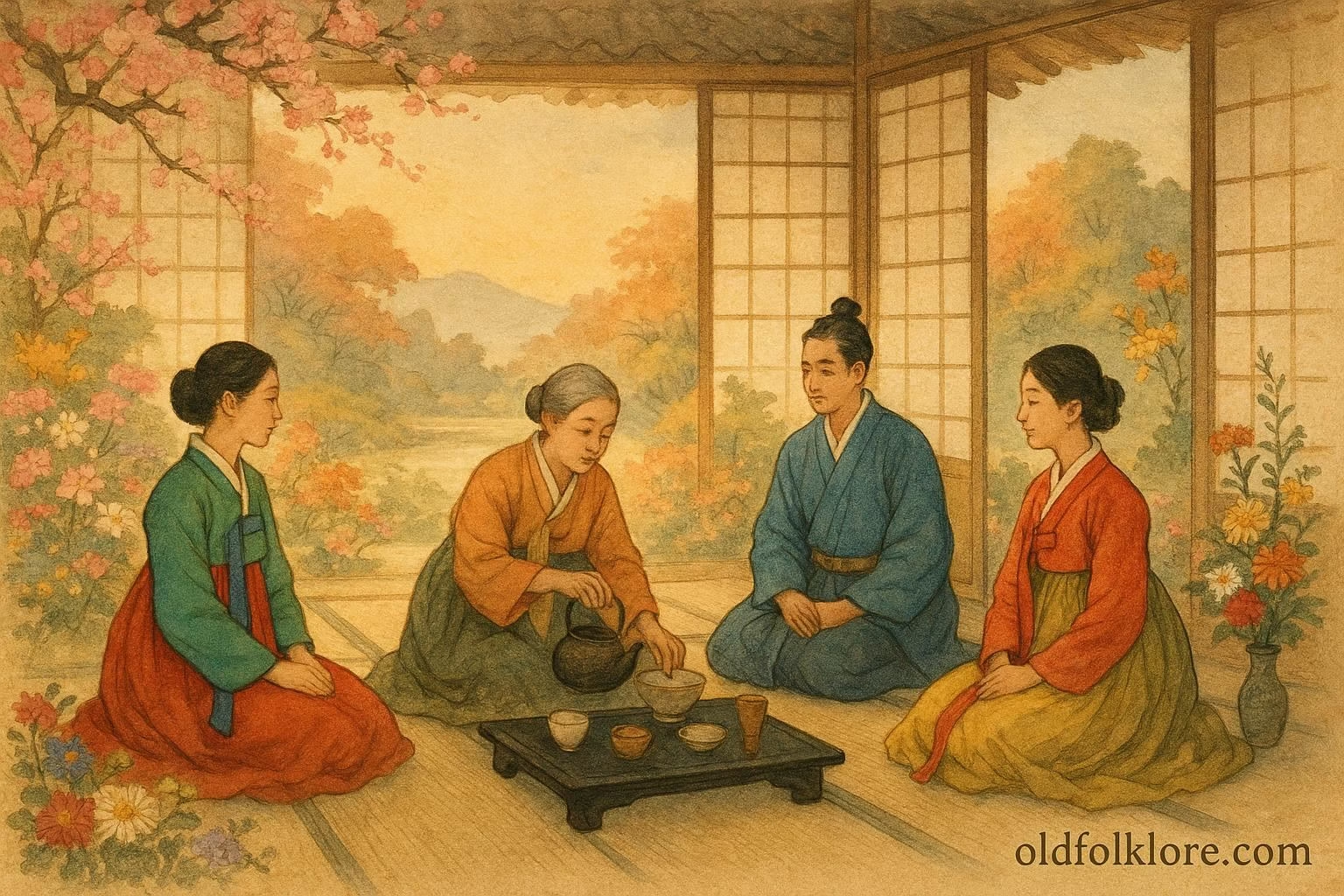
Chanoyu is far more than drinking tea. It is a performance of mindfulness, integrating architecture, garden design, utensils, and carefully timed gestures. Guests enter the tea house via a garden path, which symbolically encourages a cleansing of worldly thoughts. Every object from the tea bowl (chawan) to the tea whisk (chasen), is selected with seasonal awareness and aesthetic intent. Movements are deliberate: the host’s bow, the placement of utensils, and the pouring of hot water follow a precise choreography emphasizing harmony (wa), respect (kei), purity (sei), and tranquility (jaku).
The ceremony fosters a mutual moral and aesthetic exchange between host and guest. The guest observes the host’s meticulous attention to detail, acknowledging the effort and respect invested in the ritual. Through this exchange, social hierarchies dissolve temporarily, replaced by a shared appreciation for mindfulness, beauty, and presence.
Mythic / Cultural Meaning
While Chanoyu is not explicitly tied to deities or mythological events, it functions as a devotional aesthetic practice rooted in Zen Buddhist philosophy. The ceremony cultivates awareness of transience, echoes of impermanence central to Buddhist thought, and reverence for nature through the seasonal selection of utensils, flowers, and décor.
The ritual cleansing of implements, the calm movements of the host, and the focused attention of the guest all reflect spiritual purification in a quotidian form. By enacting these small, disciplined gestures, participants cultivate moral refinement and mindfulness, discovering a sacred rhythm in the ordinary. This mirrors Japan’s broader cultural tendency to sacralize everyday acts, turning even a shared cup of tea into a microcosm of moral and aesthetic order.
Chanoyu also reflects Japan’s relationship with nature and cosmology. Seasonal shifts dictate the décor, the choice of tea utensils, and the flowers used in the tea room, acknowledging human life’s interdependence with the cycles of the natural world. Every ceremony becomes a miniature ritual reenactment of cosmic attention, harmonizing human behavior with the rhythm of the seasons.
How It Was Practiced
Traditionally, the tea house is approached through a carefully designed garden, whose winding path encourages reflection and mental preparation. Guests cleanse themselves symbolically by entering slowly, leaving behind worldly concerns. Inside, the host meticulously prepares the tea: warming the bowl, whisking the matcha to a frothy consistency, and presenting it with precise gestures.
Guests respond with formal bows, silent appreciation, and carefully timed drinking and wiping motions. The ceremony may last from thirty minutes to several hours, depending on formality. Utensils are appreciated aesthetically before and after use, reflecting the idea that every object has intrinsic value and spirit.
In contemporary Japan, Chanoyu has both traditional and modern expressions. Some ceremonies follow centuries-old codifications, while others adapt to schools teaching cultural refinement and etiquette to new generations. Despite these variations, the focus remains: mindfulness, moral conduct, and aesthetic harmony.
Author’s Note
The Japanese Tea Ceremony exemplifies how ritual can elevate ordinary acts into spiritual practice. Though not tied to a specific deity or myth, it embodies the Japanese worldview in which beauty, ethics, and mindfulness converge. Through Chanoyu, participants enact moral discipline, communal respect, and attunement to nature. The ritual reminds us that spirituality often resides not in grandeur, but in the small, deliberate acts we offer to others and the natural world.
Knowledge Check
1. What is the Japanese Tea Ceremony called?
It is called Chanoyu, also known as Sadō or Chado.
2. Who codified the modern tea ceremony?
Tea master Sen no Rikyū formalized the aesthetics and moral principles of Chanoyu.
3. What four principles guide Chanoyu?
Harmony (wa), Respect (kei), Purity (sei), and Tranquility (jaku).
4. How does Chanoyu relate to Zen Buddhism?
It cultivates mindfulness, moral discipline, and awareness of impermanence, reflecting Zen ideals.
5. What role does nature play in the tea ceremony?
Seasonal elements, flowers, and utensils align the ritual with natural cycles, emphasizing harmony with the environment.
6. How do guests participate in the ceremony?
Guests observe proper etiquette, bow respectfully, enjoy tea mindfully, and acknowledge the host’s effort and aesthetic presentation.