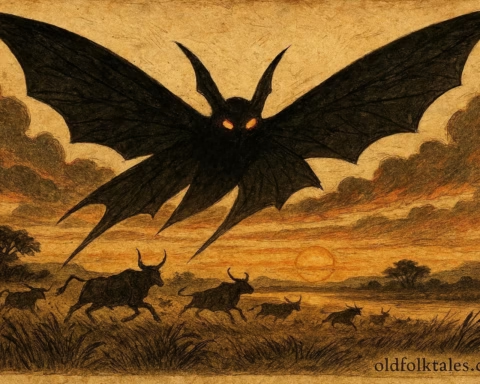
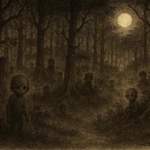
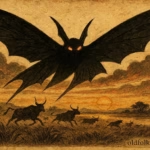
The Jersey Devil, also historically called the Leeds Devil, is a cryptid and folkloric figure rooted in colonial and local Pine Barrens legend. It is typically described as a winged biped with hooves, a long tail, and a goat- or horse-like head, capable of gliding through forested landscapes and making eerie, unearthly cries. Its origin is linked to Mother Leeds, who, according to legend, cursed her 13th child (sometimes given as 1735), producing this supernatural creature destined to haunt the Pine Barrens indefinitely.
Physical descriptions vary across reports: in some, the creature has bat-like wings, a barbed tail, and elongated neck; in others, it appears smaller and more monstrous, with glowing eyes and clawed hands. The behavior of the Jersey Devil is said to include nocturnal flight, terrorizing livestock, and leaving mysterious footprints in the soft soil of the Pine Barrens. Sightings often note fast movement and sudden disappearance, reinforcing its association with supernatural speed and elusiveness.
Journey through the world’s most powerful legends, where gods, mortals, and destiny intertwine
While the legend’s earliest roots are colonial-era family and local lore, its iconic image as a winged, hoofed creature was heavily shaped by 19th- and early 20th-century newspaper sensationalism, including the famous 1909 “Jersey Devil frenzy” in which hundreds of supposed sightings were reported in New Jersey papers. These accounts solidified its physical description in public imagination.
Behavior and Mythic Role
The Jersey Devil functions both as a cautionary tale and a regional identity marker. In its folkloric role, it embodies:
- Fear of the wilderness: The Pine Barrens, dense and isolated, were historically associated with lawlessness, smuggling, and danger; the Devil acts as a supernatural embodiment of the unknown forest.
- Moral or genealogical warning: The Leeds family origin story, particularly the cursed Mother Leeds narrative, reflects themes of familial transgression or hubris, linking personal or social misdeeds to supernatural consequences.
- Community storytelling: The Jersey Devil reinforces local identity and oral tradition, giving Pine Barrens communities a shared legend that blends humor, fear, and regional pride.
Reported sightings describe the creature as elusive, nocturnal, and unnervingly intelligent, avoiding capture while leaving cryptic signs. While never part of indigenous North American myth predating European settlement, it has become an iconic figure in American colonial folklore, blending historical fact, rumor, and media embellishment.
Cultural Role and Symbolism
The Jersey Devil operates on several levels of cultural meaning:
- Colonial Folklore and Family Lore: The Leeds family curse frames the creature as a product of colonial superstition, reflecting anxieties over large families, sin, or transgression.
- Environmental Symbol: The Pine Barrens, remote and forested, are as much a character as the Devil itself. The creature symbolizes the danger and mystery of uncharted wilderness.
- Media and Social Myth-Making: The 1909 newspaper frenzy illustrates how print culture codified local folklore, transforming a localized family story into a statewide legend and, later, a national phenomenon.
- Regional Identity: The Jersey Devil is embraced as a New Jersey symbol, appearing in sports mascots, tourism, and popular culture, demonstrating how folklore evolves into cultural iconography.
Unlike traditional mythic monsters with moral or cosmological functions, the Jersey Devil’s symbolism is mostly social and regional, serving as a cautionary tale, an expression of collective fear, and a narrative identity marker for Pine Barrens communities.
Historical and Ethnographic Context
Although the creature is often described as dating to the 18th century, archival research suggests that the earliest references are genealogical rumors and local oral stories, tied to the Leeds family in southern New Jersey. By the 19th century, local histories and newspapers began codifying reports of sightings, combining family lore with folkloric embellishment.
The Atlantic County historical page notes that while Mother Leeds’ curse story may have origins in local superstition, the creature’s winged-hooved image was largely shaped by 19th–20th-century media sensationalism, including widespread reports during 1909. Academic overviews argue that the legend is less an ancient supernatural belief than a product of colonial genealogy, rumor, and print culture, reflecting social fears of the wilderness, disease, and isolated communities.
Narrative Motifs and Examples
- Birth Curse Origin: Mother Leeds allegedly cursed her 13th child, which immediately transformed into the Devil and escaped, foreshadowing the creature’s lifelong haunting.
- Nocturnal Haunting: The creature flies over the Pine Barrens, emitting unearthly shrieks, frightening farmers, and disturbing livestock, reinforcing fear of the unknown wilderness.
- Sightings and Media Frenzy: Newspaper accounts from 1909 report hundreds of sightings, including glowing eyes and footprints, demonstrating how media amplified folklore into collective legend.
- Symbolic Trickster Elements: While often terrifying, the Devil sometimes appears in humorous or ironic folklore, including tales where townspeople “outsmart” the creature, reflecting local wit.
Explore the mysterious creatures of legend, from guardians of the sacred to bringers of chaos
Author’s Note
The Jersey Devil is a product of colonial/local folklore and later media myth-making, not a pre-colonial indigenous myth. Its cultural significance lies in its blend of family rumor, wilderness fear, and regional identity, rather than cosmological or moral function. While reports vary widely, the enduring image of the winged, hooved biped demonstrates how folklore evolves with print culture and communal storytelling.
As a folkloric subject, the Jersey Devil illustrates how colonial narratives, rumor, and media intersect, creating enduring legends that define local culture. Researchers are encouraged to differentiate between archival genealogical evidence, newspaper embellishment, and folkloric oral tradition when studying this figure.
Knowledge Check (Q&A)
- Q: What are the most distinctive physical features of the Jersey Devil?
A: Winged biped, hooves, long tail, sometimes with a goat- or horse-like head. - Q: Who is associated with the origin of the Jersey Devil?
A: Mother Leeds, allegedly cursed to give birth to the Devil. - Q: In what region is the Jersey Devil primarily located?
A: The Pine Barrens of Southern New Jersey. - Q: When did the modern winged-hooved image solidify?
A: During 19th–20th-century newspapers and the 1909 media frenzy. - Q: How does the Jersey Devil function culturally?
A: As a regional cautionary tale, symbol of wilderness danger, and local folklore identity. - Q: How should researchers approach the Jersey Devil legend?
A: Distinguish between genealogical records, media embellishment, and local oral folklore, understanding its colonial and print-cultural origins.
Sources:
Primary Source: 19th–20th-century newspapers, local histories, genealogical accounts of the Leeds family
Secondary Source: Atlantic County historical summaries; academic overviews of regional folklore
Origin: Pine Barrens, Southern New Jersey, United States