In the ancient mountains of Japan, where the mist drifts through cedar forests and temple bells echo softly across the valleys, there lived a humble monk named Muso. His life was one of quiet service. He traveled from shrine to shrine, carrying only his prayer beads, a robe of faded gray, and the sacred duty to bring peace to the departed.
One evening, as twilight fell and rain began to sweep through the hills, Muso lost his way. The path that had once guided travelers between villages had vanished beneath roots and stones. He pressed onward, guided by the dim flicker of his oil lamp, until he saw the faint glow of firelight through the trees. It came from a small village that seemed forgotten by the world.
When Muso entered the village, the people greeted him with uneasy eyes. Their faces were pale, their voices hushed. An old man stepped forward and said, “Holy one, you are welcome to rest among us, but do not leave your dwelling after nightfall. There are things that walk in darkness which should not be seen.”
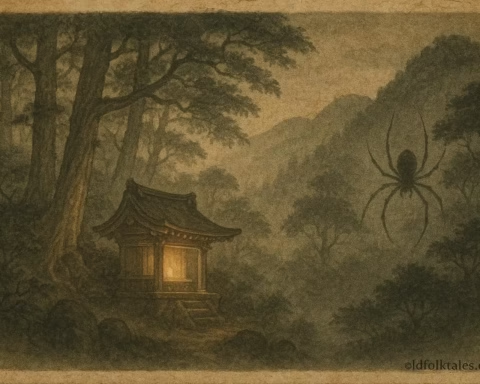
Muso bowed in thanks and accepted shelter in a small hut at the edge of the settlement. As he knelt to recite his evening prayers, he heard the sound of the wind whispering through the bamboo and the soft rhythm of rain on the roof. Then, just before midnight, the air grew strangely still.
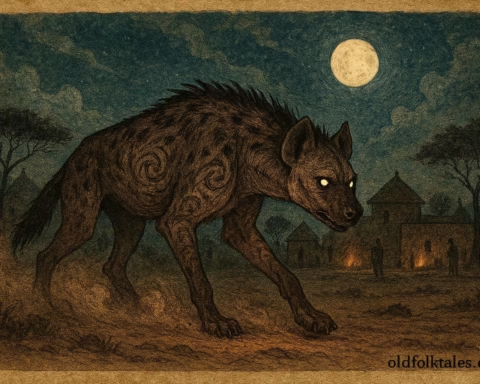
Encounter dragons, spirits, and beasts that roamed the myths of every civilization
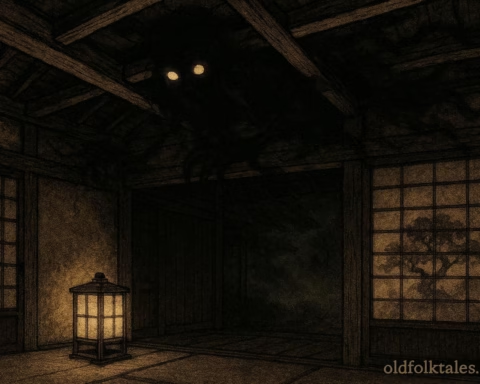
Through the silence came a noise that chilled him to the bone. It was a slow dragging sound, like hands clawing through earth. Muso rose and moved toward the door. When he looked outside, he saw a shadow crouched in the graveyard beyond the rice fields.
The moon had broken through the clouds, and by its light he saw the creature clearly. Its body was gray and thin like smoke. Its hair hung in tangled strands. It knelt beside a freshly dug grave, tearing at the flesh of the dead with trembling hands. Its mouth moved in a frenzy, devouring what was once sacred.
Muso whispered a prayer of protection and closed his eyes. When he opened them, the graveyard was empty, and the night seemed to hold its breath.
At dawn he went to the villagers and told them what he had seen. The old man lowered his head and said, “You have met the Jikininki, holy one. Long ago, there lived a temple keeper in this valley. He appeared devout, but his heart was full of greed. The offerings meant for the poor he hid away for himself. When he died, his soul was denied peace. Now he wanders as a Jikininki, a corpse eater, cursed to feed upon what he once refused to share.”
Muso felt great sorrow for the spirit and asked where the temple ruins lay. The villagers begged him not to go, but he was steadfast in his purpose. “Even a cursed soul,” he said, “deserves compassion and release.”
That evening, as the sun faded behind the mountains, Muso climbed to the hill above the village where the ruins stood. The temple was nothing more than broken stones covered with moss, but the air felt heavy with unseen presence. He placed his lamp upon the ground and began to chant the sutras of purification, his voice steady and calm.
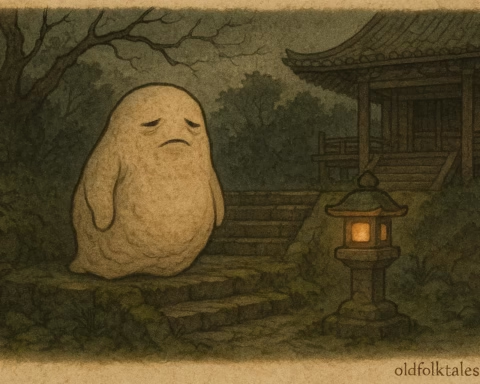
As his chant filled the air, a cold wind began to rise. The shadows thickened, and from within them stepped the Jikininki. Its eyes burned with sorrow and hunger. It spoke in a voice that trembled like the rustling of dry leaves.
“Holy one,” it said, “you see my torment. I was once a guardian of this temple. I recited prayers but never lived by them. I took offerings from the faithful and filled my belly while others starved. When death came, my spirit was judged unworthy. Now I am bound to this valley, devouring corpses, unable to rest.”
Muso looked upon the creature with compassion rather than fear. “Your punishment was born of your own greed,” he said gently, “but repentance is still possible. I will pray for your release.”
The Jikininki knelt before him, trembling. “I have watched centuries pass. No priest dared look upon me without horror. You alone offer pity. Please, end this hunger that binds me.”
Muso closed his eyes and began to chant once more. The sutras rose like wind through the forest, carrying light into the shadows. The Jikininki’s form wavered and began to dissolve. As dawn’s first light touched the hill, the creature let out a soft sigh that was neither human nor monstrous. Then it vanished, leaving behind only a faint scent of incense.
When Muso opened his eyes, the ruined temple was quiet. Where the Jikininki had stood, a single lotus flower had grown between the stones. He bowed deeply and gave thanks that compassion had triumphed over fear.
When he returned to the village, the people felt the air lighter and freer than before. No more whispers haunted their nights. They rebuilt the temple and brought offerings not of gold or pride but of gratitude.
Years later, travelers spoke of the monk who freed a cursed soul through kindness. They said that the valley became a place of calm where no evil spirit dared dwell. Muso continued his journeys, carrying the memory of the Jikininki as a reminder that even those consumed by greed could find peace through humility and mercy.
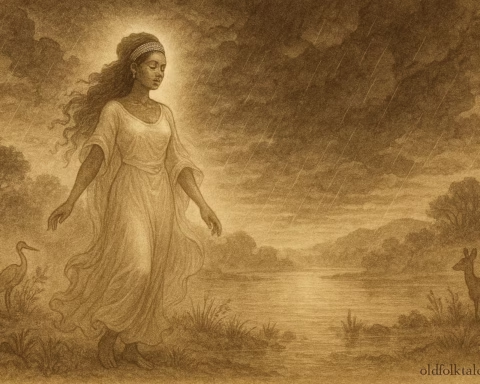
Explore the shadows of world mythology, where demons test the soul and spirits watch over mankind
Author’s Note
The story of the Jikininki carries a deep Buddhist message about karma and the weight of human desire. It teaches that greed corrupts not only the body but the soul. The Jikininki’s endless hunger is a reflection of spiritual emptiness. Yet through compassion and prayer, even a lost spirit can be redeemed. The tale invites all who hear it to seek generosity and humility, for only through such virtues can the soul find rest.
Knowledge Check
1. What are Jikininki according to Japanese folklore?
They are spirits cursed to eat corpses as punishment for greed and selfishness.
2. Who encountered the Jikininki in the story?
A wandering Buddhist monk named Muso.
3. Why was the temple keeper cursed?
Because he hoarded offerings meant for the poor and served his own greed.
4. How did Muso free the Jikininki?
By chanting sacred prayers that released its tormented soul.
5. What emotion guided Muso instead of fear?
Compassion and sorrow for the cursed spirit.
6. What lesson does the story teach?
That greed brings spiritual decay, but mercy and repentance can restore peace.