The Kachina, or Katsina, tradition is one of the most enduring and spiritually central ritual systems among the Hopi and other Pueblo peoples of the American Southwest. Publicly known accounts describe katsinam as spirit-beings connected to rainfall, fertility, ethical instruction, ancestral memory, and the maintenance of social balance. These ceremonies, practiced for centuries, are woven deeply into the agricultural cycles of the desert, where rainfall determines survival. Each Pueblo, Hopi, Hopi-Tewa, Zuni, and others, develops its own ceremonial calendar and spirit repertoire, but the shared belief remains that katsinam move between their sacred homes and human communities during certain seasons to bless, instruct, and sustain life.
Description
The Kachina ceremonial season traditionally begins in mid-winter and continues into late July, following the natural cycle from planting to harvest. During this time, masked dancers embody katsinam in a series of structured, community-centered rites.
Men who are initiated into the Katsina Society don carved wooden masks and costumes representing specific spirit-beings. These representations are deeply symbolic: each katsina has its own colors, patterns, songs, gait, and ritual purpose. Some bring gentle rains; others ensure crop health; others teach discipline, harmony, or humor.
Publicly documented ceremonies include:
-
Soyoko and Nataska appearances, offering moral warning and social guidance.
-
Powamuya (Bean Dance), marking renewal and the blessing of children.
-
Niman (Home-Going Ceremony), when katsinam return to their mountain or mesa homes after offering blessings for the agricultural year.
-
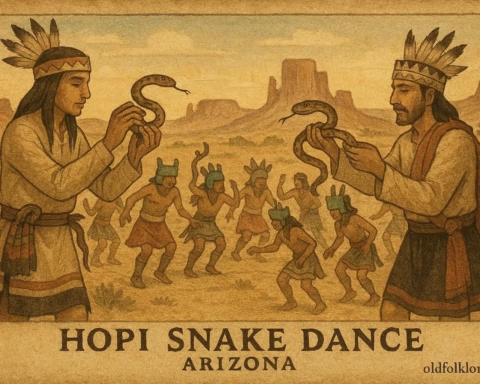
Plaza dances, where masked dancers perform rhythmic steps to drum and rattle accompaniment, moving in lines or circles with precise, tradition-bound choreography.
During many ceremonies, katsinam distribute gifts to children, reinforcing the bond between community, cosmos, and future generations. The katsina dolls (tiihu), carved by initiated men, serve a similar purpose, teaching young people to recognize the katsinam, understand their lessons, and respect the spiritual world that supports life.
What can be shared publicly emphasizes that these rites are not performances for display but sacred reenactments of relationships between humans and the spirit beings who sustain their world. The dances bring the community together, reaffirming social unity, agricultural hope, and ancestral continuity.
Mythic Connection
In Hopi and Pueblo cosmology, katsinam are more than symbolic figures, they are living intermediaries between the human community and the metaphysical world. They dwell in sacred mountains, mesas, lakes, or cloud realms. They respond to prayer, song, dance, and correct communal conduct.
Their primary gift is rain, essential in the arid Southwest. The rhythmic rising of dust beneath dancers’ feet, the soft thudding of drums, and the spiraled paths of movement all echo the arrival of storm clouds and the movement of water across the land. Thus, when katsinam dance, they re-enact the cosmic order in miniature: clouds are called, fertility is renewed, harmony is restored.
Equally important is moral instruction. Katsinam appear in many forms, kind, stern, humorous, frightening, wise. Their variety reflects the full spectrum of life lessons the community must remember. Through songs and actions, they teach virtues such as generosity, balance, humility, cooperation, and respect for elders.
Because the katsina system is intertwined with Pueblo spiritual law, certain teachings and ritual structures are private. But what is publicly known affirms that katsinam represent a vast spiritual landscape of ancestors, forces of nature, cosmic order, and the ongoing life of the world.
Author’s Note
This article summarizes publicly available knowledge of the Katsina tradition, respecting what Pueblo communities identify as private or restricted. What is shared here highlights the visible and widely discussed elements, seasonal dances, spiritual symbolism, communal instruction, and the profound relationship between humans, rain, and spirit-beings. The katsinam remind us that ceremony is not performance but an act of balance, gratitude, and cosmic responsibility.
Knowledge Check
1. Who are the katsinam?
They are spirit-beings in Hopi and Pueblo cosmology linked to rain, fertility, ancestral memory, and moral guidance.
2. When is the katsina ceremonial season?
It typically spans mid-winter to late July, mirroring agricultural cycles.
3. What is the purpose of katsina masks and costumes?
They allow initiated dancers to embody specific katsinam, each with its symbolic features and spiritual role.
4. What is the Powamuya ceremony?
The Bean Dance, marking renewal and blessings for children, including teaching and community cleansing.
5. Why are katsina dolls important?
They teach children to recognize katsinam and understand their lessons, linking education with tradition.
6. What is the Niman ceremony?
The Home-Going Ceremony, when katsinam return to their spiritual homes after blessing the community.