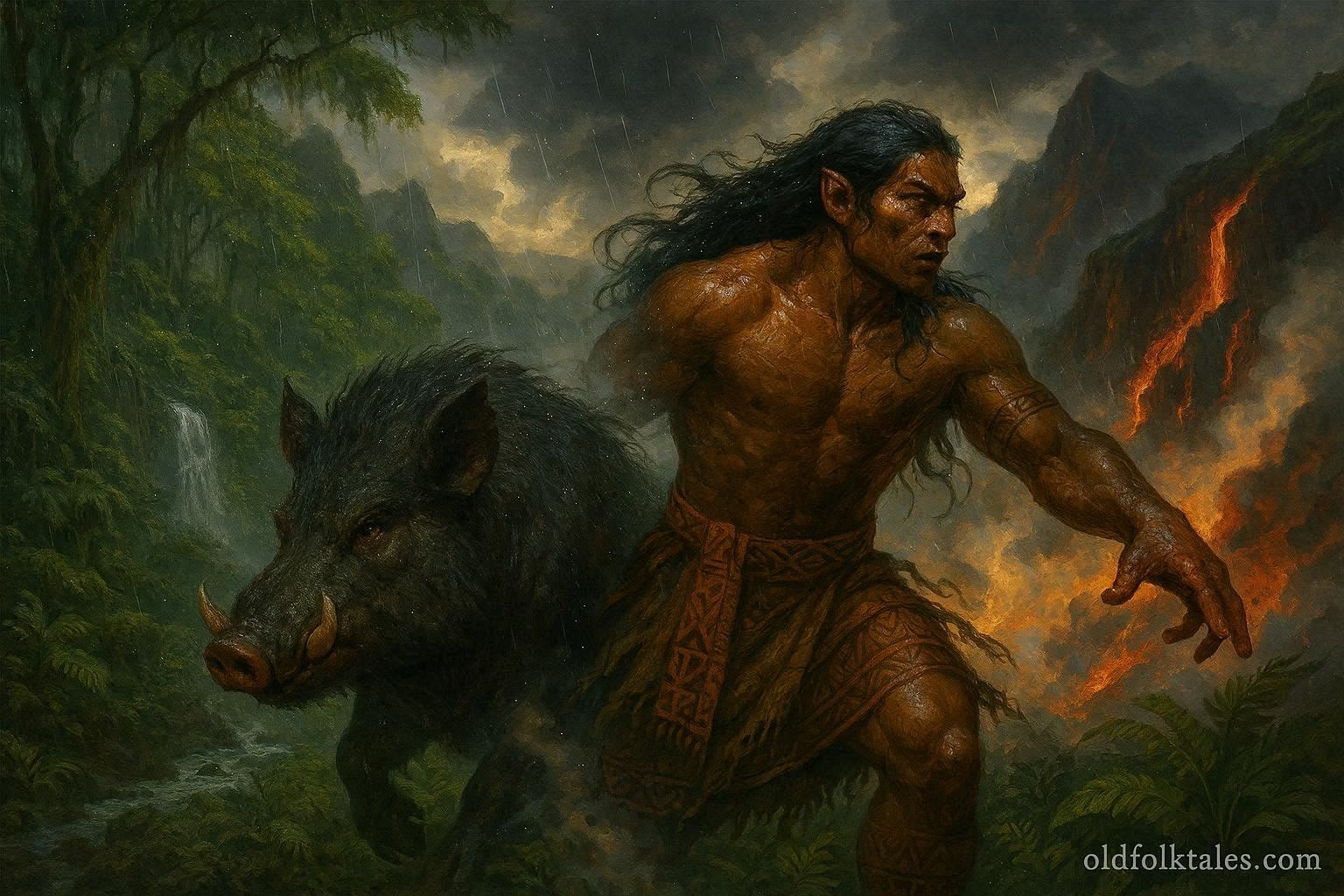
Kamapuaʻa, the famed hog-man kupua, is one of the most dynamic heroes of Hawaiian oral tradition, part trickster, part warrior, part lover, and part fertility deity aligned with Lono, the god of agriculture, rain, and renewal. His stories sweep across the islands: from his exploits on Oʻahu and Maui to his fiery entanglement with Pele, the volcano goddess of Hawaiʻi Island.
In Hawaiian cosmology, a kupua is a being of exceptional mana (spiritual power) who possesses multiple bodies and transformations. Kamapuaʻa is among the most celebrated of them, able to shift between a handsome young man, a monstrous boar, a ridge-backed hog, and even a fish-form known as humuhumu-nukunuku-a-puaʻa, allowing him to move between land, forest, and ocean. These transformations express his command over nature’s boundaries, wet and dry, cultivated and wild, human and elemental.
Explore ancient traditions that connected the human spirit to divine realms and cosmic order
Birth and Genealogy
Kamapuaʻa’s origins are layered and vary by island, but a well-known line from Fornander captures the traditional summary:
“Kamapuaa was the son of Hina … at the end of a long life of marvelous exploits he is said to…”
This fragment, drawn from the public-domain Fornander collection, reflects the widespread knowledge of his birth to Hina, a lineage of immense spiritual prestige. Because Hawaiian stories place heavy emphasis on genealogy, Kamapuaʻa’s ancestry ties him to multiple districts and chiefs, grounding his deeds in landscape and kinship.
Appearance and Powers
In human form, Kamapuaʻa is described as energetic, tall, compellingly handsome, and sometimes mischievously arrogant. But his boar form, the aspect most often associated with him, is massive, bristled, tusked, and nearly unstoppable. This shape embodies untamed vitality, fecundity, and the unstoppable power of new growth: what the rains of Lono bring each season.
His powers include:
- Shape-shifting: human, boar, fish, and intermediate forms
- Controlling rains and vegetation: an extension of his ties to Lono
- Invulnerability to fire when in certain forms
- Magical escape tricks, including dissolving into water or slipping through the earth
- Land-making and boundary-shaping, altering the landscape in mythic time
- Charisma and seduction, often leading to humorous or dramatic episodes
Youthful Exploits and Conflicts
Many narratives begin with Kamapuaʻa as a rebellious youth on Oʻahu, often clashing with chiefs and stealing from them, not out of cruelty, but from a trickster’s desire to test power and challenge greed. His rough early deeds serve as moral stories: chiefs who hoard food or mistreat the land attract Kamapuaʻa’s ire, while those who observe pono (right conduct) may earn his respect.
He eventually gathers companions and travels through the islands, battling tyrannical chiefs. In Maui traditions, he fights the chief Olopana; in others, he matches wits and strength with various kupua, sometimes winning territory, sometimes learning humility. These episodes are frequently humorous, showcasing Hawaiian storytelling’s blend of slapstick, sacred lessons, and landscape explanation.
The Legendary Romance with Pele
Kamapuaʻa’s most famous cycle recounts his confrontation and love affair with Pele, the volcano goddess of Kīlauea. This is one of the great oppositional pairings in Polynesian myth:
- Kamapuaʻa = rain, vegetation, wetness, fertility (Lono)
- Pele = fire, lava, destruction, heat (Ka wahine ʻai honua)
Their clash is both literal and symbolic. When Kamapuaʻa arrives in Hawaiʻi seeking Pele’s affection, she mocks his boarish appearance. Infuriated, he threatens the volcano lands with the floods and rains of Lono. Pele retaliates with her fiery might. Their battles create a dialogue of elemental forces: water quenching lava, lava evaporating water.
Eventually, as so often in Hawaiian stories, conflict gives way to intimacy. They become lovers, though tumultuous ones. Their children are spirits tied to different natural phenomena: some associated with steam vents, others with lush vegetation or shifting lava fields.
But the relationship is not permanent. Both embody opposite realms, and the world cannot remain balanced if either permanently conquers the other. So they part, Kamapuaʻa taking the windward (wet) side of the islands, Pele ruling the leeward (dry) volcanic slopes. This division explains ecological and meteorological patterns across Hawaiʻi.
Transformation into Fish and Exile to the Sea
After his great exploits, Kamapuaʻa eventually transforms fully into his fish-body form, humuhumu-nukunuku-a-puaʻa, and lives in the ocean, surfacing occasionally near windward coasts. Some stories say he does this to end his conflicts; others say it is his final evolution, an embodiment of all Hawaiian environments: forest, field, volcano, and sea.
Moral and Cultural Themes
Kamapuaʻa symbolizes:
- Regeneration and Fertility: His affinity with Lono highlights planting seasons, rainfall, and growth.
- The Balance of Opposites: His romance with Pele teaches that creation requires both wet and dry, restraint and eruption, love and conflict.
- Transformation of Character: His wild youth matures into leadership, showing that spiritual power must be disciplined.
- Reciprocity with the Land: His conflicts often defend communities oppressed by unjust chiefs, illustrating the Hawaiian ideal of pono, righteous balance.
- The Creative Power of Kupua: Shape-changing is not mere magic but a metaphor for adaptability and identity rooted in place.
Kamapuaʻa stories, especially in Fornander and Malo, also serve as place-based maps: cliffs, valleys, reefs, and gulches become living records of his battles, footsteps, or transformations.
Author’s Note
Kamapuaʻa’s tales illustrate the richness of Hawaiian oral literature, where humor, romance, elemental forces, and deep ecological knowledge intertwine. It is crucial to differentiate authentic 19th-century chant fragments and native histories from later synthesized or Christian-influenced retellings. The Kamapuaʻa–Pele cycle especially reflects Hawaiian understandings of land stewardship, natural cycles, and the sacred interplay of fire and rain.
Knowledge Check (Q&A)
- Q: What type of being is Kamapuaʻa?
A: A kupua, Hawaiian demigod/shape-shifter capable of multiple forms. - Q: What elemental force is Kamapuaʻa associated with?
A: Rain, fertility, and wet growth, aligned with the god Lono. - Q: Which goddess is Kamapuaʻa famously linked with?
A: Pele, the volcano goddess. - Q: Name one of Kamapuaʻa’s alternate forms.
A: Boar, human, ridge-backed hog, or humuhumu-nukunuku-a-puaʻa (fish). - Q:What ecological explanation arises from his separation from Pele?
A: Kamapuaʻa takes the wet windward sides; Pele rules the dry volcanic leeward slopes. - Q: What moral lesson is central in his youthful exploits?
A: Challenging injustice and learning righteous behavior (pono).
Sources:
- Fornander, Collection of Hawaiian Antiquities and Folk-Lore(public domain; Ulukau)
- Malo, Beckwith, and later Hawaiian cultural scholarship
- Secondary commentary from contemporary Hawaiian scholars (e.g., Kameʻeleihiwa)
Origin: Hawaiʻi, with strong narrative centers on Maui, Oʻahu, and Hawaiʻi Island.
Pre-contact oral traditions; written collections 19th–early 20th century.