Kava ceremonies, central to Melanesian and Polynesian cultures, are among the oldest and most enduring ritual traditions in the Pacific. The ceremonies revolve around kava, a drink made from the root of Piper methysticum, revered for its mildly sedative and calming properties. Across Vanuatu, Fiji, Tonga, and Samoa, kava is not merely a beverage but a symbolic conduit connecting the living to ancestral spirits, deities, and the community itself.
Historical and ethnographic studies trace kava rituals back centuries, embedded in the cosmologies of Pacific islanders. Mythical accounts often describe the origin of kava as a divine gift from ancestral deities or culture heroes, intended to strengthen social bonds, resolve conflicts, and honor spiritual guardians. Over time, ceremonial protocols have codified the preparation, serving, and drinking of kava, reflecting societies’ respect for hierarchy, reciprocity, and spiritual propriety.
Description of the Ceremony
A kava ceremony is both structured and symbolic, with regional variations reflecting local traditions:
-
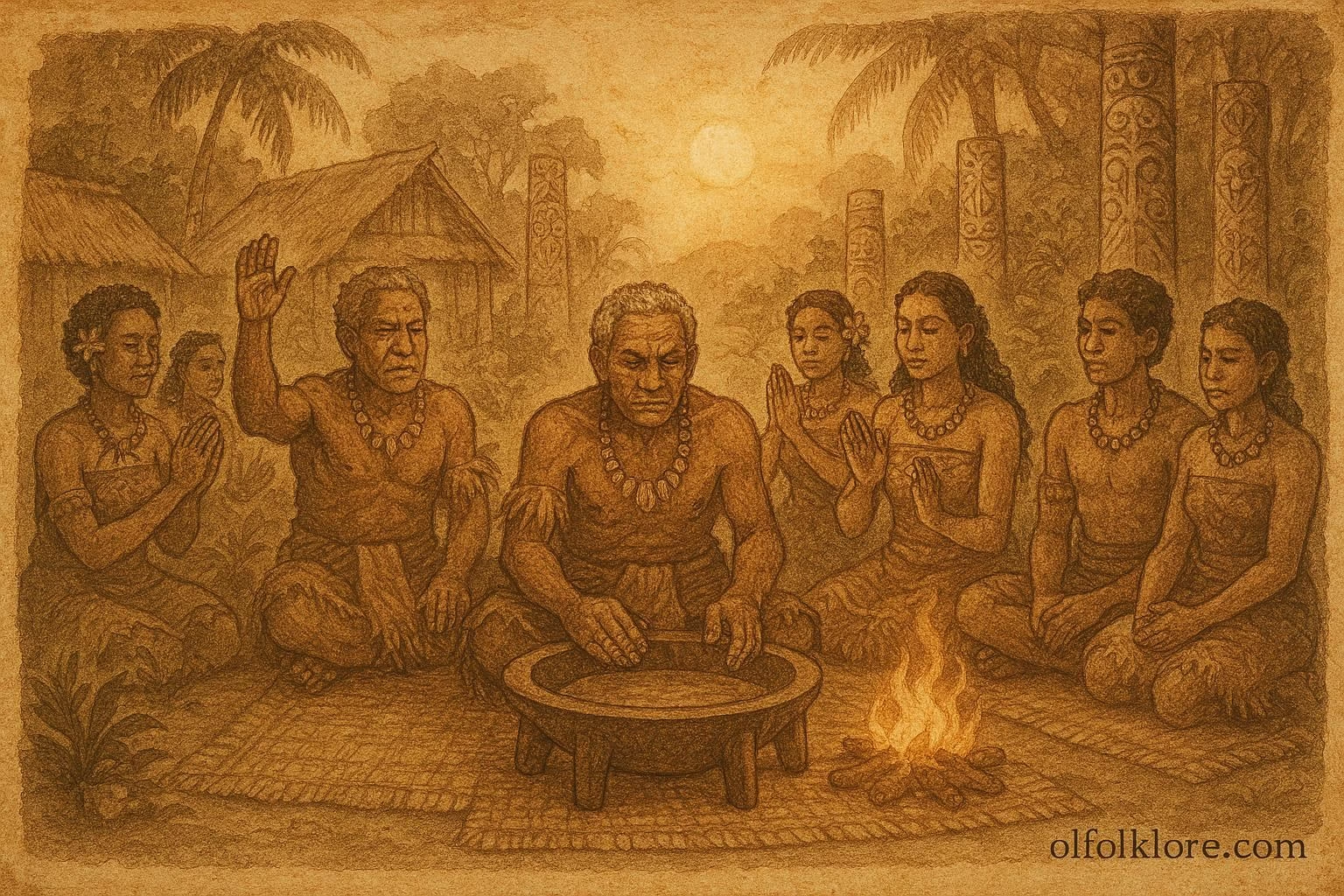
Vanuatu: Participants gather in a communal space, typically seated on mats around the designated kava bowl. A ritual specialist or elder, often male, prepares the drink by pounding or grinding the kava root, then mixing it with water. Drinks are served in strict order, usually elders first, followed by community members, and accompanied by prayers invoking ancestral guidance. Gestures of respect, such as bowing or raising the cup, punctuate the ritual.
-
Fiji: Known locally as yaqona, Fijian ceremonies emphasize community harmony and hierarchy. The yaqona root is meticulously prepared, sometimes by women, and served in a polished bilo (coconut shell cup). Each serving includes prescribed rituals: claps, chants, and acknowledgment of elders and chiefs. The ceremony can mark welcoming guests, initiating agreements, or celebrating major events.
-
Tonga: In kava circles (tangata kava), the ceremony often begins with a formal speech (talanoa) or prayer, followed by the preparation of the root in a communal bowl. Drinks are distributed from highest-ranking individuals to others, emphasizing social order. Traditional songs or chants may accompany the service, honoring both ancestral spirits and contemporary leaders.
-
Samoa: The ava ceremony is characterized by strict formality, where men are the primary participants, though women may assist in preparation. Each step, mixing, serving, and drinking, is codified by ritual gestures, and speeches reinforce genealogical ties, respect for chiefs, and communal solidarity.
Despite variations, common elements unify the ceremonies: the kava root, ceremonial preparation, communal seating, protocol-driven distribution, and invocations of ancestors or spiritual guardians.
Mythic Connection and Symbolism
Kava ceremonies embody the Pacific conception of the spiritual and social world as interconnected. In myth, kava is a medium bridging mortals and ancestral spirits, facilitating guidance, reconciliation, and communal unity. Drinking kava reinforces reciprocal relationships, as participants acknowledge each other’s place within the social and cosmic hierarchy.
The ritual gestures, bowing, raising the cup, or ceremonial claps, symbolize respect, humility, and acknowledgement of both human and spiritual authorities. In many traditions, kava also mediates disputes or solemnizes important agreements, making it a tangible expression of law, morality, and spiritual oversight.
Kava’s psychoactive properties, producing relaxation without intoxication, have been interpreted as a physical manifestation of spiritual calm and social harmony, emphasizing the interdependence of mind, body, and community. These rituals thus illustrate how Oceanians cultivate sacred spaces in everyday life, using ritual to reinforce cultural continuity and ancestral remembrance.
Author’s Note
Kava ceremonies reveal the profound interweaving of spirituality, social order, and ancestral respect in Pacific island cultures. Beyond a communal drink, kava serves as a symbolic and ritualized thread connecting generations, embodying the values of respect, unity, and reverence for the unseen world. Observing these ceremonies offers insight into how communities navigate social hierarchies, honor the past, and maintain cultural identity, preserving traditions that are at once ancient and vibrantly alive.
Knowledge Check
1. What is the origin of kava ceremonies?
Rooted in Melanesian and Polynesian cosmology, linking communities to ancestors and deities.
2. What is the primary function of kava in these rituals?
Kava acts as a ritual medium, fostering spiritual connection, social cohesion, and ceremonial propriety.
3. How is kava typically prepared?
The root is pounded or ground and mixed with water, often by a designated ritual specialist.
4. How is the drink distributed?
Drinks are served in strict social order, usually beginning with elders or chiefs, reflecting hierarchy and respect.
5. What symbolic gestures accompany the ceremony?
Bowing, raising the cup, clapping, and chanting honor ancestors, chiefs, and communal values.
6. How do the ceremonies vary across regions?
Vanuatu emphasizes ancestral prayers, Fiji emphasizes welcoming guests and hierarchy, Tonga features chants and formal speeches, and Samoa stresses ritualized gestures and chiefdom protocol.