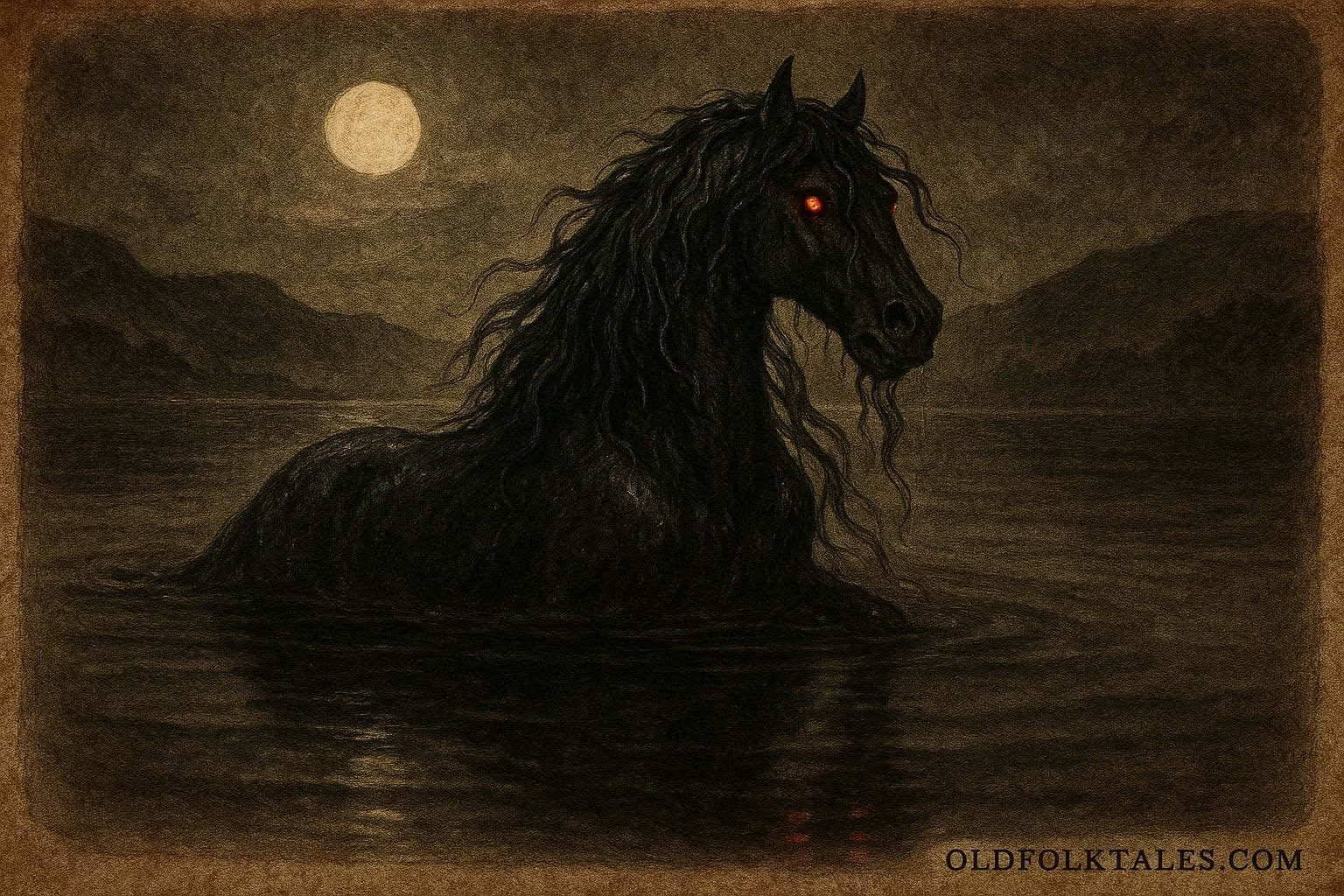
The Kelpie and Each-Uisge are supernatural water spirits of Scottish and Irish Gaelic tradition, most often taking the form of a horse but capable of shapeshifting into a human or hybrid form. Linguistically, “each-uisge” literally means “water-horse,” describing its association with lochs, rivers, or sea inlets. Kelpies inhabit rivers and streams, while each-uisge are associated with larger lochs and the sea, and are generally considered more dangerous.
Appearance in tales varies by region: as a shimmering, attractive horse, sometimes with a mane flecked like sea foam, the creature lures unsuspecting humans, often travelers or children, onto its back. Once mounted, the rider becomes trapped by a sticky, iron-like tack or the creature’s magic, and the water-horse dives into its home waters, drowning its victim. Some stories describe the each-uisge with terrifying human features at the last moment, eyes that gleam red, teeth like fangs, revealing its monstrous nature.
Kelpies and each-uisge may also assume human form, particularly to seduce or manipulate, blending beauty and danger in their liminal identity as both familiar and monstrous. Some versions depict them as protective or mischievous rather than lethal, depending on local tradition.
Powers and Behavior
- Luring and predation: Both kelpies and each-uisge are predatory spirits, enticing humans to mount them and dragging them into watery graves. Each-uisge are typically more lethal than kelpies, leaving few survivors.
- Shape-shifting: They can take human form, sometimes appearing as beautiful strangers, servants, or lovers to ensnare victims.
- Supernatural strength and speed: Once mounted, the water-horse can cross land at unnatural speed before plunging into deep water, often leaving no trace of the victim.
- Magic in harness or pelt: Folklore frequently emphasizes magical properties of their tack or hides; capturing a water-horse’s pelt can bind it, while removal or destruction of the skin may release or kill the creature.
- Ambiguity of intent: Regional variations sometimes depict kelpies as mischievous or morally ambivalent, whereas each-uisge are almost always deadly, reflecting a spectrum of danger in aquatic folklore.
Myths and Beliefs
- 19th-century collections: John Francis Campbell and William Henderson document numerous accounts from Gaelic informants, detailing river- and loch-based water-horses, their deadly methods, and occasional strategies to thwart them.
- Local cautionary tales: Kelpies and each-uisge often serve as warnings to avoid deep water, teach respect for rivers and lochs, and enforce social and environmental caution, particularly for children and travelers.
- Ritual and magic: Some tales reference protective charms, knots in bridles, or specific methods for killing or binding the water-horse, reflecting a folkloric interest in controlling natural and supernatural hazards.
- Cultural permeation: Over time, these water-horses became central in Scottish storytelling, local legends, and poetic imagery, often symbolizing the dangerous allure of natural landscapes.
Cultural Role and Symbolism
Kelpies and each-uisge serve as liminal creatures, residing between human and supernatural, land and water:
- Moral caution: They teach vigilance and respect for natural hazards; children and travelers are warned to avoid dangerous waters.
- Symbol of nature’s unpredictability: Water-horses embody the dual beauty and peril of rivers and lochs, symbolizing both abundance and death.
- Liminality and duality: Shape-shifting and hybrid forms reflect the uncertain boundary between human and supernatural in Gaelic imagination.
- Integration with daily life: Tales show how folklore mediates human interaction with potentially lethal landscapes, embedding ecological awareness in narrative.
- Cultural continuity: Kelpies and each-uisge are a window into Gaelic oral tradition, demonstrating continuity of motifs across Scottish and Irish coastal communities.
Author’s Note
The kelpie and each-uisge represent one of the most vivid examples of Scottish and Irish water folklore. Their consistent recording in 19th-century fieldwork indicates strong oral transmission and cultural persistence. Collectors like Campbell and Henderson documented these stories from Gaelic-speaking informants, preserving regional distinctions between river-based kelpies and sea/loch each-uisge. These creatures illustrate how folklore encodes environmental hazards, social caution, and moral instruction into stories that are both terrifying and fascinating.
While often portrayed as lethal, they also embody the aesthetic and symbolic fascination with water, its beauty, unpredictability, and capacity to shape human experience. Understanding these beings requires considering both their folkloric role and their function as cultural metaphors for liminality, danger, and the natural world.
Knowledge Check
- What is the literal meaning of each-uisge?
→ “Water-horse” in Scottish Gaelic. - How do kelpies differ from each-uisge in traditional tales?
→ Kelpies inhabit rivers/streams and are sometimes mischievous; each-uisge inhabit lochs/sea and are usually deadly. - What methods do these water-horses use to capture victims?
→ They lure humans to mount them, then dive into water, drowning the victim; sticky pelts or magical harnesses trap riders. - Can kelpies and each-uisge take human form?
→ Yes; they sometimes appear as beautiful humans to seduce or trick victims. - What cultural purpose do these myths serve?
→ Teach caution near dangerous waters, convey respect for natural hazards, and transmit ecological and moral lessons. - Which 19th-century collectors documented these tales?
→ John Francis Campbell and William Henderson.
Source: John Francis Campbell, Popular Tales of the West Highlands; William Henderson, Folklore of Scottish Lochs and Springs
Origin: Scottish Highlands, Hebrides, and Irish coasts; 18th–19th-century oral attestation collected in 19th–early 20th-century ethnography