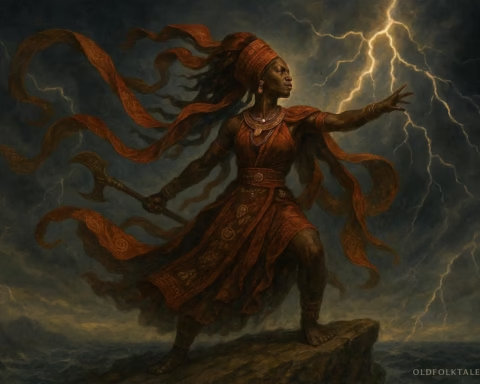
Before time learned to move in measured breaths, before mountains raised their white crowns above the clouds, the gods of the Upper Realm gathered in a council of troubled silence. Across the Middle World, chaos coiled like a serpent, demons walked openly among humans, sowing discord, hunger, and violent ambition. The cosmic balance trembled, and even the Dharma winds that carried truth and compassion faltered. In this gathering, the gods spoke of a destined champion named Gesar, whose emergence alone could restore harmony.
From this anguish rose the radiant deity Tonpa Shenrab, whose voice carried the calm of eternity. “We must send a champion,” he proclaimed, “one born of heaven yet shaped by earth’s suffering. A warrior who can cut through illusion and restore the path of harmony.”
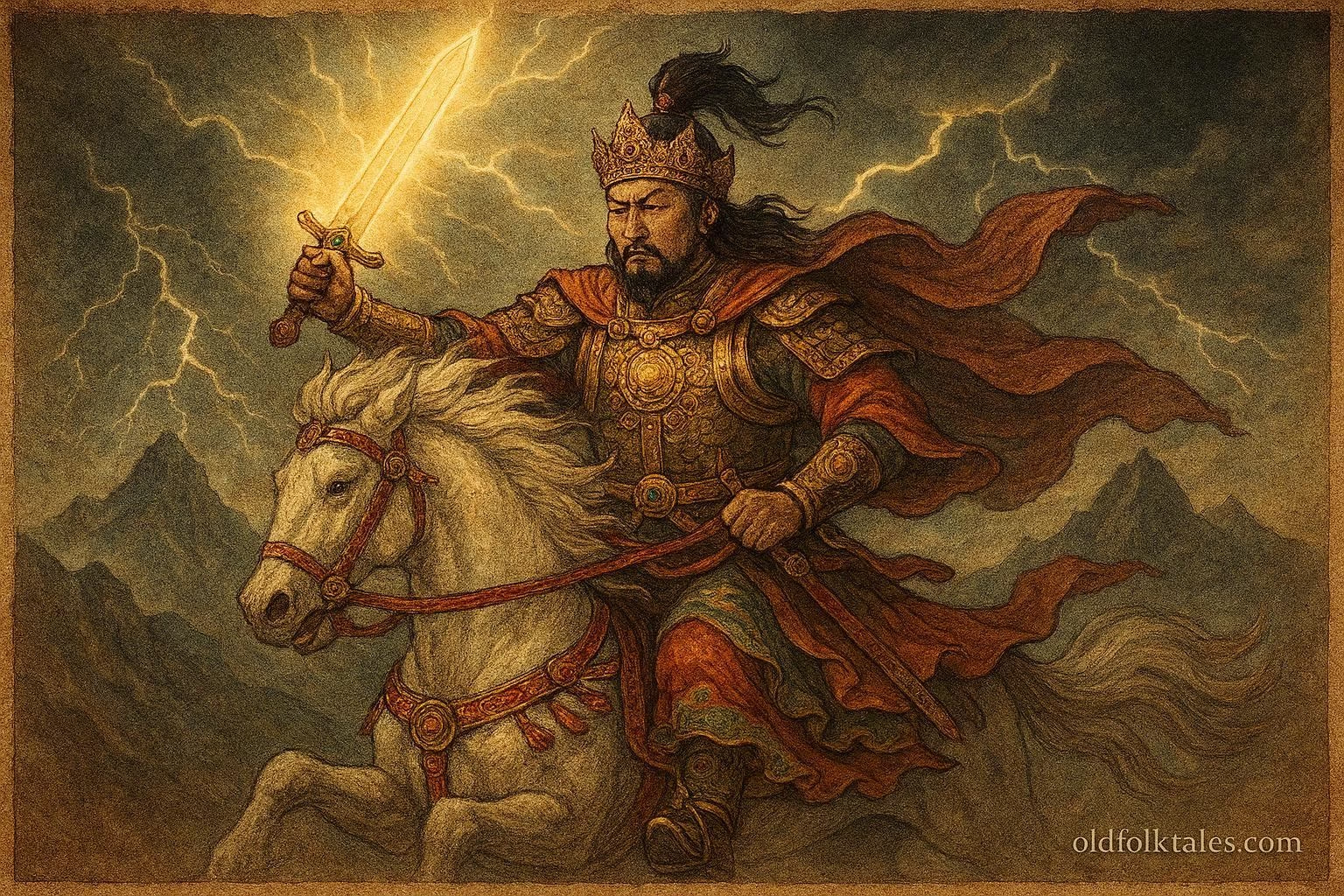
Thus was conceived Gesar, not from mortal womb but from divine decree. From the heart of a thundercloud he descended, wrapped in a robe of stormlight. His infant cry shook the peaks, and the guardians of the four directions bowed in recognition. Yet to fulfill his purpose, he was entrusted to the mortal world, born in the humble land of Ling, beneath the watch of wise elders and suspicious chiefs who sensed destiny’s weight in the child’s eyes.
Even as a boy, Gesar was… otherworldly. He spoke to yaks in a language of winds, tamed wild horses with a touch, and saw through the duplicities of men. But his divine gifts bred fear. The regent of Ling, Todong, driven by envy and a heart twisted by demonic whispers, banished the youth and his mother to the harsh frontier.
Rather than crush him, exile forged Gesar like steel in the furnace of adversity.
Years passed. Gesar grew lean but unbroken, swift as a hawk and perceptive as a mountain hermit. He spent nights in meditation, receiving dreams from the gods, visions of a crown, of a sword forged from lightning, of battles where the fate of worlds hinged on his choices.
Then came the prophecy’s turning. A great horse race was announced: the winner would claim the throne of Ling. Rivals gathered, their steeds groomed with precious oils, their armor gleaming. But on the horizon appeared a rider clad in rough skins, mounted on a demonic horse whose mane shimmered like burning frost, Gesar, the banished one, returned from the edges of the world.
Laughter met him. Jest and mockery followed. Yet as the race began, a divine wind surged behind him. His horse leapt as though the sky bent downward to lift it. In a streak of white fire, Gesar crossed the finish, leaving the proud riders of Ling stunned and speechless.
He was crowned King Gesar of Ling, but coronation did not bring peace. The world was out of balance, and the demons who had whispered corruption into mortal ears now stirred at the rise of the sky-forged king.
THE HEROIC CHALLENGE
The first great foe was Klu-btsan, the serpent-demon lord who feasted on human discord. His fortress rose from a valley of poisoned rivers, its towers scaled like a monstrous dragon. Gesar rode at the head of the Ling warriors, though he warned them: “This battle is not for conquest, but for cleansing. Strike only when justice guides your blade.”
The demon king unleashed storms, illusions, and blinding rage, turning earth and sky against the hero. But Gesar invoked the mantra gifted from the Upper Realm. The storm stilled. The illusions broke. The serpent-demon fell beneath a blade that shone with the light of cosmic order.
But victory brought no celebration, for with each demon destroyed, Gesar felt the weight of power tighten around him. His divine origin lifted him above ordinary men, yet every victory risked drawing him into arrogance. His true struggle was not with demons, but with the pride that threatened to corrupt him.
THE MORAL STRUGGLE
When Gesar defeated Shing-khri, the demon of greed, he faced the temptation of wealth offered freely by the vanquished lord. Gold enough to feed ten kingdoms lay before him. His warriors begged him to take it, Ling was poor; its winters were harsh.
But Gesar saw the trap. “Wealth born of corruption cannot nourish the soul,” he said, turning away. His men cursed him. Some deserted. Yet Gesar remained steady, for he knew that power used without purity would doom all realms.
His greatest test came when Démon Queen Jomo seduced the dreams of his people, whispering that a king who refuses wealth, refuses glory, refuses indulgence is no king at all. Doubt crept through Ling. Farmers questioned him. Chiefs challenged him. Even his closest advisors wavered.
And Gesar felt the loneliness of righteousness.
In meditation atop the Snow-Mirror Peak, he cried out to the gods. “Why must a hero stand alone?” he asked.
The winds answered: “Even among gods, virtue is chosen, not given.”
Renewed, Gesar descended the mountain and confronted Jomo in battle, not with hatred, but with compassion. He offered her a chance to abandon chaos and return to the cosmic order. When she refused, he unleashed a purified flame that restored harmony to the shattered lands she ruled.
THE SYMBOLIC OUTCOME
Peace returned to Ling, not through Gesar’s sword alone but through his steadfast morality. He became known not only as a warlord but as a Balancer of Worlds, a king who fought so that compassion could thrive among mortals.
Legend says he never died. Instead, when the world grew stable again, Gesar mounted his lightning-born horse and rode into the clouds, leaving behind the promise:
“When darkness rises again, I shall return.”
AUTHOR’S NOTE
The Epic of King Gesar remains one of the longest and most enduring oral traditions in the world. In Tibetan culture, Gesar represents the ideal warrior-saint, ferocious in battle, uncompromising in morality, and divinely guided. His legacy teaches that true power lies not in conquest but in the disciplined heart that wields it.
KNOWLEDGE CHECK
-
What divine purpose led to Gesar’s birth?
-
How did exile shape Gesar’s character?
-
Why was winning the horse race significant?
-
What moral temptation did Gesar face after defeating Shing-khri?
-
How did he overcome Queen Jomo’s influence over the people of Ling?
-
What symbolic meaning lies in Gesar’s departure into the clouds?
CULTURAL ORIGIN: Tibetan and Mongolian epic tradition (1st millennium CE oral cycle)
SOURCE: Walther Heissig, The Gesar Epic and Tibetan Literature (1970).