In the elder dawn, when the vault of heaven still leaned close to the newborn earth, there lived a solitary man named Kintu. No one knew from where he had come, only that he walked with a calm power upon the red soil, tending a single cow whose milk was his only nourishment. He spoke little, yet the world seemed to pause around him, as though listening for his footsteps. Birds alighted upon his shoulders, storms parted above him, and the spirits of the land whispered that this lone wanderer was more than mortal flesh.
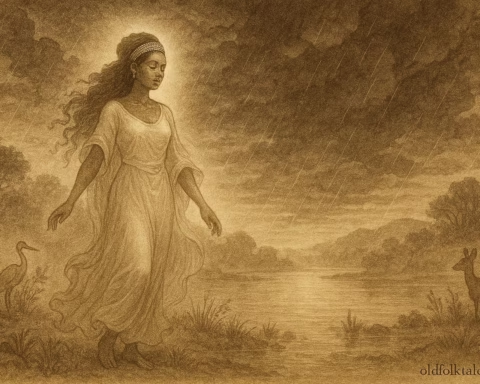
Far above, in the bright realm of Ggulu, lord of the sky, the divine family watched the strange man on earth. They marveled at his quiet mastery of the wild: how he shaped peace with nothing but his presence. Among them, Nambi, daughter of Ggulu, felt her heart stir with curiosity and an unspoken tenderness. She descended to earth with her sister, bringing gifts of food to the silent herdsman.
Kintu welcomed them with humility, offering only milk from his faithful cow. His manner was gentle, his eyes steady as deep water. Something in him seemed ancient, older than the hills, and Nambi returned to the heavens praising him. Her words troubled Ggulu, for he sensed the presence of destiny.
Before any bond could form between man and heaven’s daughter, Ggulu decreed that Kintu must undergo divine trials. For no mortal could wed a child of Ggulu nor rule a great people without proving his spirit against the measure of the gods. Kintu accepted without hesitation, for though he feared nothing, he honored the order of things.
He ascended into the sky realm, guided by Nambi’s hopeful gaze. There, before the gathered celestial host, Ggulu presented the First Trial:
Kintu must identify his single cow among a thousand heavenly cattle, identical in form and color, guarded by spirits invisible and cunning.
The hosts murmured, but Kintu remained still, listening, not with ears, but with memory. He closed his eyes. Across the vast corral came the faintest echo of a familiar breath, a warmth that had shared the lonely earth beside him. Kintu stepped forward and laid his hand upon one cow, and the beast nuzzled him. Ggulu nodded, for he had seen truth, bond, not chance.
The Second Trial followed:
Kintu must eat food prepared in heaven without dying, though heavenly nourishment was deadly to mortals.
Ggulu placed before him the celestial feast. It glimmered like molten stars, dangerous and beautiful. But Nambi secretly brought earthly herbs and mixed them with the divine meal, softening its power. When Kintu ate, the gods waited. When he rose unharmed, they gasped, believing him strengthened by sheer mortal resilience. Only Nambi knew the gentle deception she had woven for love.
But the Third Trial demanded more than cunning or loyalty.
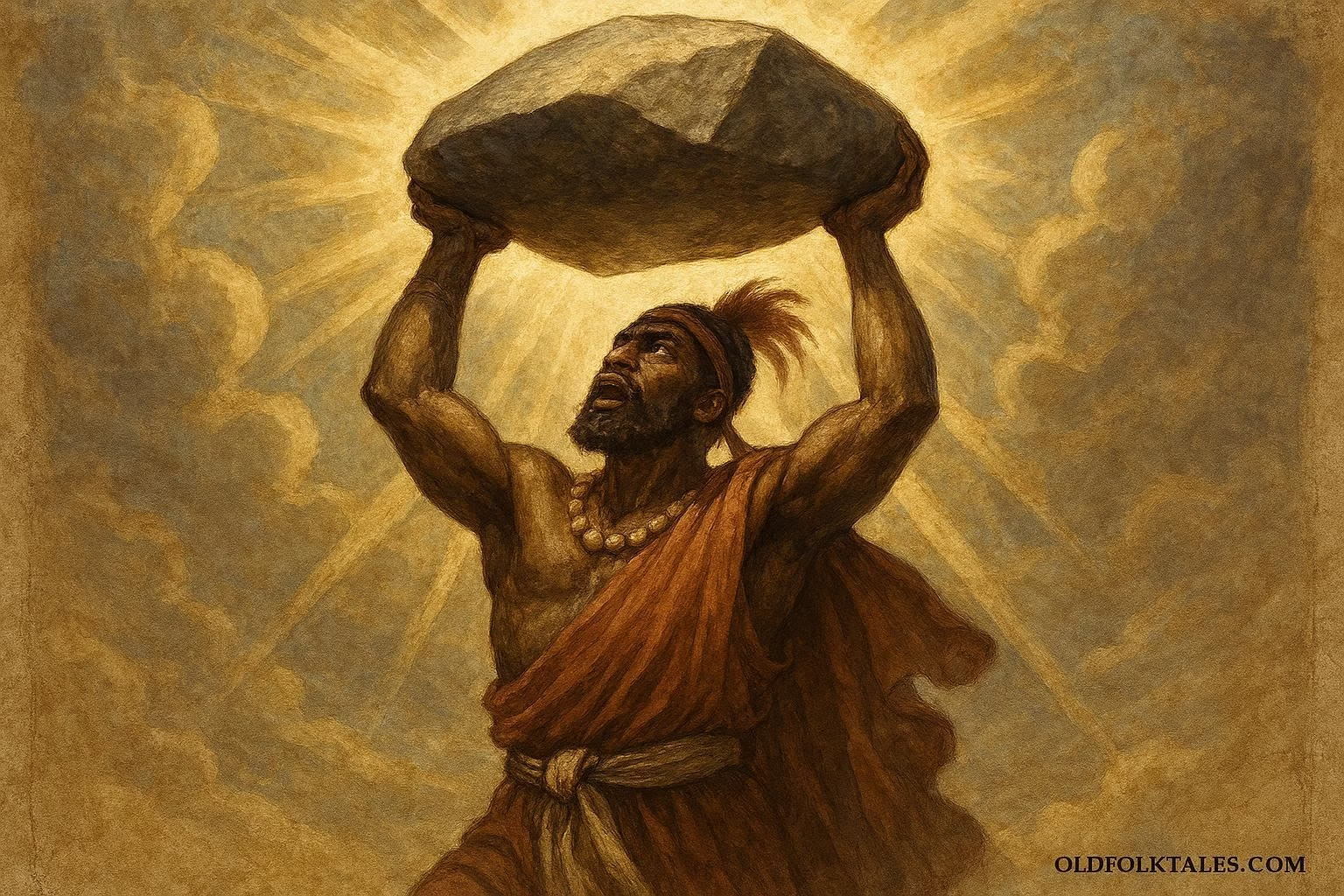
Kintu must lift Ggulu’s sacred stone, a weight forged from the sky’s foundation, a burden even spirits raised only with effort.
Kintu approached the stone, his breath steady, his heart invoking the memory of earth’s soil and the cow that had nourished him. He grasped the cold mass and pulled. For a moment, he faltered. His arms trembled; his mortal strength wavered. But within him rose a whisper, perhaps from the land that had birthed him, perhaps from destiny itself. He heaved again, and the stone rose. The sky realm thundered with awe.
Yet Ggulu was not satisfied. He knew that strength and perception could be lent, even borrowed. But moral courage, the heart’s loyalty, could not be faked. Thus came the Final Trial:
Kintu must resist Walumbe, the shadow-bringer and Nambi’s brother, whose honeyed words could twist any mortal mind.
Walumbe approached Kintu with the calm of a serpent. He offered him dominion over hidden realms, wealth beyond the forests, and a throne cushioned by fear instead of justice. Kintu listened, silent and stern. For a moment, a flicker crossed his face, temptation, perhaps, or the desire to ease the burdens he sensed would one day come. But Kintu bowed his head and answered:
“I will not rule through suffering. I seek harmony, not dominion.”
Walumbe’s eyes darkened. He withdrew, wounded in pride, and swore silently that he would one day descend to earth and mar Kintu’s kingdom with death and sorrow. But even that curse waited beyond the horizon of this moment.
Ggulu rose and proclaimed:
“Kintu has passed all trials. Let him wed my daughter and descend as the First Man-King, to begin the lineage of Buganda.”
Kintu and Nambi returned to earth in glory. With them came tools, seeds, and blessings of order. From their union came the beginnings of clans, laws, and sacred leadership. Yet Walumbe followed, bringing toil and mortality. Though sorrow entered the world, Kintu stood firm, shaping Buganda’s early kingdom into a realm of resilience and unity.
In time, he became not only a king, but a symbol, the bridge between heaven’s order and earth’s striving. His trials echoed through generations as reminders that leadership was not born of strength alone, but of humility, loyalty, and moral courage.
And long after his reign, when kings rose and fell, when the drums of Buganda resounded across the hills, the people remembered Kintu: the first to bear heaven’s trials, the first to shape a kingdom of earth and spirit.
Author’s Note
Kintu’s legacy stands at the foundation of Buganda’s kingship and identity. His story teaches that true leadership is earned through spiritual discipline, compassion, and the steadfast rejection of tyranny. The trials he faced are symbolic of the qualities expected of rulers across centuries: perception, endurance, moral judgment, and humility before divine order.
Knowledge Check
-
What was Kintu’s sole companion before meeting Nambi?
-
Why did Ggulu demand divine trials for Kintu?
-
How did Kintu identify his cow among the heavenly herd?
-
What moral challenge did Walumbe pose to Kintu?
-
What blessings did Kintu and Nambi bring to earth?
-
What symbolic meaning do Kintu’s trials hold for leadership?
Cultural Origin: Great Lakes Bantu cultural sphere; mythic traditions of Buganda (present-day Uganda).
Source: Apolo Kaggwa, Basekabaka be Buganda (1901), Buganda royal oral-historical traditions.