Description
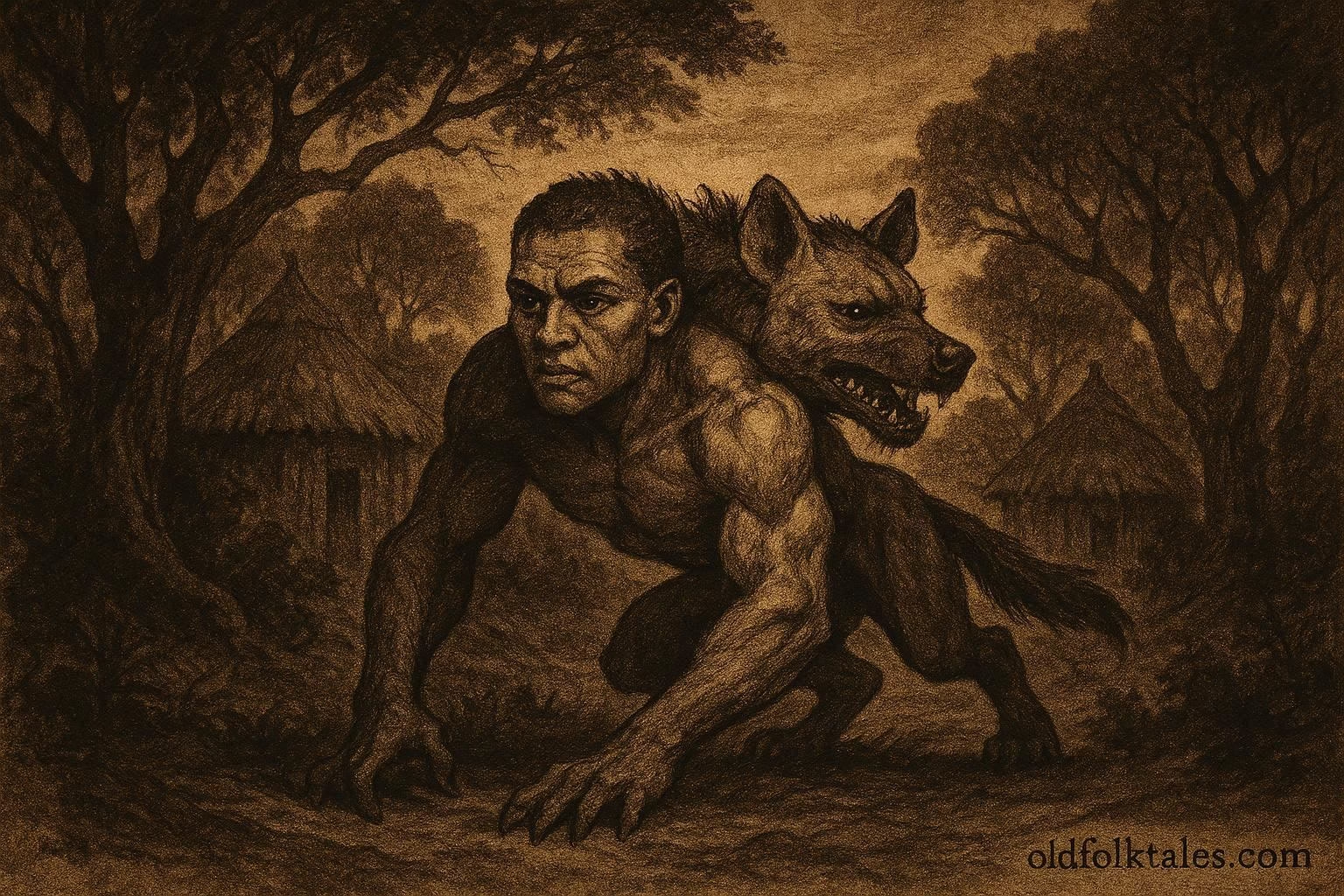
The Kishi, or plural Makishi, is a strikingly grotesque yet captivating creature from Ambundu folklore. It is a two-faced monster: a beautiful human visage at the front, complemented by a savage hyena face at the back. This duality defines its nature, outwardly alluring, inwardly lethal. The human face is described as handsome and charming, often male, used to lure unsuspecting women or travelers. The hyena face, positioned at the rear of the head, is monstrous, with jagged teeth and a snarling jaw, used to devour its victims once they are close.
In Chatelain’s 1894 Ki-Mbundu collection, one tale notes:
“A kishi had a hyena face at the back of its head and a fair human face in front, and lured the woman to her doom.”
Discover the gods, goddesses, and divine spirits who ruled the heavens and shaped human fate
This literal description emphasizes the creature’s duality and predatory intent. While it appears human at first glance, its hyena side betrays its carnivorous, supernatural nature, symbolizing the danger hidden beneath seduction and charm.
Makishi are often depicted as shapeshifters, though this trait is not always emphasized in early texts. Later reinterpretations sometimes present them with partial animal-human hybrid bodies, claws, or tails, enhancing their monstrous appearance. Despite their monstrous power, the Kishi’s primary method is deception, not brute force, the human face is central to its hunting strategy.
Behaviorally, the Kishi is solitary and nocturnal, emerging primarily to prey on humans. Its appetite for women reflects a folkloric emphasis on caution and virtue, warning listeners, especially young women, to beware of strangers whose appearances may deceive. While its presence in stories can terrify, it is rarely portrayed as overtly magical beyond its two-faced physiology; the horror lies in its cunning and the inevitability of its predation.
Cultural Role
Among the Ambundu people, the Kishi functions both as a cautionary figure and moral enforcer. It embodies the dangers of seduction, trust, and vulnerability. Tales of the Kishi serve as warnings: a beautiful exterior can conceal lethal intentions, and superficial attraction can lead to destruction. In a broader sense, the creature enforces community norms and social vigilance, teaching listeners, particularly women, to exercise discernment and caution in social interactions.
The Kishi’s hyena face carries symbolic weight. In Ambundu culture, hyenas are associated with treachery, gluttony, and scavenging, often linked to morally corrupt or dangerous behaviors. By giving the creature a hyena face, folklore amplifies its predatory and morally cautionary aspects. The Kishi, therefore, operates on two symbolic planes simultaneously: it is both a literal predator in stories and an emblem of hidden moral dangers in daily life.
Historically, these tales were transmitted orally, later documented in Ki-Mbundu by Héli Chatelain in the late 19th century. Chatelain’s translations preserve both the literal text and the narrative essence, offering rare insight into early colonial-era interpretations of Ambundu folklore. The 1894 volume remains an important archival source for scholars studying Bantu mythology, hybridity in folk monsters, and early ethnographic documentation.
Variants of the Kishi motif appear across Bantu-speaking regions (Angola, Congo), but the two-faced hyena-human version is specific to the Ambundu. While some modern retellings enhance shapeshifting or animal traits, Chatelain’s text emphasizes the moral and cautionary dimensions, focusing on the creature’s deceptive allure and deadly consequence rather than supernatural powers.
Symbolism and Meaning
The Kishi symbolizes duplicity, temptation, and hidden danger. The beautiful human face represents allure and superficial charm, while the hyena face embodies predatory instincts, gluttony, and the inevitable punishment for naivety. At a moral level, the creature warns against judging by appearances and succumbing to seduction.
In cultural terms, the Kishi also reinforces social vigilance and awareness, especially among young women, emphasizing the importance of discernment in interactions with outsiders. Its existence in myth serves as a metaphor for deceptive appearances in human relationships, a reminder that danger often hides in plain sight.
Additionally, the Kishi reflects the Ambundu people’s relationship with the natural and spiritual world. Hyenas, nocturnal and scavenging, represent forces outside human control, the wild, chaotic aspects of nature. By merging human and hyena traits, the Kishi embodies the boundary between the civilized and untamed, warning communities to respect both social and natural laws.
Encounter dragons, spirits, and beasts that roamed the myths of every civilization
Author’s Note
The Kishi fascinated me for its blend of horror and moral allegory. On one side, it is a predator of flesh; on the other, it is a predator of the mind, warning listeners of the consequences of gullibility and imprudence. Its enduring presence in Ambundu folklore highlights the power of myth to encode social values and survival strategies, especially in a culture where oral storytelling was central to community life.
Through Chatelain’s translation, the Kishi emerges not just as a monster but as a mirror of human fears: the dread of betrayal, the allure of temptation, and the fine line between attraction and danger.
Knowledge Check
- What is the Kishi’s defining physical characteristic?
→ It has two faces: a handsome human face at the front and a hyena face at the back of its head. - What is the Kishi’s primary method for preying on humans?
→ Deception: it uses its human face to lure victims close before attacking with its hyena face. - Which cultural group is the Kishi associated with?
→ The Ambundu people of northern Angola and related Bantu groups. - How does the Kishi function symbolically in Ambundu folklore?
→ As a warning about duplicity, temptation, and hidden dangers; it teaches social vigilance and moral caution. - Why are hyenas significant in Kishi stories?
→Hyenas symbolize treachery, gluttony, and moral corruption, highlighting the creature’s predatory and cautionary aspects. - What is the importance of Héli Chatelain’s 1894 text?
→It is a primary archival source documenting Ki-Mbundu tales, preserving the Kishi motif in early colonial ethnography.
Source:
- Chatelain, Héli. Folk-tales of Angola: Fifty Tales, with Ki-Mbundu Text, Literal English Translation, Introduction and Notes.American Folk-Lore Society, 1894 (Public domain), includes original Ki-Mbundu texts and literal English translations.
- “Kishi (folklore).” Summarizes the creature and cites Chatelain 1894.
Origin: Ambundu People, Northern Angola; recorded 1894 by Héli Chatelain in Folk-tales of Angola