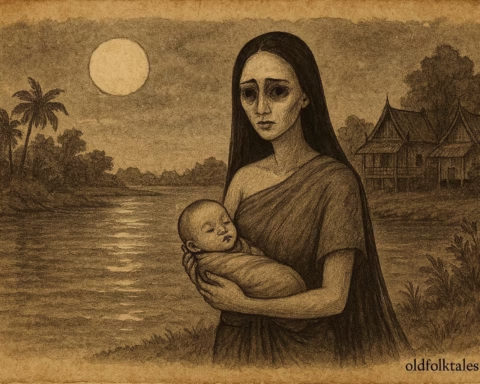
In ancient Japan, long before temples rose above the mountains and long before the quiet bells of the monasteries echoed across the fields, there lived a powerful spirit named Kishimojin. She was known among the people as a fearsome being, a demoness of immense strength who roamed the villages beneath the soft glow of the moon. While others hid from her shadow, Kishimojin carried herself with confidence and pride, for she was the mother of countless demon children who depended on her for survival.
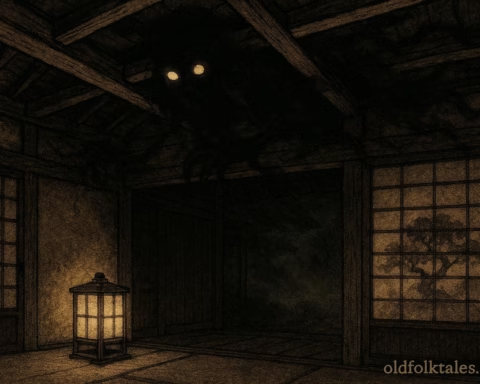
Her brood was always hungry. They moved like restless shadows around her feet, whispering for food that the forests and rivers could not provide. Kishimojin loved them deeply, and her devotion to her offspring was fierce. She would do anything to keep them alive. But in her desperation to feed them, she turned her gaze toward the human world. When night fell, she entered villages quietly and took the children she found sleeping in their homes. She never meant to cause sorrow. She was only acting as a mother protects her own.
But to the people, her actions became a terror whispered at dusk. Mothers clutched their infants close. Fathers stayed awake through the night. Every lost child brought grief that settled like a stone in the heart of the village. The name Kishimojin became one of trembling fear, yet none dared to confront her. What mortal could stand against a demon mother who carried the strength of the old spirits in her hands
Explore the mysterious creatures of legend, from guardians of the sacred to bringers of chaos
One day, the Buddha heard the cries of the grieving villagers who had prayed for help. He knew Kishimojin was not truly evil but lost in her devotion to her children. With calm resolve, he chose not to punish her but to teach her a lesson that would awaken her heart.
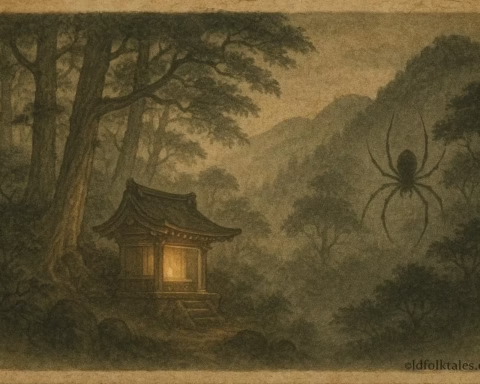
He went to the place where Kishimojin lived among the twisted roots of an ancient tree. While she was away searching for food, he picked up her youngest and most beloved child and gently carried the little one to a hidden place where no spirit could find him. The child remained safe but invisible to the world.
When Kishimojin returned and found her child missing, she cried out in grief. Her voice shook the mountains and her wails echoed across the sea. She tore through forests and flew across villages, searching in every shadow, every cave, every corner of the earth. Her heart broke with each passing moment. She who had caused so many to suffer now felt the same unbearable pain.
She finally arrived at the Buddha’s dwelling, trembling not with anger but with sorrow. She bowed her head in desperation and begged, Great one, help me. My child is gone. No agony compares to this. I cannot breathe. I cannot think. I would give anything to have my little one back.
The Buddha looked upon her kindly and said, Kishimojin, now you understand the pain the mothers of the world have felt because of your actions. Their sorrow is the same as yours. Their cries are the same as yours. You must see that your love for your children is no greater than their love for theirs.
Her eyes widened as the truth struck her deeply. For the first time she felt the weight of what she had done. Her heart softened. Her pride crumbled. The world looked different.
In tears she answered, I did not understand. I only wished to feed my children. I never sought to bring sorrow to others. What I have felt now is beyond any suffering I knew. Please return my child and I will change my ways.
The Buddha returned the little one to her arms. Kishimojin embraced the child, holding it close as if it might vanish again. She wept with relief and gratitude. The moment her tears fell to the ground, her spirit began to change. The fierce glow in her eyes softened into compassion. The wild storms in her heart calmed.
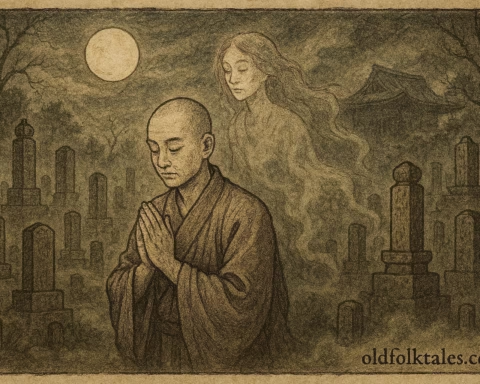
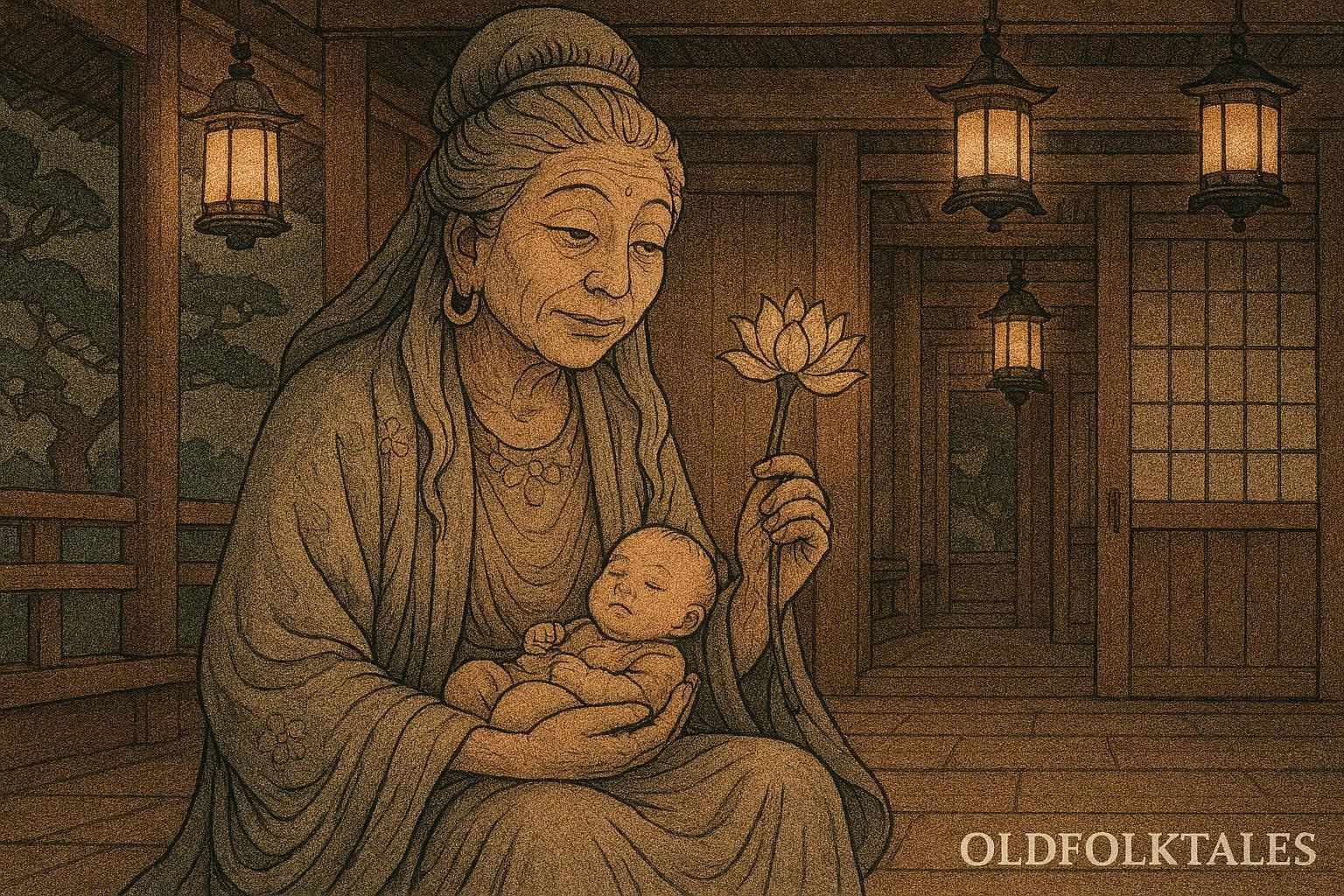
From that day on, Kishimojin became a guardian rather than a thief. She vowed to protect mothers and children everywhere. Instead of stalking the night in hunger, she brought blessings to those who prayed for safety. She guided infants through danger, warded off sickness, and brought comfort to women in childbirth. Temples built statues of her standing tall with a child in her arms and another clinging to her robes, symbolizing both her past and her transformation.
People no longer feared her. They called her the Mother of Children and offered fruit, flowers, and incense in gratitude. Her name became a symbol of love that could change even the darkest heart. Some said that on quiet nights her voice could still be heard singing lullabies for the children of the world.
Even now, in temples across Japan, Kishimojin stands as a reminder that compassion has the power to transform even the deepest shadows. From a demon mother to a divine protector, her journey became one of the most cherished stories of redemption in Japanese tradition.
Author’s Note
Kishimojin’s tale reflects the truth that love and understanding can reshape even the most fearful paths. Redemption is possible for any being who chooses compassion over harm.
Knowledge Check
1. What emotion drove Kishimojin to take human children
Her devotion to feeding her own children.
2. Who intervened to teach her the lesson of compassion
The Buddha.
3. What did Kishimojin lose that helped her understand human suffering
Her youngest and most beloved child.
4. How did Kishimojin change after realizing the pain she caused
She transformed from a demoness into a protector of mothers and infants.
5. What offerings did people later bring to her temples
Fruit, flowers, and incense.
6. What message does Kishimojin’s story ultimately teach
That compassion and understanding can transform even the darkest nature.