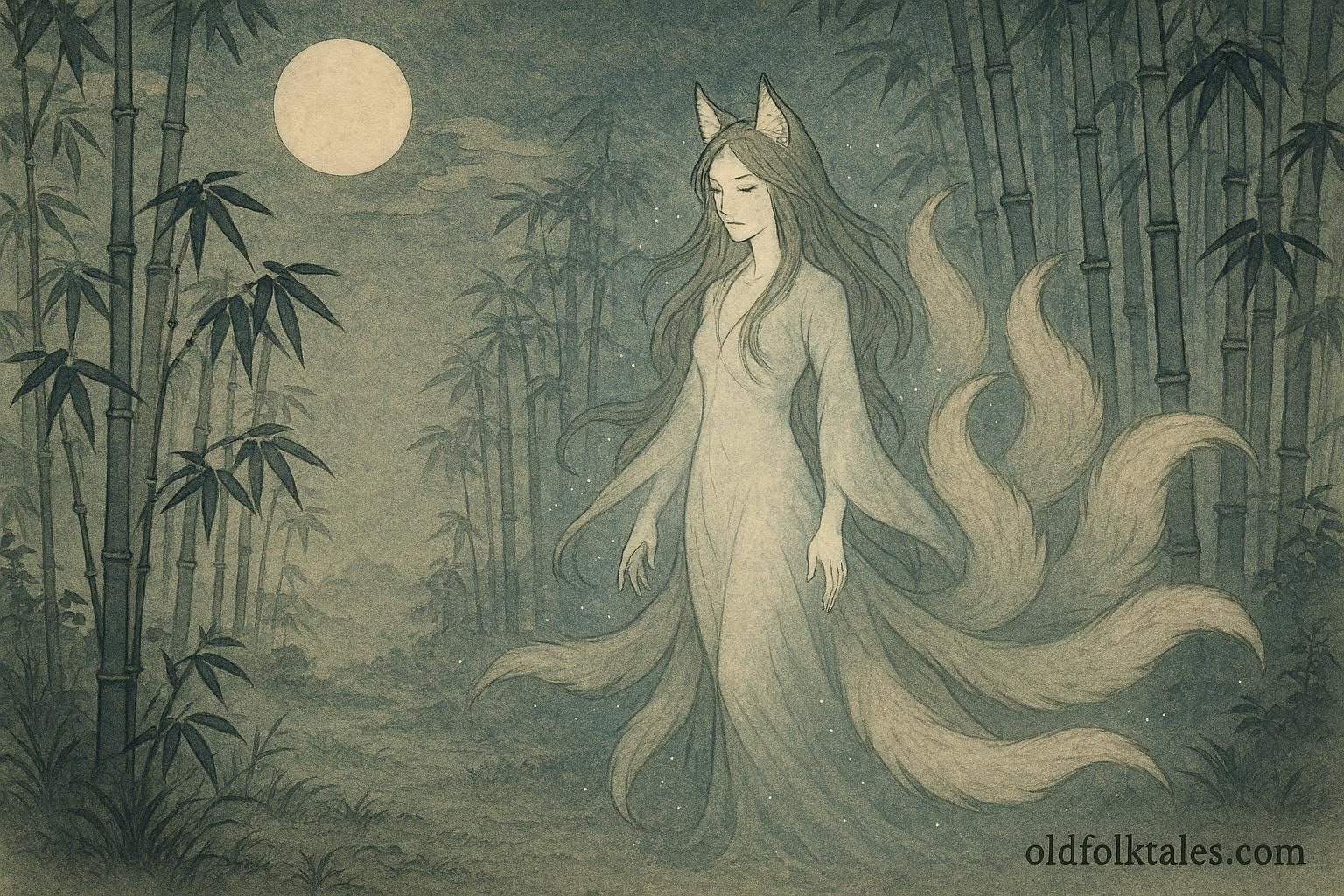
Kitsune are intelligent, magical foxes deeply embedded in Japanese myth and folklore, renowned for their shapeshifting abilities, cunning intelligence, and mystical longevity. Traditionally, a kitsune begins as a fox but develops supernatural powers as it ages. The number of tails it possesses, commonly up to nine, is a symbol of its age, wisdom, and power; a nine-tailed kitsune (kyūbi no kitsune) is considered supremely magical and highly respected in both literary and religious contexts.
Physically, kitsune are foxes with a remarkable variety of appearances depending on age, region, and narrative. Young kitsune resemble ordinary foxes, often red, white, or black. With age and magic, they may grow multiple tails, glow faintly in moonlight, or take on semi-human characteristics. Kitsune often assume the form of beautiful women, elegant men, or elderly sages to interact with humans. Classical accounts describe subtle “tails revealed” motifs as telltale signs of their fox nature, often discovered accidentally by humans.
Learn the moral wisdom of ancient civilizations through proverbs that shaped cultural values
Kitsune are also known to possess partial human features even in their fox form, such as expressive eyes, unusual markings, or supernatural luminescence. In some Edo-period illustrations, notably Toriyama Sekien’s Gazu Hyakki Yagyō, kitsune are depicted with elongated, flowing tails, sly smiles, and subtle anthropomorphic gestures, bridging the natural and supernatural.
Powers and Behavior
The kitsune’s signature power is shapeshifting (henshin), ranging from temporary disguises to long-term human transformations. They may marry humans, serve as guardians, or act as tricksters, often testing human morality. In the fox-wife tales (kitsune nyōbo), a kitsune may marry a human, conceal her identity for years, and reveal herself only under specific circumstances, such as the accidental discovery of her fox skin. These stories illustrate themes of fidelity, identity, and the tenuous boundary between human and spirit.
Other magical abilities include:
- Illusions and possession: Kitsune can manipulate perception, create phantom landscapes, and, in some stories, possess human bodies (kitsunetsuki) for spiritual or punitive reasons.
- Shape-changing objects and self-multiplication: Some tales describe foxes replicating themselves or manipulating objects to confuse or instruct humans.
- Elemental or mystical influence: Certain narratives attribute weather control, fire-summoning, or communication with deities to particularly powerful nine-tailed kitsune.
Behaviorally, kitsune range from benevolent (protecting households, acting as divine messengers of Inari) to malevolent (tricking humans, punishing arrogance or greed). The duality of their nature reflects Japanese cultural emphasis on balance and moral consequence, illustrating that supernatural power can serve justice or mischief depending on intent.
Myths and Literary Accounts
Classical texts provide rich examples of kitsune narratives:
- Nihon Ryōiki (c. 822) :): Early Heian Buddhist collection preserving fox-possession tales, emphasizing karmic retribution and moral education. One story recounts a fox taking human form to punish a deceitful man, showing the fox’s role as moral arbiter.
- Konjaku Monogatari-shū (c. 11th–12th century): Compendium of folktales including the fox-wife motif, wherein a fox marries a human and provides domestic harmony, only to vanish when her true nature is discovered. Tales blend humor, pathos, and supernatural intrigue.
- Pu Songling’s Liaozhai zhiyi (17th century, Chinese influence): Though Chinese, some fox-tales influenced Japanese conceptions, reinforcing cross-cultural fox motifs in East Asia.
In Edo-period folklore and visual culture, kitsune became more codified, with tales of:
- Nine-tailed foxes as divine messengers of the Shinto deity Inari, protector of rice fields and prosperity.
- Foxes as trickster spirits, teaching humility or punishing excess, reflecting the didactic purpose of folklore.
Cultural Role and Symbolism
Kitsune occupy a dual role in Japanese culture: spiritual intermediaries and moral exemplars. They are associated with:
- Shinto belief: Kitsune are messengers of Inari Ōkami, the kami of rice, fertility, and prosperity. White foxes, in particular, are sacred. Shrines often feature fox statues with symbolic keys or scrolls in their mouths.
- Moral storytelling: Kitsune tales convey lessons about honesty, fidelity, respect for the supernatural, and the consequences of human behavior.
- Household protection and social order: Local belief held that appeasing fox spirits could ensure good harvests or prevent misfortune.
- Ambiguous threat: Malevolent kitsune illustrate that magical beings can enforce societal norms and test human virtue.
The fox, therefore, embodies the boundary between nature and human society, the sacred and the profane, and human ethical responsibility toward both.
Ritual and Folk Practices
- Offerings of rice, sake, or fox-shaped talismans at Inari shrines.
- Annual festivals such as Kitsune Matsuri involve dances and symbolic fox masks.
- Folk belief held that fox possession (kitsunetsuki) could be mitigated by exorcism, charms, or mediation by local clergy, reflecting the integration of spiritual, moral, and social dimensions.
Author’s Note
Kitsune myths demonstrate the flexibility of folklore across centuries, showing how narrative, morality, and ritual interweave. By examining classical literary texts alongside Edo-period visual culture and ongoing shrine practices, we can appreciate kitsune as both enduring literary archetypes and living spiritual symbols. Their stories exemplify the human impulse to personify nature, explore the unseen, and reflect on moral conduct through fantastical intermediaries.
Knowledge Check
- What is the significance of a kitsune’s number of tails?
Answer: Indicates age, wisdom, and magical power; nine tails signify a fully mature, highly powerful kitsune. - Name two classical Japanese texts that contain early kitsune tales.
Answer: Nihon Ryōiki (c. 822) and Konjaku Monogatari-shū (c. 11th–12th century). - How do kitsune typically interact with humans in folklore?
Answer: They may marry, protect, trick, or punish humans depending on the story’s moral focus. - Which Shinto deity is closely associated with kitsune?
Answer: Inari Ōkami, deity of rice, fertility, and prosperity. - What is kitsunetsuki?
Answer: Possession by a fox spirit, often causing illness or unusual behavior. - Describe one moral lesson conveyed by kitsune stories.
Answer: Human actions have consequences; respect for supernatural forces is necessary, and deception or greed may be punished.
Source: Nihon Ryōiki (c. 822), Konjaku Monogatari-shū (c. 11th–12th century), Toriyama Sekien’s Gazu Hyakki Yagyō, modern folkloric studies
Origin: Japan; literary and oral tradition from early Heian period (9th century) through Edo period (18th century) and modern folklore