Kobold (plural kobolde; English usage retains the term) is a broad category of Germanic household, mill, and mine spirits. These supernatural beings inhabit human dwellings or subterranean environments, where they act as helpers, tricksters, or sometimes malevolent spirits, depending on circumstances and the nature of the human interaction. Kobold legends are particularly rich in early modern mining regions (Saxony, Harz Mountains, Bohemia), and in domestic folklore across German-speaking Europe.
Appearance
Physical descriptions vary widely, reflecting the regional and functional diversity of kobolds:
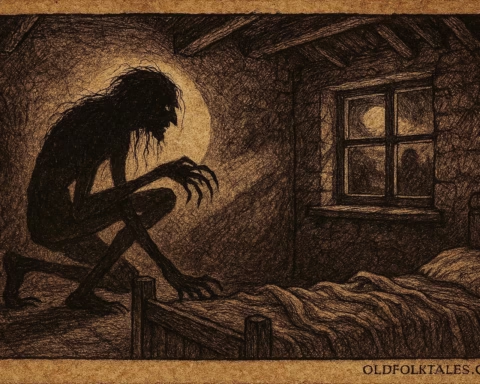
- House kobolds: Small, humanoid figures, often invisible or only partially visible. When seen, they are sometimes described as diminutive men or children, dressed in ragged clothes or miniature household attire.
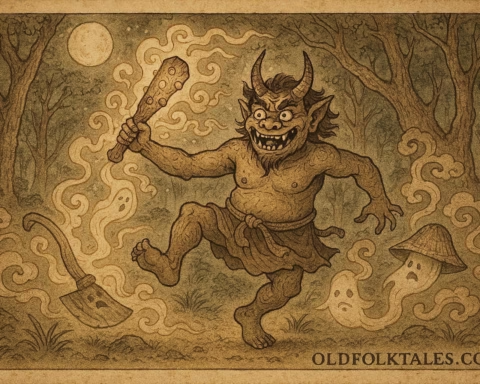
- Mine kobolds (Bergkobold): Often grotesque or impish, sometimes with long noses, sharp teeth, or glowing eyes. They inhabit mines, particularly veins rich in cobalt and other ores.
- Hütchen/Hödekin: Regional variants of house spirits sometimes depicted as tiny hatted men, who perform domestic tasks or mischief at night.
- Heinzelmännchen (Cologne region): Beneficial domestic spirits, invisible while working, sometimes leaving tiny tools or signs of activity.
Learn the moral wisdom of ancient civilizations through proverbs that shaped cultural values
Physical attributes are less critical than their behavioral characteristics: kobolds are known more for what they do than for how they appear. In many tales, visibility itself is rare; catching sight of a kobold is often a portent of mischief or reward.
Behavior and Powers
Kobolds display a dual nature:
- Helpful domestic spirit:
- Perform household chores at night, polish tools, grind flour, or tidy kitchens.
- Serve as personal guardians of homes or families if properly respected.
- May reward generosity with wealth or prosperity.
- Trickster / mischievous entity:
- Punish humans for disrespect, laziness, or broken promises.
- Hide or spoil tools, cause accidents, or make loud noises to frighten or annoy inhabitants.
- In mines, mine-kobolds can lead miners to rich veins or mislead them into dangerous areas, sometimes causing cave-ins if angered.
- Magical qualities:
- Shape-shifting: Some sources indicate the ability to appear as small animals or take on human form.
- Invisibility: Most kobolds are unseen; their actions or subtle hints reveal their presence.
- Control over resources: Particularly in mining lore, kobolds are linked to ore deposits, explaining sudden discoveries or losses in veins of precious metals.
The behavior of kobolds was often interpreted pragmatically by miners and households: prosperity, misfortune, or accidents were attributed to their favor or wrath.
Myths and Narrative Themes
Kobold narratives are found in multiple regional strata:
- Mining tales: Documented in early modern mining manuals (Agricola, 16th c.) and 17th-century folklore (Praetorius), these describe mine spirits warning of rockfalls, pointing to veins of cobalt or other ores, and sometimes punishing disrespectful miners.
- Household tales: Collected by the Grimms in Deutsche Sagen, these involve invisible helpers who perform chores at night, or mischievous hütchen spirits.
- Trickster morality: Kobolds serve as personifications of both reward and retribution. Children, servants, and masters are taught to behave properly; disrespect, laziness, or greed can provoke the kobold’s wrath.
- Folkloric persistence: The duality of helper and trickster allowed kobolds to remain relevant in folk consciousness, bridging everyday domesticity and supernatural cosmology.
Kobolds also appear in literary adaptations and fairy tales, where their shape-shifting and magical behavior becomes central to narrative plots.
Cultural Role
Kobolds occupy multiple layers of social and cultural meaning:
- Moral Instruction
- Serve as cautionary figures: respect for household work, property, and mine safety is crucial.
- Reward and punishment frameworks mirror folk moral codes, particularly in domestic and mining contexts.
- Explanatory Function
- Kobolds help explain unexpected occurrences, such as lost tools, sudden accidents, or rich ore veins.
- Their stories rationalize both prosperity and misfortune in a pre-industrial worldview.
- Regional Identity
- Variants like Heinzelmännchen, Hütchen, and Bergkoboldstrengthen local folklore identity.
- Tales are tied to specific towns, rivers, or mines, reinforcing community narratives.
- Magical and Religious Syncretism
- Kobolds exist in a liminal space: neither fully human nor divine.
- They reflect Germanic folk belief in house spirits and household guardians, often coexisting with Christian practice (e.g., blessing a house to placate or invite them).
Symbolism
- Human-nature negotiation: Kobolds personify the hidden forces within domestic and natural (mineral) environments.
- Reward for virtue, punishment for vice: They encode moral and social norms in supernatural guise.
- Work ethic and ritual: Respectful treatment of household or mining space yields tangible benefit; neglect or hubris invites disaster.
- Boundary figure: Kobolds illustrate the intersection of human and supernatural worlds, showing how folk culture interprets the unseen.
Variant Notes
- House kobolds: Helpful, domestic; may vanish if treated poorly.
- Mine kobolds (Bergkobold): More dangerous; can lead miners to ore or to harm.
- Hütchen / Hödekin: Tiny, often mischievous, hatted domestic figures.
- Heinzelmännchen: Beneficial Cologne house spirits, invisible while working.
Grimms’ editorial practice sometimes aggregated local variants under the category “kobold,” making it a catch-all term for Germanic household and mining spirits.
Authenticity Assessment
- Primary attestations: Early modern mining treatises (Agricola, 16th c.), Praetorius (17th c.), and Grimm’s 19th-century collections.
- Secondary scholarship: Grimms’ commentaries, Wikipedia syntheses, folklore studies.
- Cross-disciplinary attestations: Mining manuals, oral tradition, domestic folklore.
- Consistency: Kobold narratives exhibit coherent motifs of domestic help, mischief, and moral instruction, attested across centuries.
Transcription / Translation Notes
- Original German: Kobold; English transliteration retains “kobold.”
- Subtype names: Hütchen, Hödekin, Heinzelmännchen, transliterated from German, retain regional spelling.
- Grimm editions provide original text with annotations, useful for primary quotations.
Author’s Note
Kobolds illustrate the Germanic integration of the supernatural into everyday life, linking domestic routine and mining labor to moral, social, and environmental order. As helpers, tricksters, or dangerous mine spirits, they mediate between human effort and unseen forces, providing a rich tapestry of folklore spanning centuries.
Knowledge Check
- What are the main categories of kobolds?
House kobolds, mine kobolds (Bergkobold), hütchen/Hödekin, Heinzelmännchen.
- Where are kobold legends primarily attested?
German-speaking Europe, especially Saxony, Harz Mountains, Cologne region, and other northern/central areas.
- Name two early modern sources that reference kobolds.
Georgius Agricola, De Re Metallica (16th c.) and Johannes Praetorius (17th c.).
- What function do kobolds serve in domestic folklore?
Helpful or mischievous household spirits that perform chores or punish disobedience.
- What dual nature characterizes kobold behavior?
They are simultaneously helpful and trickster-like, rewarding obedience and punishing disrespect.
- How do kobolds symbolize natural and social order?
They embody unseen forces in homes or mines, reflecting moral codes, work ethic, and environmental hazards.
Source: Jacob & Wilhelm Grimm, Deutsche Sagen (1816–1818); Georgius Agricola, De Re Metallica (16th c.); Johannes Praetorius (17th c.)
Origin: German-speaking Europe; attested from early modern treatises (16th–17th c.) and codified in 19th-century Grimm collections