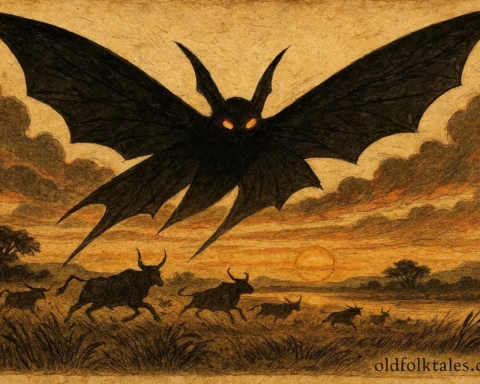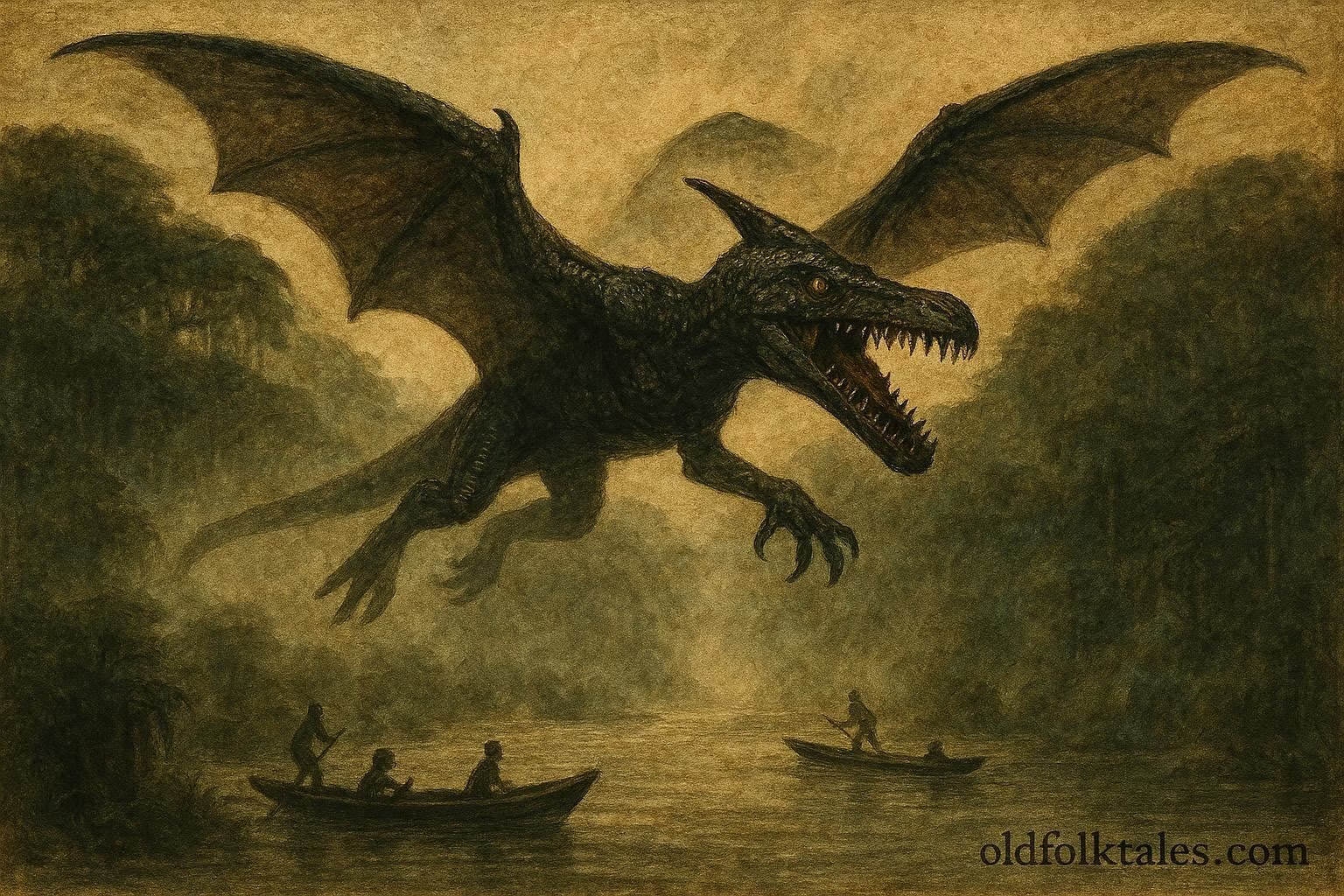
Kongamato, whose name translates roughly as “breaker of boats,” is a terrifying winged creature reported in the riverine and swampy regions of Central and Southern Africa. Accounts describe it as a pterosaur-like being: a large, bat-winged lizard with jagged teeth and a fierce gaze. Its wingspan is often said to reach several meters, enabling it to swoop low over rivers and lakes, striking fear into canoeists and fishermen.
Its body is described as scaly and dark, blending seamlessly with the shadows of dense forest or water surfaces. Sharp claws and a long, pointed tail add to its menace, while its jaw is lined with rows of razor-sharp teeth capable of tearing through wood and flesh. The creature moves with swift, gliding precision, giving it an almost supernatural quality, as it appears and disappears from view with startling speed.
Discover the gods, goddesses, and divine spirits who ruled the heavens and shaped human fate
Some accounts emphasize that Kongamato can emit shrill cries that echo across river valleys, warning humans of its presence. These cries are said to paralyze small prey or terrify canoers, reinforcing its status as a supernatural predator.
Behavior and Powers
Kongamato’s powers and behaviors are often depicted in both physical and mystical terms:
- River and Canoe Attacks: The creature is notorious for attacking boats, overturning canoes, or frightening fishermen away from certain stretches of water. This behavior links it to territorial and protective spirits, guarding river domains.
- Predatory and Carnivorous Traits: Legends describe it as a flesh-eating predator, capable of attacking humans, livestock, or other animals near waterways. The jagged teeth and powerful wings amplify its fearsome physicality.
- Supernatural Attributes: While some accounts treat Kongamato as a biological entity resembling prehistoric reptiles, others emphasize spiritual aspects: it may be a river demon, a guardian of sacred waters, or a manifestation of river spirits angered by human disrespect.
- Omens and Warnings: In several communities, sightings of Kongamato are considered omens. A swooping flight or sudden cry may signal impending danger, floods, or community misfortune.
- Elusiveness: Kongamato is rarely seen up close. Its quick, silent glidingand camouflage in swampy environments make it nearly impossible to track, reinforcing the mystical and untouchable aura surrounding it.
Myths and Beliefs
- The Canoe Horror Tales: River communities tell of fishermen paddling through swamps who suddenly hear wings flapping overhead. Canoes capsize, nets are shredded, and sometimes men vanish entirely. Villagers interpret these events as punishment for neglecting river rituals, emphasizing the creature’s role as a moral enforcer.
- The Winged Dinosaur Legend: Some Bantu-speaking groups claim that Kongamato is a living remnant of prehistoric times, a “dinosaur” surviving in hidden swamps. While likely mythologized, these narratives underscore a cultural memory of powerful, extinct creatures and the awe they inspire.
- The Spirit Guardian Interpretation: Other stories stress a supernatural protective role, suggesting Kongamato safeguards river spirits or ancestral treasures. Canoeists are warned not to disturb the waters, fish excessively, or pollute sacred areas, otherwise the creature will strike.
- Tales of Encounter:
- A fisherman in Zambia sees a shadow swoop across the river: his canoe trembles and he falls into the water.
- In Angola, hunters hear a high-pitched screech and spot a dark winged shape above a swamp; livestock go missing the next day.
Such narratives convey lessons of caution, respect for nature, and the limits of human power in these wild environments.
Cultural Role
Kongamato embodies fear, respect, and moral teaching within Central and Southern African communities:
- Guardian of Waterways: Its presence enforces rituals, respect for rivers, and sustainable fishing practices, linking natural behavior to spiritual consequences.
- Symbol of Danger and Mystery: The creature reminds humans of the power and unpredictability of natural landscapes, especially rivers, swamps, and isolated forests.
- Ethnohistoric Memory: Tales may preserve ancient knowledge of large flying reptiles, which, while likely mythologized, serve as reminders of humanity’s relationship with lost and powerful wildlife.
- Cautionary Moral Figure: Stories of attacks and vanishing canoes illustrate humility, caution, and observance of cultural norms, embedding ethical lessons in folklore.
Explore the mysterious creatures of legend, from guardians of the sacred to bringers of chaos
Author’s Note
Kongamato represents the intersection of myth, ecology, and human psychology. Whether viewed as a cryptid, a supernatural demon, or a spirit guardian, it exemplifies how folklore encodes ethical and environmental lessons. While Western interpretations often sensationalize it as a “living pterosaur,” indigenous accounts emphasize moral caution, spiritual respect, and reverence for rivers, making it a core figure in local cosmology rather than mere monster lore.
Knowledge Check
- What distinguishes Kongamato visually from ordinary birds or bats?
A winged, pterosaur-like lizard with jagged teeth, claws, long tail, and large wingspan. - Why is it associated with rivers and canoes?
Because it guards waterways and punishes those who disrespect sacred rivers. - How do local stories explain its sudden appearances and disappearances?
Its speed, camouflage, and supernatural qualities make it elusive, symbolizing spiritual or moral oversight. - What are some interpretations of Kongamato?
It is viewed as a physical cryptid, a river demon, or a spirit guardian depending on the tale. - What moral or ethical lesson is conveyed by Kongamato myths?
Respect natural and sacred environments, observe rituals, and act with humility. - How does the diamond-like head in some African serpentine myths compare to Kongamato?
Unlike Mamlambo or Okukubarakpa, Kongamato is more predatory and winged, symbolizing aerial and riverine dominance rather than wealth or healing.
Source: Efik oral narratives, African cryptid folklore, and ethnographic accounts compiled from Central and Southern Africa.
Origin: Congo, Zambia, Angola; Bantu-speaking riverine communities