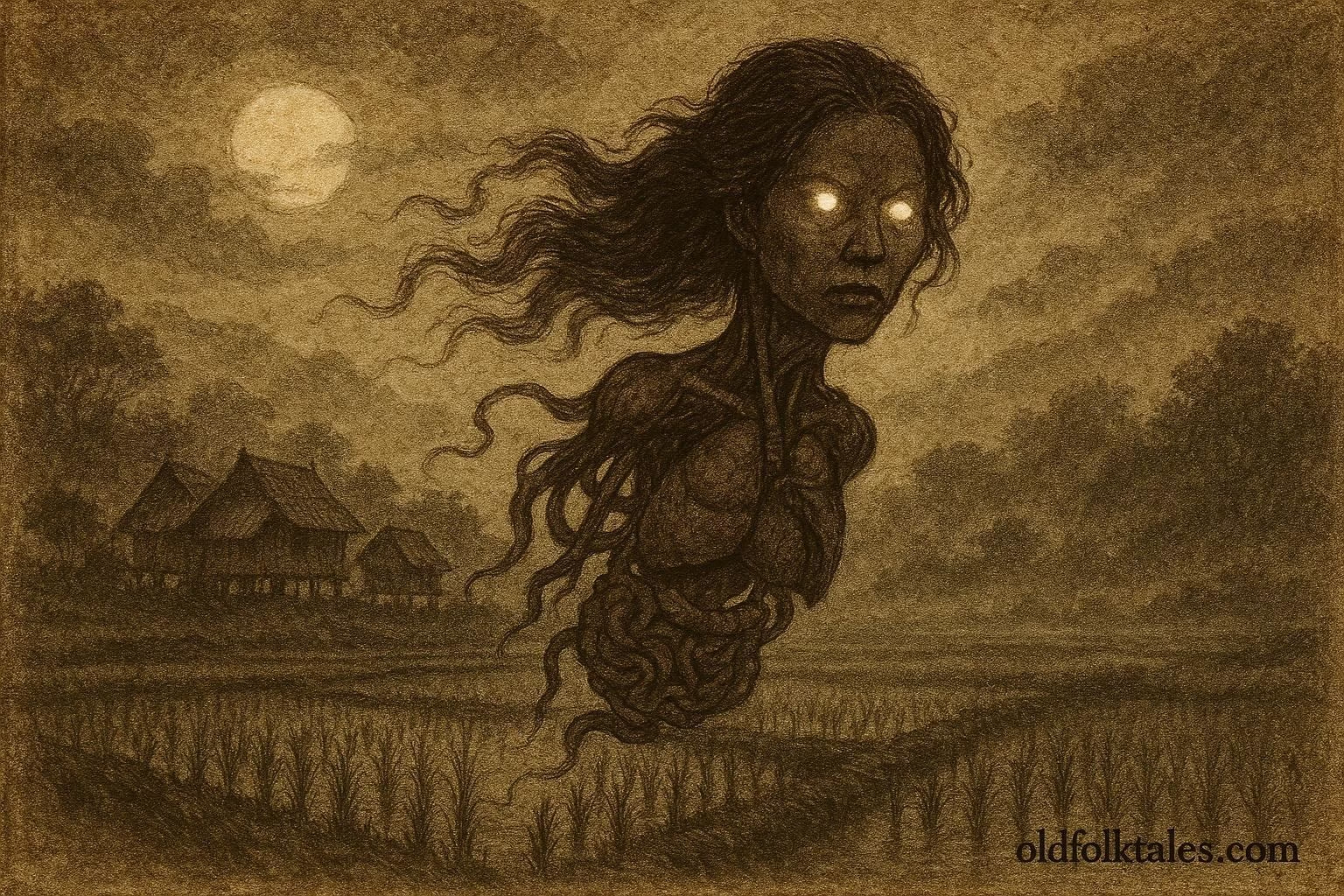
The Krasue is one of Southeast Asia’s most haunting supernatural figures, renowned for her grotesque yet culturally significant appearance. She manifests as a woman’s head detached from her body, with her internal organs, intestines, stomach, liver, and occasionally the heart, dangling beneath her, often faintly glowing in the moonlight. The body remains behind, concealed, while the head floats through the night to hunt for sustenance.
Behaviorally, the Krasue is nocturnal, predatory, and elusive. She feeds primarily on carrion, blood, fluids of childbirth, or fetuses, depending on the variant. The creature’s presence explains sudden illnesses in infants, miscarriages, livestock deaths, or mysterious nocturnal events. The spirit’s female form, often young and beautiful in life, reflects gendered notions of morality, danger, and social order, while the horrific transformation conveys the consequences of transgression.
Regional variants highlight local culture and interpretation:
- Thailand (Krasue): Depicted with long hair, glowing eyes, trailing intestines, and a penchant for preying on blood and placenta. Stories often appear in villages as cautionary tales for women, especially regarding reproductive or moral propriety.
- Cambodia (Ahp): Focuses on stealth and the ability to invade homes undetected. Often associated with sorcery or malevolent witchcraft and feared for attacking children.
- Laos (Kasu): Sometimes hunts livestock, emphasizing communal responsibility and vigilance at night. Kasu legends are intertwined with folk medicine and local rituals.
- Malaysia (Penanggal/Penanggalan): A woman transforms into a flying head with trailing organs, preying on infants or the recently born, often linked to black magic or witchcraft
- Indonesia (Kuyang/Leyak): Appears in Balinese and Bornean stories; Kuyang is both feared and respected, associated with sorcery and spiritual hierarchy.
Physical descriptions vary, with some informants depicting long, prehensile organs capable of grabbing prey, others emphasizing speed and stealth. Folklore also portrays the Krasue as vulnerable to certain domestic protections: scissors, salt, garlic, or sacred amulets can ward her off, reflecting the integration of spiritual belief into everyday life.
Cultural Role
The Krasue serves multiple societal, moral, and symbolic functions:
- Moral and Social Instruction: Tales often warn of violating taboos, particularly regarding sexuality, reproduction, or female propriety. A Krasue may be a woman punished for promiscuity or engaging in sorcery, embodying moral consequences for transgression.
- Explanatory Function: The spirit explains otherwise inexplicable events: sudden infant death, miscarriages, livestock loss, and night accidents. Krasue belief provides a framework for causality in rural communities, linking the unseen world with tangible outcomes.
- Ritual Practice: Protective practices are common. Communities hang scissors or knives above beds, sprinkle salt, or recite charms at night to deter the Krasue. Such rituals reinforce communal cohesion, domestic order, and the integration of the supernatural into daily life.
- Environmental and Cosmological Reflection: As a nocturnal, predatory being, the Krasue symbolizes the dangers of the night, the uncertainty of the environment, and the liminality between life and death. In agrarian societies, she reflects the precarious balance between human activity and unseen natural or spiritual forces.
- Cross-Cultural Symbolism: The floating-head motif appears in India, Sri Lanka (churel), and Japan (rokurokubi), suggesting shared or convergent cultural anxieties about female power, night hazards, and morality. In Southeast Asia, the Krasue embodies these themes while adapting to local religious and ethical contexts, including animistic, Buddhist, and Islamic influences.
Historical Context
Although Krasue stories were primarily oral, early temple murals, village chronicles, and ethnographic reports from the 19th century document her presence in rural imagination. Some murals in central Thailand depict ghostly female figures with floating heads, reinforcing the visual culture associated with the myth. Folklorists note that the legend has persisted despite colonial, modern, and cinematic influences, illustrating the strength of oral transmission and cultural embedding.
Scholars also note adaptive changes: modern media often emphasizes horror aesthetics, vampires, or grotesque elements, while traditional oral sources focus on ethical and environmental lessons. The Krasue continues to mediate fear of the night, gendered social conduct, and the invisible forces shaping life, showing remarkable resilience across centuries.
Explore the mysterious creatures of legend, from guardians of the sacred to bringers of chaos
Author’s Note
The Krasue embodies a multilayered cultural symbol: part moral lesson, part explanation of environmental hazards, and part nocturnal terror. While popular culture has exaggerated her grotesque qualities, ethnographic accounts reveal her central role in Southeast Asian rural morality, domestic practice, and cosmological thinking. My emphasis on oral, folkloric, and cross-cultural sources aims to highlight her authentic place in living tradition, rather than simply her sensationalized modern portrayals.
Knowledge Check
- Q: Which countries feature Krasue legends?
A: Thailand, Cambodia, Laos, Malaysia, Indonesia. - Q: What physical trait defines the Krasue?
A: A disembodied female head with trailing internal organs. - Q: What does the Krasue typically feed on?
A: Carrion, blood, reproductive fluids, and sometimes fetuses. - Q: What are the Cambodian, Laotian, and Malaysian names for the Krasue?
A: Ahp (Cambodia), Kasu (Laos), Penanggal/Penanggalan (Malaysia). - Q: What moral or social concept does the Krasue symbolize?
A: Taboo violation, female propriety, liminality, and nocturnal danger. - Q: How do communities protect themselves from Krasue attacks?
A: Using charms, scissors, salt, protective rituals, or sacred objects.
Source: Oral traditions across Thailand, Cambodia, Laos, Malaysia, and Indonesia; ethnographic studies, folklore journals, SEA Wave magazine, and modern compilations of Southeast Asian ghost stories.
Origin: Southeast Asia, Thailand, Cambodia, Laos, Malaysia, Indonesia; folklore predating modern popular culture, transmitted orally from premodern times to present.