The Kuomboka ceremony is the most renowned royal ritual of the Lozi people of western Zambia, centered in the Barotseland region along the Zambezi floodplains. For generations, these wide plains have shaped Lozi identity, livelihood, and cosmology. The term kuomboka means “to get out of the water,” referring to the seasonal movement of the Litunga, the Lozi king, from his floodplain palace at Lealui to the higher ground palace at Limulunga when floodwaters rise. This annual transition, practiced for more than two centuries, is both practical and sacred. It affirms the king’s responsibility as guardian of his people and protector of the land. Through Kuomboka, the Lozi publicly reenact their alignment with the rhythms of nature, particularly the waters of the Zambezi, which dictate life cycles, migration, and agricultural fortune.
Description
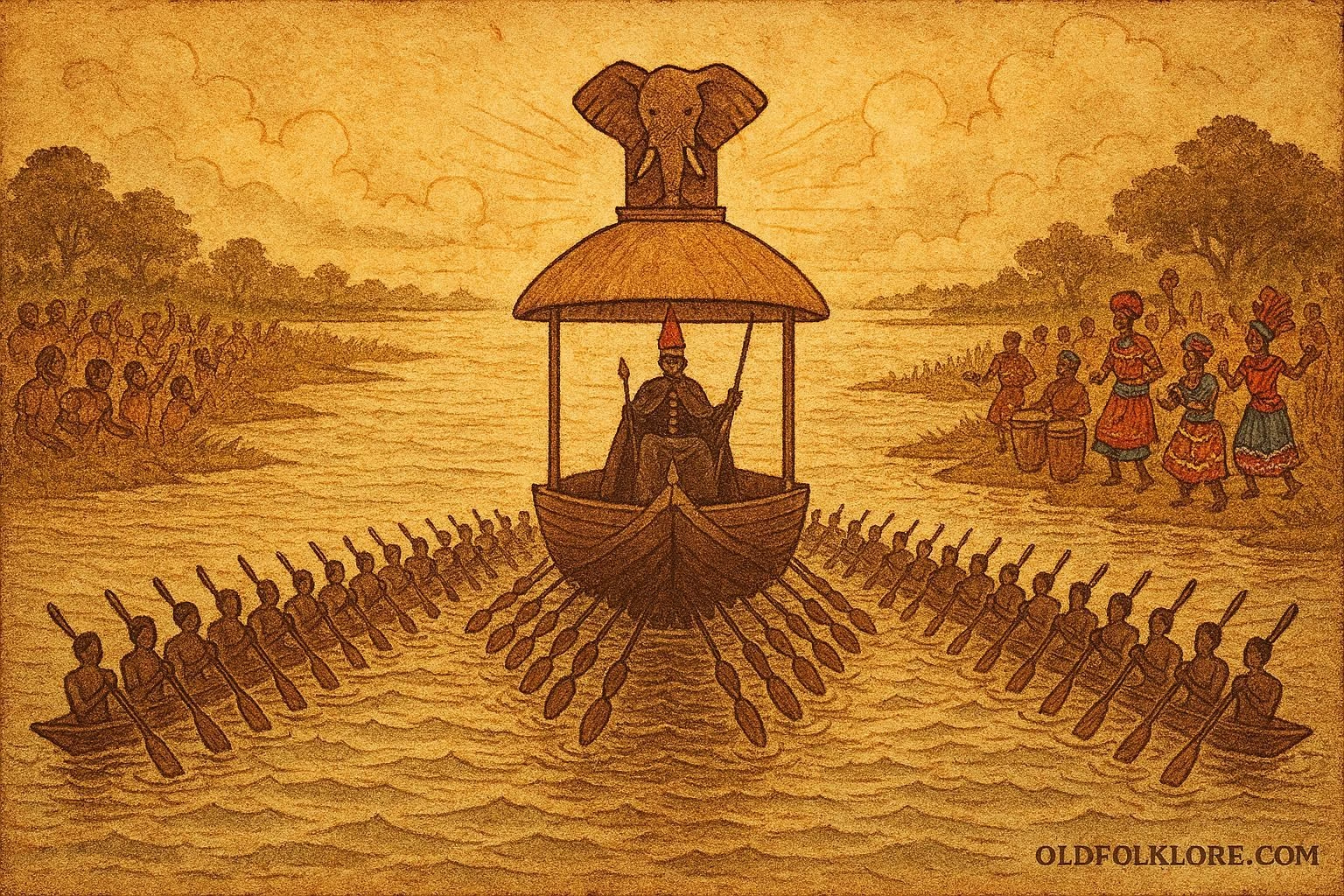
Kuomboka unfolds as a grand public spectacle featuring music, river procession, ritualized movement, and ancestral symbolism. Preparations begin weeks in advance as scouts observe the rising waters to determine the ceremony’s timing. When the moment arrives, artisans decorate the Nalikwanda, the Litunga’s massive royal barge, painted black and white like a cow, the Lozi symbol of abundance and dignity. The boat is crowned with a giant ceremonial elephant figure, representing royal strength, wisdom, and guardianship.
On the morning of Kuomboka, royal drummers initiate the event with the ancient Maoma drums, whose deep tones historically signaled significant political and spiritual events. Their thunderous rhythms echo across the plains, announcing the Litunga’s departure. The king, dressed in his distinctive attire, traditionally including a Victorian-style uniform adopted during early encounters with Europeans, boards the Nalikwanda. His entrance is deliberate and ceremonial; it reflects his dual nature as both mortal ruler and symbolic bridge between the people and the spirit world.
As the Nalikwanda begins its journey, a grand flotilla of paddlers surrounds it. These boatmen are selected for their discipline, skill, and moral standing. Their synchronized strokes form a living choreography, an expression of unity and loyalty. They sing ancestral songs that praise the Litunga, honor the river, and reflect the people’s hope for prosperity as the flood season ends.
Along the riverbanks, thousands gather to witness the passage. Families dress in bright chitenge cloth, children wave flags, and elders offer prayers for renewal. The air fills with drumming, ululation, and ceremonial chants. Stopping points along the route carry symbolic meaning: certain bends in the river are associated with historical events, royal triumphs, or spiritual encounters. Each moment along the journey is both a reaffirmation of identity and a declaration of continuity.
Upon reaching Limulunga, the Litunga is welcomed with another round of drumming and formal greetings from his council. Ritual speeches recount the significance of the journey, connecting the king’s movement to past rulers and ancestral blessings. Although modern audiences interpret Kuomboka as cultural pageantry, its foundation remains decidedly sacred. Every gesture, color, rhythm, and movement reflects ecological stewardship, spiritual legitimacy, and the intricate relationship between human leadership and natural forces.
The ceremony concludes with communal dances, feasting, and blessings. Kuomboka also marks the transition into the dry season, ushering in a time of planting, trade, and community gatherings. In this way, the ritual functions as both a political affirmation and a celebration of the Lozi worldview, one in which water, land, leadership, and ancestry form an inseparable whole.
Mythic Connection
Lozi cosmology is deeply entwined with water, particularly the Zambezi River and its seasonal movements. The Litunga, as king, is regarded not only as a political authority but also as a custodian of the natural order. Myths describe the river’s spirit guardians, beings who influence fertility, rainfall, and flood cycles. Through Kuomboka, the Litunga symbolically negotiates with these powerful forces, ensuring balance between human society and the watery domains.
The ceremonial barge’s cow-pattern design connects the king to the cattle wealth that traditionally signified prosperity. The elephant emblem atop the Nalikwanda represents ancestral kings whose leadership mirrored the steady wisdom of this powerful animal. Furthermore, the journey from Lealui to Limulunga recalls mythic tales of earlier rulers who were guided by spirits through periods of flood, scarcity, or relocation. These stories teach that wise leadership requires attentiveness to nature and the courage to act in harmony with cosmic patterns.
The water journey itself functions as a rite of renewal. Just as the river rejuvenates the plains after the rains, the Litunga’s movement expresses the rebirth of the nation. The people witness in ritual form the sacred truth that their collective well-being flows from ancestral favor, ecological awareness, and responsible kingship. Thus, Kuomboka is not merely a seasonal transition; it is a physical reenactment of the Lozi relationship with spirits, nature, and the unbroken lineage of their kings.
Author’s Note
This article presents a historical and cultural overview of Kuomboka, focusing on its sacred significance, ecological symbolism, and role in expressing Lozi kingship and ancestral continuity.
Knowledge Check
1. What does “Kuomboka” mean?
It means “to get out of the water,” referring to the Litunga’s seasonal move.
2. What is the Litunga’s royal barge called?
The Nalikwanda, decorated with black-and-white patterns and an elephant emblem.
3. Why does the ceremony occur during floods?
It marks the Litunga’s relocation when Zambezi waters rise, symbolizing stewardship and renewal.
4. What do the Maoma drums signify?
They announce major royal events and carry ancestral authority.
5. What spiritual role does the Litunga hold?
He acts as mediator between people, ancestors, and river spirits.
6. What broader themes does Kuomboka express?
Ecological harmony, ancestral blessing, kingship legitimacy, and seasonal rebirth.