Kupala Night, celebrated across Russia, Ukraine, Belarus, and Poland, is one of the oldest surviving Slavic pagan festivals. Its roots lie in pre-Christian fertility worship and midsummer rites centred on the power of fire, water, and vegetation. Traditionally held around June 23–24, the longest days of the year, the festival marked a moment when nature was believed to overflow with vitality, and the boundaries between the human and the divine were thought to thin.
Before Christianisation, Kupala Night belonged to the seasonal cycle of agrarian spirituality. Midsummer was the point when crops stood ready for blessing, herbs reached their strongest potency, and rivers were believed to possess healing force. The festival later merged with the Christian feast of St. John the Baptist, giving rise to the hybrid name “Ivan Kupala,” yet many customs remained distinctly pagan.
Description of the Ritual
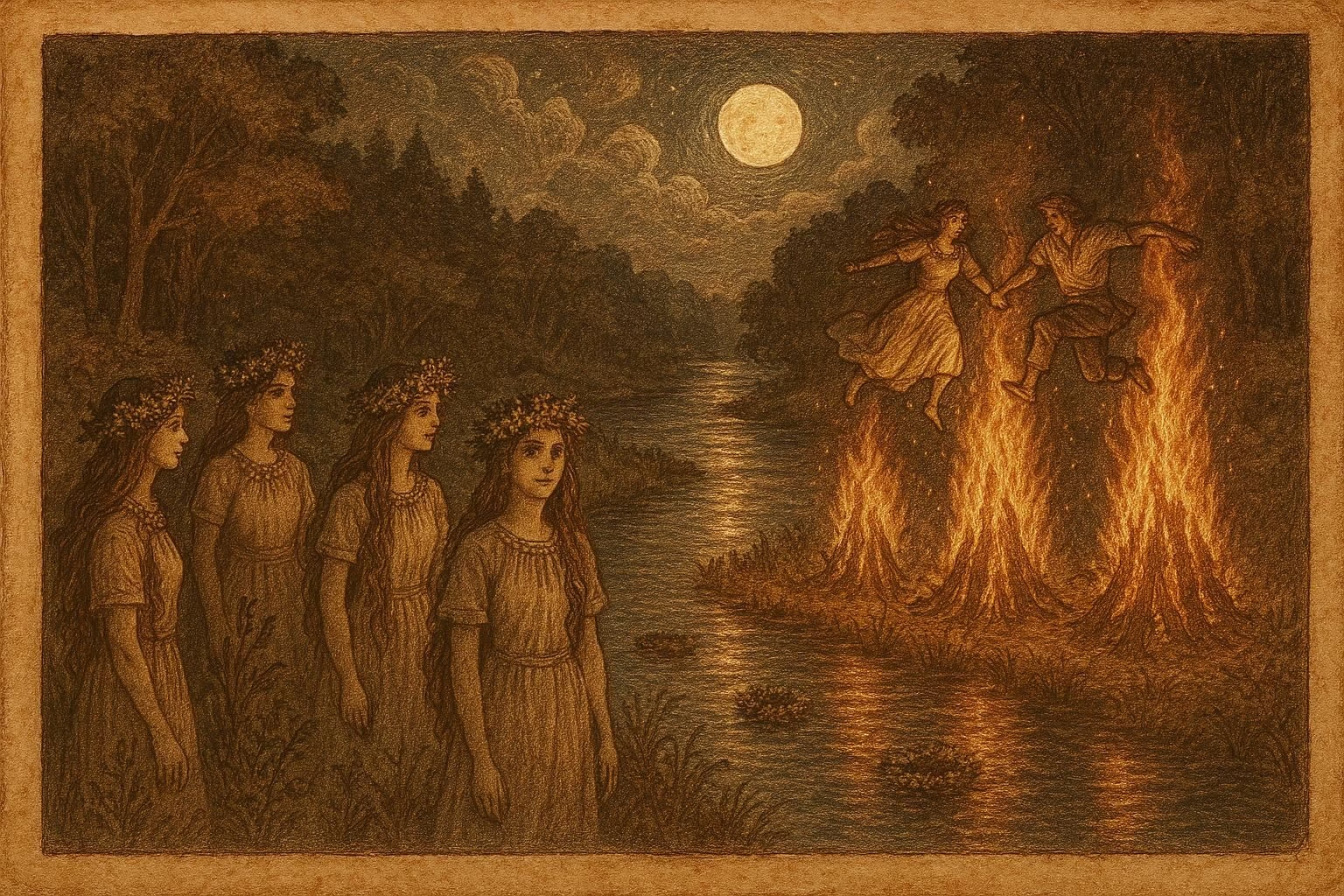
The rituals of Kupala Night revolve around fire, water, and verdant summer growth. Villages traditionally gathered at dusk, building tall bonfires from dry branches and herbs. As flames rose into the solstice night, people leapt over them in pairs or alone. This act symbolised cleansing, luck, and fertility. A successful jump was believed to protect one’s body from illness and ensure harmony in marriage.
Young women wove wreaths from wildflowers and grasses collected earlier in the day. These wreaths served dual purposes, decorative and divinatory. At night, maidens floated their wreaths on rivers or lakes. The movements of the wreath foretold one’s future: drifting toward the shore meant delayed marriage, circling meant uncertain love, and flowing swiftly forward was a sign of a destined partner. In some regions, young men swam after the wreaths, turning the act into a flirtatious courtship ritual.
Water played a purifying role. People bathed at dawn, believing midsummer water could “wash away misfortune” or protect from evil spirits. Rivers were understood not merely as physical bodies of water but as living forces guided by unseen guardians.
Herbal magic also dominated the day. Kupala herbs, especially St. John’s wort, mugwort, fern, and yarrow, were gathered at midnight, believed to carry heightened healing power. Households hung these bundles above doors or stables to ensure protection for the coming year.
Though the Slavic world does not possess a flowering fern in reality, the mythic fern flower became the central symbol of the night. Couples searched forests for this impossible bloom, said to glow gold at the very moment of midnight. Finding it granted prosperity, wisdom, and sometimes the gift of understanding animal speech.
Even with Christian influence, the ritual preserved its older essence. The blessing of water by priests, the carrying of crosses, or the addition of hymns did not erase the ancient belief that the night belonged to elemental forces at their peak.
Mythic Connection
Kupala Night expresses the Slavic worldview in which nature is divine, alive, and filled with beings who govern its rhythms. The festival’s name links to Kupala, a spirit or deity associated with water, fertility, and summer radiance, though scholars debate whether Kupala was a deity or simply a seasonal epithet.
The ritual’s two main elements reflect cosmic balance:
Fire
Fire symbolised the sun at its highest power. Jumping over flames reenacted humanity’s attempt to draw the sun’s energy into the body and fields. Fire also repelled evil spirits believed to wander freely during liminal moments like midsummer.
Water
Water embodied purification, regeneration, and the realm of spirits. Bathing rituals recalled ancient beliefs in river guardians, vodyanoi or water nymphs, who controlled rainfall and water’s blessing on the land.
Vegetation and the Fern Flower
The fern flower captures the heart of Slavic myth. It represents hidden knowledge, the secret fire within nature, and the promise of abundance. Its unattainable nature mirrors the human longing for cosmic harmony.
Kupala Night thus reflects the Slavic belief that humans, gods, and natural forces coexist in a shared, enchanted environment. The festival is not only a celebration of midsummer; it is a ritual dialogue with the world itself.
Modern Continuity
Today, Kupala Night remains widely celebrated, especially in Ukraine, Belarus, and Poland, featured at cultural festivals, open-air events, and youth gatherings. The ritual has transformed into a blend of entertainment and cultural preservation. Yet the core symbolism endures: bonfires, wreaths, river rites, and the search for the fern flower still echo ancestral voices.
Author’s Note
This article examined the pre-Christian roots of Kupala Night, its elemental symbolism, and its transformation across centuries. The festival reveals how Slavic communities expressed reverence for nature’s cycles, using fire, water, and sacred plants to communicate with the divine. Kupala Night remains a vivid example of spiritual continuity in Eastern Europe.
Knowledge Check
1. What is the cultural origin of Kupala Night?
It began as a pre-Christian Slavic midsummer ritual celebrated across Eastern Europe.
2. Why do people jump over the Kupala bonfire?
The act symbolises purification, luck, health, and fertility for the coming year.
3. What is the purpose of floating wreaths on water?
It is a divination rite used to predict love, marriage, and future relationships.
4. What does the fern flower represent?
It symbolises hidden wisdom, fortune, and cosmic harmony, though it is mythic rather than botanical.
5. Why is water important during Kupala Night?
Water is believed to gain healing and protective power at midsummer, cleansing misfortune.
6. How is Kupala Night practiced today?
It appears in modern cultural festivals with bonfires, wreath rituals, music, and symbolic forest searches.