Before the rise of the great Luba realm, before the palaces, the sacred drums, and the line of divine kings, there wandered a lone hunter whose footsteps shaped the destiny of a people. His name was Kwise Ngonda, born not of ordinary flesh but of a covenant between earth and unseen spirits. His mother, a quiet woman of the forest clans, dreamed of a radiant figure clad in moonlight who promised her a child “whose shadow will sway empires.” When she awoke, the dream-scent of wild honey lingered in the air, and the elders whispered that the child she carried was marked by the Bavidye, the ancestral spirits.
From boyhood, Kwise walked as one half in this world and half in the next. Animals paused when he approached; winds shifted to follow his path. He was taught the hunter’s craft, bow, spear, tracking, but his greatest teacher was the forest itself. In the hush of dawn, he listened to the murmurs of leaves, learning secrets carried by spirits older than kings.
Discover the gods, goddesses, and divine spirits who ruled the heavens and shaped human fate
As he grew, a shadow festered in the land. The Luba faced turmoil, neighboring clans waged petty wars, sacred relics vanished, and the rains faltered. It was said that the bond between rulers and ancestors had weakened, and only one chosen by the spirits could heal it. Dream-seers spoke a single name: Kwise Ngonda.
One night, while hunting a great antelope deep in the sacred thickets, Kwise crossed a world-threshold. The forest dimmed, though no cloud touched the sky; the trees grew taller, ancient beyond imagining. Before him appeared the Spirit of the Red Horn, guardian of hunters. Its voice rumbled like distant thunder.
“Kwise Ngonda,” the spirit proclaimed, “you are called to restore sacred kingship. But power must never rest in hands that do not endure trial. Walk the Three Paths of Challenge, and let your heart be weighed.”
Kwise bowed, accepting his destiny.
The First Path: The Trial of Courage
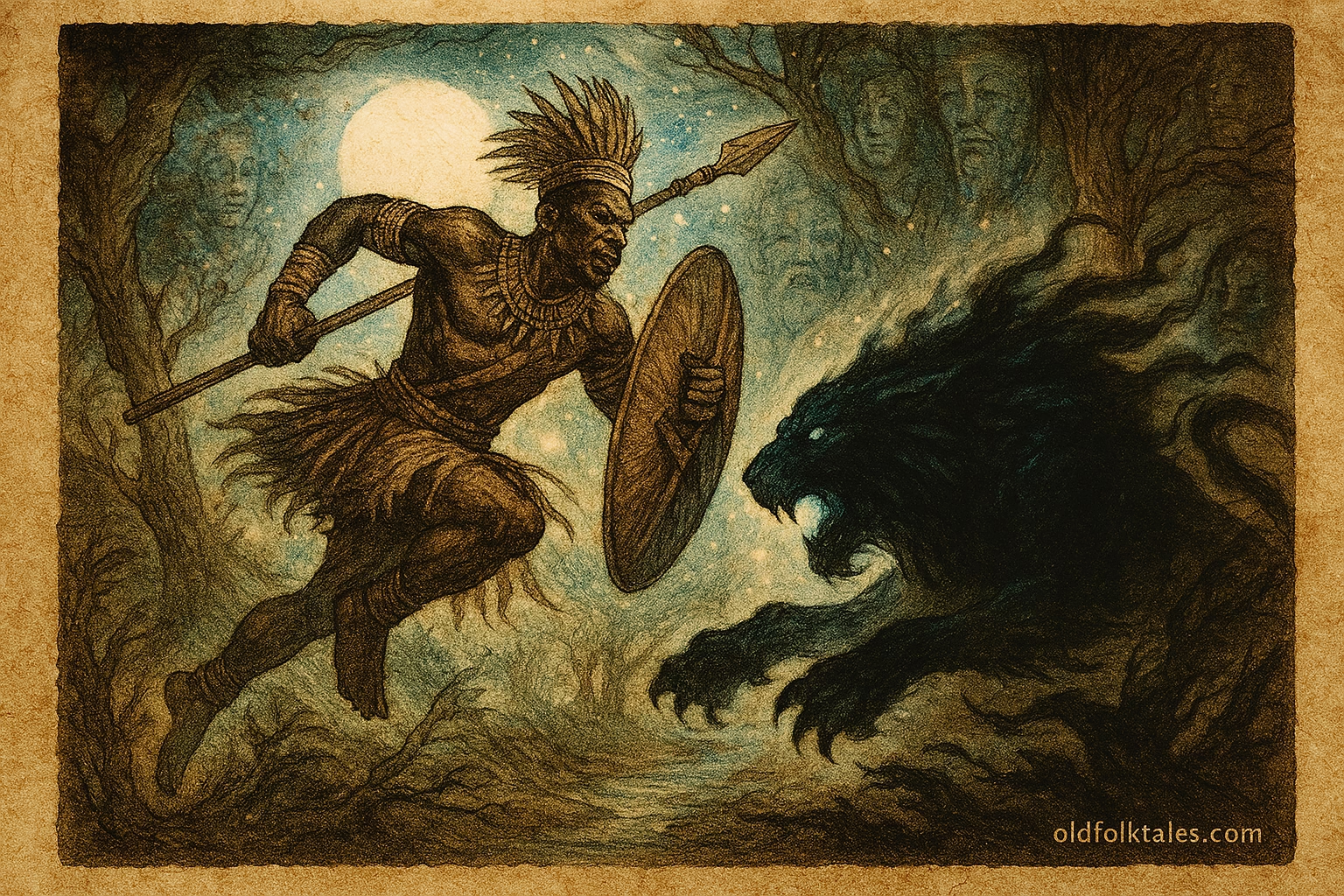
He was led to a clearing lit by a red, unreal glow. In the center stood a monstrous shadow-lion, its mane flickering like flame. It was the embodiment of fear—the dread that cripples leaders, the terror that consumes empires. Many warriors had faced it in visions; few survived.
Kwise steadied his breath. Fear surged through him like icy water, whispering doubts: You are only a hunter. You cannot rule. You are unworthy of ancestral crowns.
But he lifted his spear, remembering his mother’s words: “A leader is not the one without fear, but the one who walks despite it.”
He lunged. The battle was both physical and spiritual, each blow a clash of wills. At last, with a cry that echoed into the unseen realms, he struck true. The shadow-lion dissolved, leaving only a trail of silver dust on the earth.
The Red Horn Spirit nodded. “Courage is yours.”
The Second Path: The Trial of Truth
Kwise next stood before the River of Mirrors, where every drop reflected not the face but the soul. The spirits commanded: “Speak your truth aloud, and let the river judge.”
Kwise hesitated. A leader must carry strength, yet the river demanded vulnerability. Finally, he spoke:
“I fear not the fight, but the crown. I fear that power will harden my heart, that I may forget the humble hunters who raised me.”
The river shimmered. From its depths rose a vision, Kwise, older, seated on a throne, his eyes distant and cold. He trembled.
The spirits whispered, “This is the path you may become.”
Kwise knelt and declared: “If ever I forget compassion, may the ancestors strip me of kingship. Let me serve, not rule for myself.”
The vision broke like glass. The river cleared, revealing his soul steady and bright.
“You have spoken truth,” the spirits intoned.
The Third Path: The Trial of Sacrifice
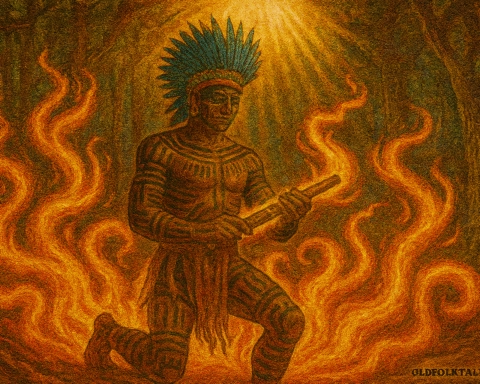
At the final path, Kwise found a child crying in a blazing ring of fire. The spirits tested not strength nor honesty, but heart. To save the child meant risking his own life, risking the life chosen for kings.
Without hesitation, Kwise threw himself into the flames. They burned his skin, scorched his breath, but he lifted the child and shielded him. When he staggered out of the fire, the blaze vanished, and the child transformed into an elder spirit bathed in golden light.
“You have passed the final measure,” the spirit said. “Kingship is not seized, it is granted to those willing to give everything.”
The forest brightened; birds sang as though renewed. The Red Horn Spirit placed a radiant ancestral torque around Kwise’s neck, marking him heir to sacred authority.
Return and Ascension
Kwise Ngonda returned to his people changed. His wounds glowed with spiritual fire; his eyes held the depth of ancient rivers. When he spoke, the clans listened. Under his guidance, disputes dissolved, rain clouds returned, and sacred relics were restored to their rightful shrines.
At the great council, elders proclaimed him Mulopwe, sacred king of the Luba. But Kwise never forgot his trials. He hunted with his people, judged fairly between villages, and led with humility. His reign became the golden dawn from which Luba kingship drew its sacred legitimacy for generations.
And it is said that when he died, the spirits of the forest embraced him, and his footprints turned to stone, so none would forget the hunter who became a king.
AUTHOR’S NOTE
Kwise Ngonda embodies the Luba ideal of divine kingship, leadership born not from conquest but from spiritual merit. His trials symbolize the virtues expected of rulers: courage, truth, and sacrifice. Through his story, we glimpse how the Luba linked political authority to ancestral approval and moral integrity.
KNOWLEDGE CHECK
-
What supernatural sign marked Kwise Ngonda’s divine origin?
-
What entity gave him the Three Paths of Challenge?
-
What did the shadow-lion represent in the first trial?
-
What fear did Kwise confess beside the River of Mirrors?
-
What symbolic act proved his worthiness in the Trial of Sacrifice?
-
What title did Kwise receive when he returned to his people?
CULTURAL ORIGIN: Luba Epic Tradition, Democratic Republic of Congo (Central Africa)
SOURCE: Based on themes from Thomas Q. Reefe, The Rainbow and the Kings: A History of the Luba Empire (1981).