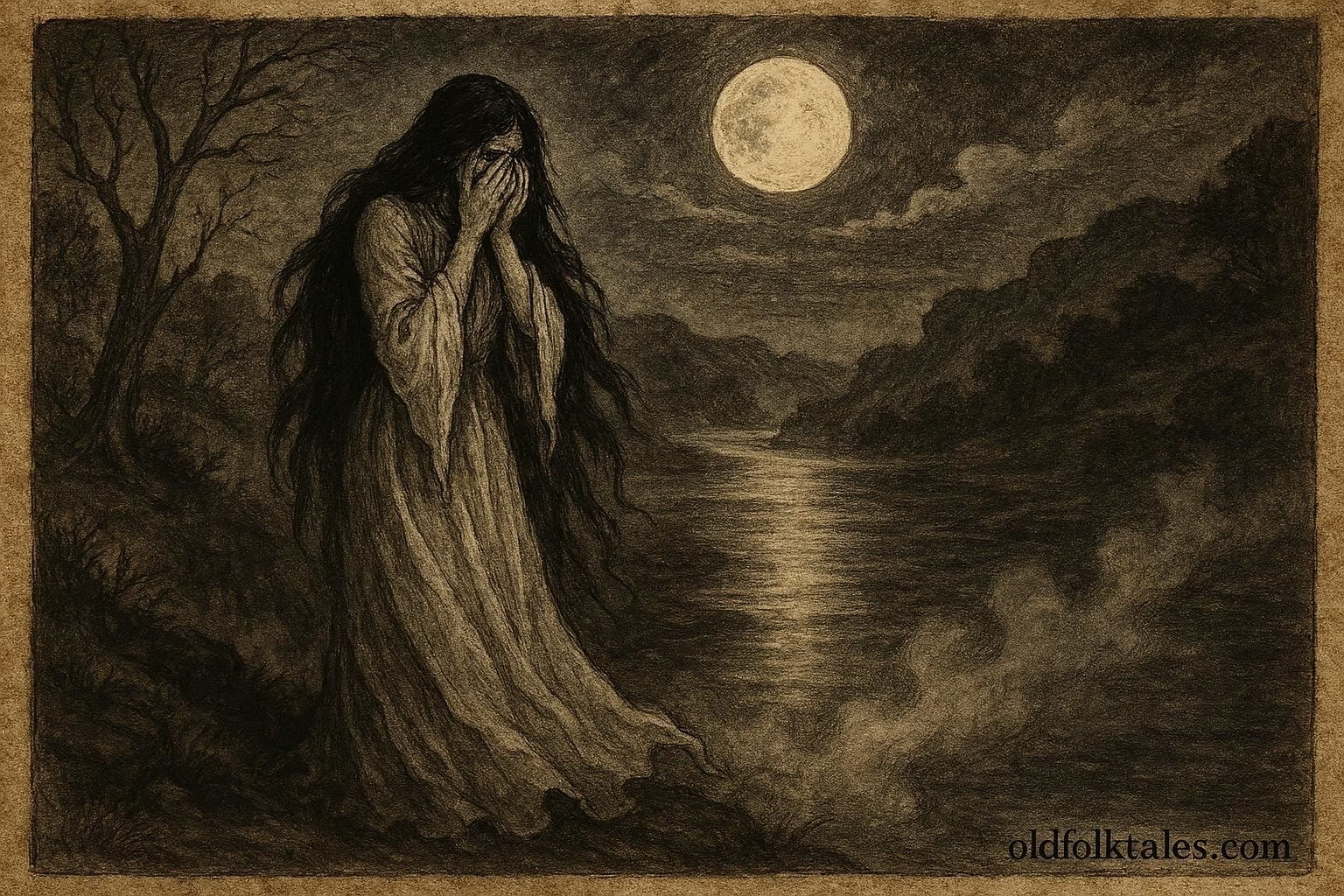
La Llorona, “The Weeping Woman,” is among the most enduring and haunting figures of Mexican and broader Latin American folklore. Her legend spans from pre-Hispanic Aztec traditions to colonial syncretism and contemporary storytelling. She is commonly portrayed as a female spirit who wanders near rivers, lakes, or other bodies of water, weeping for children she lost in life. Variants differ in motive and origin: in some, she drowned her children in a fit of rage, despair, or jealousy, in others she lost them accidentally or perished in grief, condemned to roam the earthly realm forever.
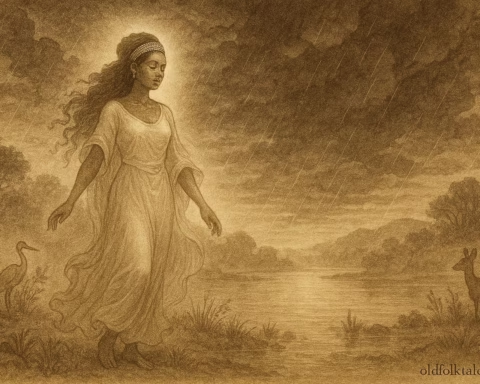
Her appearance is typically described as sorrowful and spectral. She wears white or pale garments, sometimes a flowing gown, with long dark hair, pale skin, and eyes filled with tears. Ethnographic summaries and archival references note that she appears especially at night, accompanied by wailing cries that echo over waterways. Her aura is simultaneously mournful and threatening; she may lure travelers, children, or men toward the water, either as a manifestation of her grief or as a cautionary agent for moral transgression.
Behavior and Mythic Role
La Llorona’s behavior is intimately tied to moral and social teaching. She functions as a cautionary figure, warning against:
- Parental neglect or abuse.
- Jealousy, betrayal, or the consequences of spousal abandonment.
- Transgression of social norms or disregard for sacred waters.
Some colonial-era interpretations linked her to Cihuacoatl, an Aztec goddess of motherhood, fertility, and death. In that context, La Llorona’s lamentations echo pre-Hispanic rituals mourning loss or invoking divine vengeance. During the colonial period, the legend also incorporated Spanish motifs, such as abandoned wives or domestic betrayal, creating a syncretic figure blending indigenous spiritual motifs with European morality tales.
Narratives vary by region:
- Northern Mexico: La Llorona may act as a sirens-like tempter, luring men to water as punishment for moral failure.
- Central Mexico: Stories focus on maternal grief, emphasizing the loss of children due to human error, negligence, or moral failing.
- Southern Mexico & Guatemala: Folktales often highlight spiritual justice, where she punishes those who disrespect family, nature, or sacred water sites.
Across variants, her lament, “¡Ay, mis hijos!” (“Oh, my children!”), is the signature cry that defines the myth. The sound serves as both warning and symbol, reminding communities that grief and misdeeds have spiritual consequences.
Cultural Role and Symbolism
La Llorona functions on multiple symbolic levels:
- Moral Guardian: Her story emphasizes ethical behavior, especially parental responsibility. Children are warned to obey parents; adults are reminded to act justly in family and social life.
- Maternal Archetype: She reflects the complexity of motherhood, capable of love, despair, and wrath. Her grief embodies the universal fear of loss and the consequences of failing one’s children.
- Cultural Syncretism: La Llorona represents the blending of Aztec spiritual motifs with colonial Spanish morality, showing how folklore evolves under cultural contact.
- Natural and Spiritual Warning: Haunting rivers, lakes, and canals, she reinforces respect for natural environments and sacred water sources, linking ecological awareness with morality.
Her enduring presence in oral tradition demonstrates the cultural importance of storytelling as a method of social regulation, emotional expression, and historical memory. Parents, elders, and teachers use La Llorona as a narrative tool to instill values in younger generations.
Ethnographic and Historical Context
The Florentine Codex, compiled by Bernardino de Sahagún in the mid-16th century, contains references to weeping female figures in pre-Hispanic ritual contexts. Scholars interpret these references as ancestral analogs of La Llorona, connecting her wails to Cihuacoatl, the Aztec goddess of motherhood and death.
Colonial chronicles further describe spectral women associated with rivers, often tied to domestic betrayal or family tragedy. Over centuries, oral transmission preserved the figure across rural and urban Mexican communities, adapting her tale to reflect local morality, historical trauma, and communal values.
Modern scholarship, including institutional summaries such as the Library of Congress Folklife blog, emphasizes the syncretic and adaptable nature of La Llorona. While pre-Hispanic roots exist, the narrative continues to evolve with contemporary social concerns, reflecting gender, family, and environmental ethics.
Narrative Motifs and Examples
- Drowning as Punishment or Tragedy: In many Mexican variants, La Llorona drowns her children or loses them accidentally. This act serves as a moral warning against neglect, jealousy, or domestic violence.
- Haunting Behavior: Tales describe her appearing at rivers or lakes, crying and searching for her lost children. The sound of her wailing is a symbol of grief, warning listeners of impending misfortune if moral laws are ignored.
- Seducer or Lurer: Some stories depict her luring men or children into water, linking the myth to social and spiritual vigilance.
- Syncretism and Transformation: La Llorona combines indigenous mourning practices with colonial morality, representing grief, guilt, and the consequences of human misdeeds across time.
Encounter dragons, spirits, and beasts that roamed the myths of every civilization
Author’s Note
La Llorona is a living folk figure, widely recognized in Mexico, Central America, and among Hispanic communities throughout the Americas. While her appearance and actions vary, the central theme, a woman mourning lost children, wandering near water, remains constant. She is not merely a ghost story; she embodies historical memory, moral teaching, and cultural continuity.
Researchers should note the ethnographic sensitivity of her tale. Colonial texts, the Florentine Codex, and modern summaries provide safe access, while oral versions may carry localized variations. The figure demonstrates how folklore blends mythology, morality, and social cohesion, maintaining relevance across centuries.
Knowledge Check (Q&A)
- Q: What does “La Llorona” mean in English?
A: “The Weeping Woman.” - Q: With which pre-Hispanic deity is La Llorona often associated?
A: Cihuacoatl, the Aztec goddess of motherhood and death. - Q: What moral lessons does La Llorona convey?
A: Warnings about parental neglect, jealousy, betrayal, and social transgression. - Q: How do regional variants of La Llorona differ?
A: Northern Mexico emphasizes seduction and punishment; central regions emphasize grief and maternal loss; southern variants highlight spiritual justice. - Q: Why is La Llorona considered a syncretic figure?
A: She blends pre-Hispanic spiritual motifs with colonial Spanish moral narratives. - Q: Where is La Llorona commonly found in folklore stories?
A: Haunting rivers, lakes, canals, or waterways, often at night.
Sources:
Primary Source: Florentine Codex (16th century), colonial chronicles
Secondary Source: Library of Congress Folklife blog, historytoday.com
Origin: Mexico (Nahuatl, colonial syncretic traditions)