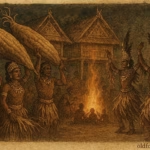
La Pourcailhade traces its roots to medieval Occitania, a cultural region of southern France. Long before modern competitions and festive humor shaped its reputation, it formed part of a network of agrarian rites that honored domestic animals, seasonal fertility, and communal survival. Occitan villages depended on livestock for food, trade, and winter security. Because pigs reproduced quickly and provided reliable sustenance, they became central to the symbolic economy of rural life. Local customs, documented in the Musée des Traditions de l’Aveyron and regional folklore studies from the University of Toulouse, show that annual gatherings were organized to acknowledge the importance of herds, bless the animals, and strengthen social bonds. The festival evolved across centuries, yet it kept its foundation in reverence for agricultural stability.
Description
Although today La Pourcailhade is known for its lighthearted contests and cheerful crowds, early versions of the ritual held deeper meaning. In the Middle Ages, Occitan families lived in close partnership with the land. Their survival depended on harvest success and animal health. Seasonal festivals provided a way to reinforce communal protection and thank the unseen spirits who governed the fertility of fields and herds.
Historically, the festival opened with a procession. Villagers walked through the settlement carrying decorated branches, woven charms, and small carved symbols representing prosperity. Pigs, central to the ritual, were washed, brushed, and adorned with ribbons or sprigs of herbs believed to carry protective power. These gestures honored the animal not merely as food but as a guardian of winter stability. Because pigs could forage wide areas and withstand cold months, their well-being reflected the household’s readiness for the season ahead.
Communal feasting played a key role. Families contributed portions of food, and the meal served as a ritual acknowledgment of abundance. Eating together reinforced trust and unity. Songs and chants honoring pastoral life were performed, some tracing back to early Occitan oral tradition. While specific lyrics have faded, the music functioned as an offering to nature and a celebration of harmony between human labor and the earth.
One of the most distinctive practices was the pig-calling tradition. Modern festivals feature this as a humorous competition, yet its origins come from genuine pastoral necessity. Herding pigs in forested rural terrain required skill and recognizable vocal calls. Shepherds trained animals to return to the village through repeated rhythms and tones. During the festival, skilled callers demonstrated their mastery. To the medieval mind, this talent was not only practical but spiritual; effective calling symbolized a bond between human caretakers and the animal world. The festival recognized this bond by awarding symbolic honors or blessings to the most gifted callers.
Additional rites focused on seasonal change. Winter posed the gravest threat to medieval livelihoods, so many traditions emphasized protection. Herbs such as rosemary, thyme, and sage were burned or bundled as charms to guard stables. Some villages led the animals through a symbolic gate of branches, acting as a purification passage. Others sprinkled blessed water or wine over the herds. These small rites expressed gratitude while invoking good fortune for the coming months.
Over time, La Pourcailhade developed into a celebratory communal fair. Markets opened, musicians played, and games encouraged friendly rivalry. Even as its tone grew more festive, echoes of the older ritual endured. The pig remained a sign of prosperity. The gathering of families symbolized protection through unity. And the festival continued to affirm the value of domestic animals in the cultural memory of Occitania.
Mythic Connection
Even in its practical form, La Pourcailhade reflects mythic themes common to agrarian Europe. Rural Occitan folklore viewed pigs as powerful carriers of luck, fertility, and resourcefulness. Because pigs reproduced efficiently and could survive harsh seasons, their vitality expressed the promise of renewal. Many farming households believed that a strong herd influenced the harmony of the home. An unhealthy animal, by contrast, could signal misfortune or a restless spirit in the land.
The festival’s rituals, processions, blessings, and symbolic purification, echo the ancient Indo-European belief that domestic animals linked humans to spiritual forces governing agriculture. These rites acknowledged that success depended not only on labor but also on natural balance. The calling competitions, though playful today, once demonstrated the shepherd’s almost ritual relationship with the herd, a connection built on sound, trust, and tradition.
Furthermore, the seasonal aspect of the festival ties it to the mythic rhythm of returning light and winter survival. Occitan villages viewed the yearly cycle as a dialogue between human effort and nature’s will. By honoring pigs, people affirmed respect for the natural world and recognized the unseen forces that shaped prosperity. Through communal participation, they expressed collective hope, gratitude, and harmony with the land that sustained them.
Author’s Note
This article summarizes La Pourcailhade as a medieval Occitan agricultural festival rooted in livestock reverence, seasonal protection, and community unity. It highlights the symbolic role of pigs as markers of prosperity and explains how processions, blessings, feasts, and pastoral calling traditions reflected deeper beliefs about fertility and the relationship between humans and the natural world. The festival illustrates how rural societies expressed gratitude, reinforced social bonds, and honored the spiritual rhythms of agriculture.
Knowledge Check
1. Why were pigs central to Occitan ritual life?
They symbolized prosperity, fertility, and winter survival for rural families.
2. What was the purpose of the early processions?
To bless the animals and honor the household’s agricultural stability.
3. How did pig-calling become part of the ritual?
It began as a real pastoral skill used for herding in rural terrain.
4. What role did feasting play in the festival?
It expressed gratitude for abundance and strengthened community unity.
5. Why were protective herbs used during the festival?
They were believed to guard animals and homes during seasonal change.
6. What broader mythic idea shaped the festival’s meaning?
The belief that domestic animals linked humans to natural and spiritual forces.