The Lajkonik is a celebrated annual ritual in Kraków, Poland, held on the first Thursday after Corpus Christi. Its roots trace back to medieval times, intertwining folklore, civic identity, and mythic storytelling. The procession commemorates Tatar invasions in the 13th century and the legendary defense of Kraków, blending historical memory with ritualized festivity. Anthropologists consider it both a protective charm for the city and a folkloric reenactment that strengthens communal identity.
While the costume and parade have evolved over centuries, the ritual continues to serve as a living testament to Kraków’s history and cultural continuity. Each year, residents and visitors witness a dynamic interplay of myth, civic pride, and festive ritual.
Description of the Ritual
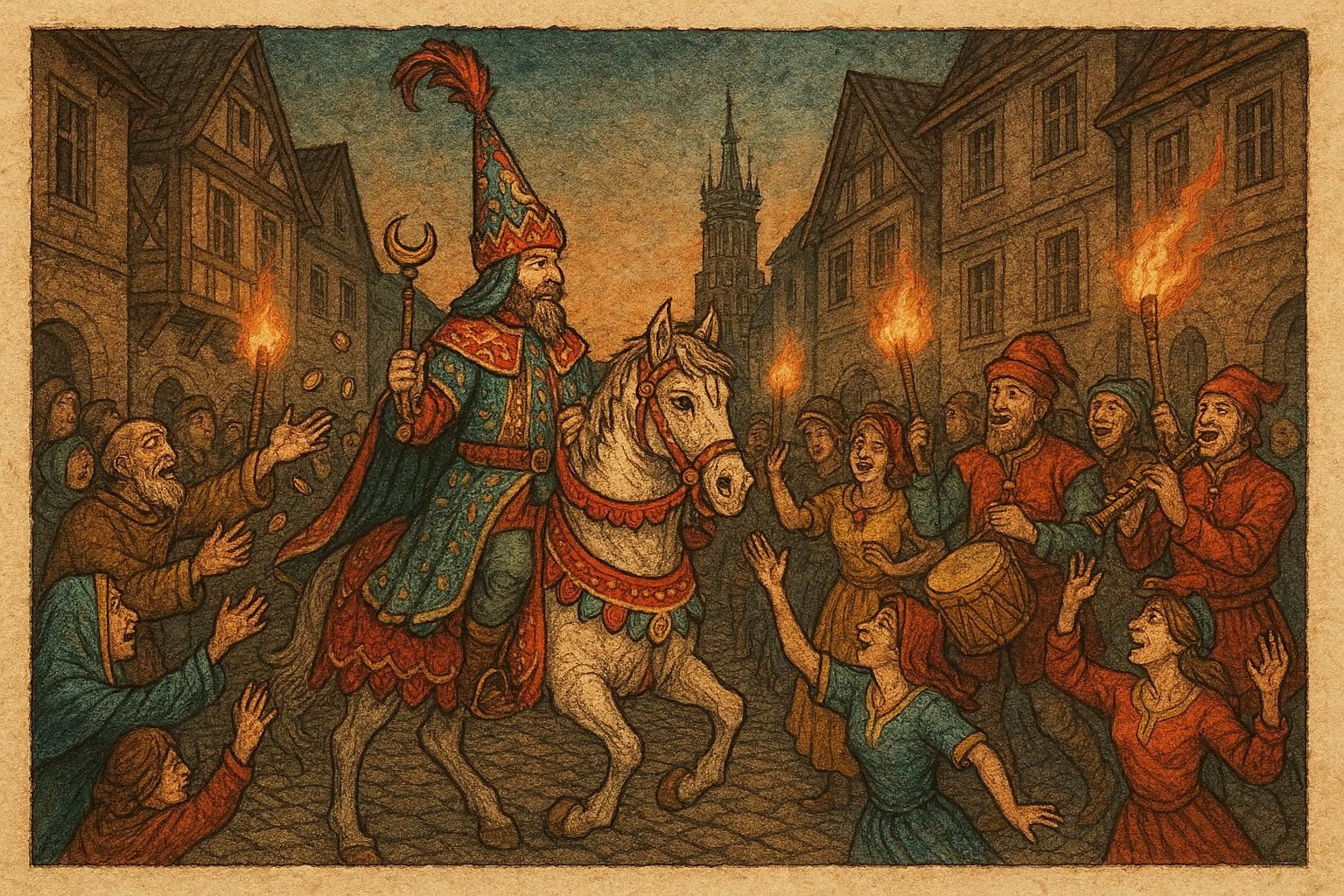
At the heart of the festival is the costumed Lajkonik, a figure representing a Tatar horseman. Traditionally, a local man dons a colorful costume with a tall hat, embroidered garments, and a horse effigy, riding through the streets while wielding a symbolic mace. The horseman is not a threat; rather, his act of lightly “beating” spectators with the mace is a blessing, conferring luck and protection on the city’s citizens.
The procession is accompanied by traditional music, drumming, and dancing, enhancing the festive atmosphere. Spectators often throw coins or small gifts, further symbolizing communal participation and the sharing of prosperity. Local officials, clergy, and performers join the parade, reinforcing the city’s collective identity and linking modern civic life to historic traditions.
The ritual is carefully choreographed. The Lajkonik follows a designated route through Kraków’s streets, visiting historic squares and neighborhoods. Each stop carries symbolic meaning, echoing the legendary Tatar attack and the city’s miraculous defense. The procession concludes with communal celebrations, often including feasts, performances, and the display of local crafts.
Mythic Connection
The Lajkonik ritual derives its mythic foundation from Tatar invasions that threatened Kraków in the 13th century. According to legend, a Tatar horde attempted to raid the city, but residents and defenders repelled the attack, turning a time of peril into a story of triumph. The horseman costume represents both the invaders and the city’s resilient spirit, creating a symbolic duality: danger transformed into protection, and chaos into civic cohesion.
In this sense, the ritual acts as a performative myth, enacting historical memory while imbuing it with magical and spiritual significance. The act of “beating” spectators with the mace embodies a protective blessing, ensuring fertility, prosperity, and safety for families and the city. Music, movement, and audience participation further enhance the mythic resonance, connecting participants to both the story and Kraków’s collective spirit.
Social and Spiritual Significance
Beyond its folkloric charm, the Lajkonik procession serves multiple social and spiritual functions. Spiritually, it enacts protection over the city, blending legend and ritual to safeguard the community from misfortune. Socially, it fosters cohesion and identity, uniting residents through shared history, performance, and celebration.
By reenacting a legendary moment of defense, participants reaffirm their connection to Kraków’s past. The ritual also highlights intergenerational continuity, as local families, performers, and craftsmen preserve the costumes, music, and choreography, passing these traditions to younger generations.
Civic pride is central. City officials actively participate, signaling the ritual’s integration into modern public life while preserving its mythic and symbolic essence. The Lajkonik’s ability to merge folklore, history, and communal identity makes it a unique example of living European tradition.
Modern Continuity
Today, the Lajkonik procession is a major cultural attraction, drawing both locals and tourists. While Kraków has modernized, the ritual retains its essential symbolic features: the horseman, the mace, the music, and the communal route. Local schools, folklore societies, and the Kraków City Museum actively preserve costume-making, parade choreography, and historical interpretation.
The ritual’s resilience highlights Poland’s dedication to cultural heritage, demonstrating how mythic storytelling and civic tradition can coexist in contemporary society.
Author’s Note
The Lajkonik procession of Kraków exemplifies the enduring power of ritual to connect a community with its historical memory, spiritual beliefs, and social identity. By embodying the legendary Tatar invasions through costume, parade, and symbolic gestures, the festival merges myth, history, and civic pride. Its continuity demonstrates how ancient legends are ritually preserved, linking past, present, and future through collective participation.
Knowledge Check
1. What is the origin of the Lajkonik ritual?
It originates from Kraków, Poland, commemorating medieval Tatar invasions with folklore and civic celebration.
2. Who are the Lajkonik figures?
Costumed horsemen representing Tatar invaders, performing symbolic “blessings” for luck and protection.
3. What is the symbolic role of the mace?
The mace is used to lightly strike spectators, representing protection and the granting of good fortune.
4. How does the procession involve the community?
Spectators participate by throwing coins, following the parade, and celebrating local music and dance traditions.
5. How does the ritual connect to civic identity?
It commemorates Kraków’s legendary defense, fostering pride, social cohesion, and historical consciousness.
6. How is the ritual preserved today?
Through costume-making, choreography, folklore societies, city sponsorship, and annual public celebration.