In the ancient port city of Antwerp, where cobblestone streets wind between tall, narrow houses and the River Scheldt flows dark and mysterious, there lived a legend that made even the boldest citizens think twice before stumbling home through the foggy night. His name was Lange Wapper, and he was no ordinary spirit. He was a shape shifter, a trickster, a supernatural being who could stretch his body to impossible heights or shrink himself down to the size of a small child. And he had one particular delight: teaching lessons to those who thought themselves clever, to the drunkards who caused trouble, to the liars who spread falsehoods, and to the greedy who cared only for their own gain.
Lange Wapper had haunted the streets of Antwerp for as long as anyone could remember. Grandmothers told stories of him to their grandchildren, and tavern keepers whispered warnings to patrons who had drunk one too many glasses of Belgian ale. No one knew exactly where he came from or why he had chosen Antwerp as his domain, but everyone agreed on one thing: you did not want to encounter Lange Wapper if you had been behaving poorly.
The spirit was most active on foggy nights, when the mist rolled in thick from the river and blanketed the city in an eerie, gray silence. On such evenings, the gas lamps seemed dimmer, their light barely penetrating the dense fog. Sounds became muffled and distorted. Footsteps echoed strangely off the wet stones. It was on nights like these that Lange Wapper would emerge from wherever he dwelled and walk among the people of Antwerp, searching for those who deserved his particular brand of justice.
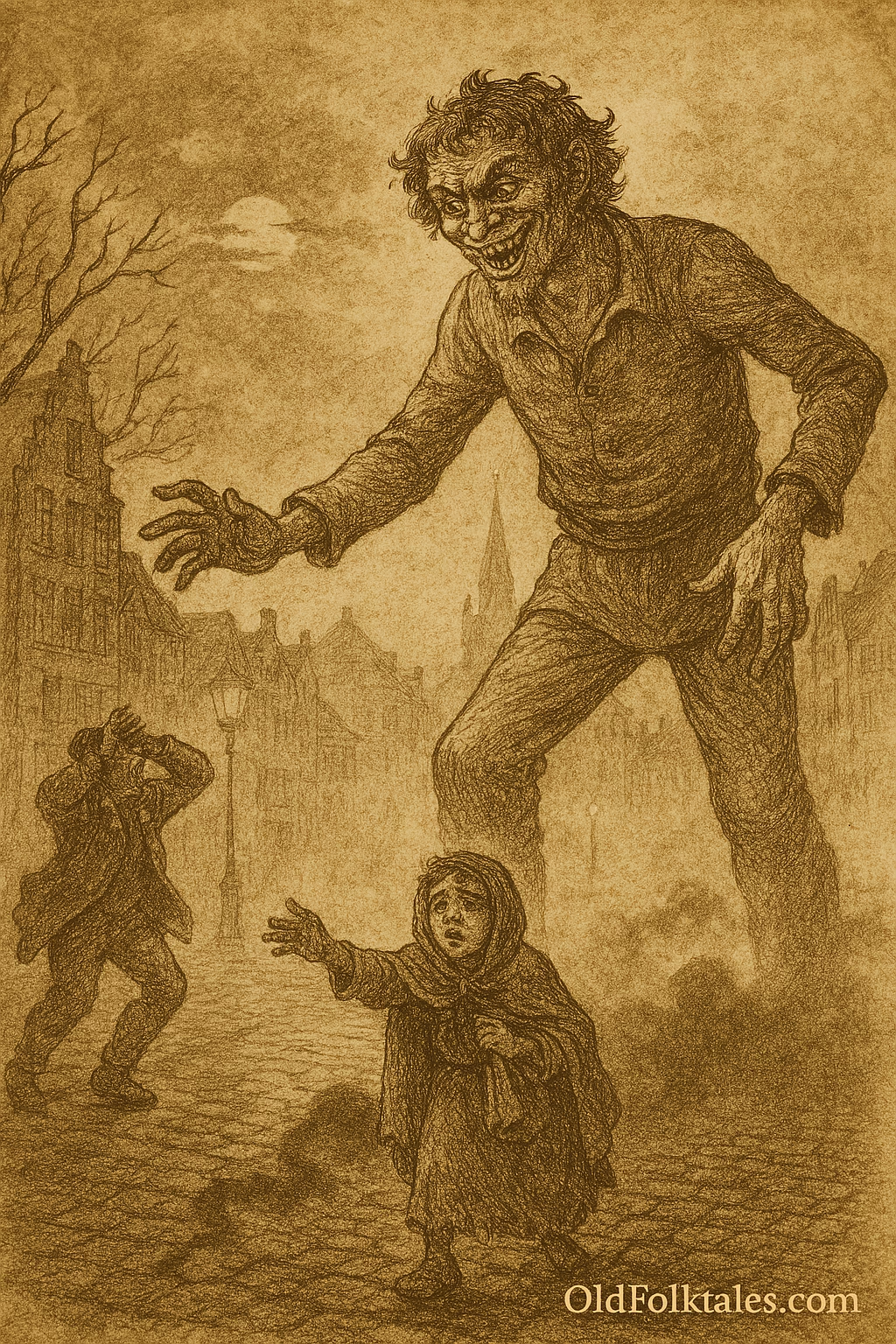
One of his favorite tricks was to appear as a beggar child. He would materialize suddenly at a street corner, dressed in ragged clothes, his face smudged with dirt, his hand extended in a plea for help. His eyes would be large and sorrowful, his voice weak and trembling as he asked for a coin or a crust of bread. Most people, good hearted citizens of Antwerp, would take pity on the child and offer what they could. To these kind souls, Lange Wapper would simply vanish, leaving them puzzled but unharmed.
But to those who mocked him, who kicked at him, who spat cruel words or laughed at his misery, Lange Wapper revealed his true nature. The transformation would begin slowly at first. The small beggar child would start to grow. His body would stretch upward, inch by inch, foot by foot, rising higher and higher into the foggy night. His shadow would spread across the cobblestones like spilled ink, swallowing the entire street in darkness. The mocker would stumble backward, terror flooding through their veins as they watched the child become a towering giant whose head disappeared into the mist above the rooftops.
Lange Wapper’s face, now enormous and terrible, would loom over the terrified victim. His laughter would boom through the empty streets, echoing off the buildings, shaking windows in their frames. The sound was not joyful but wild and mocking, filled with a kind of justice that felt both frightening and deserved. Then, just as suddenly as he had appeared, Lange Wapper would vanish completely, leaving his victim trembling in the fog, forever changed by the encounter.
But the beggar child was not his only disguise. Lange Wapper was endlessly creative in his methods of trickery. Sometimes he would appear as a friendly companion, walking alongside a lone traveler through the darkened streets. He would engage in pleasant conversation, matching the traveler’s pace perfectly, his voice warm and familiar. The unsuspecting person might think they had found a friend to escort them safely home.
Then, without warning, the transformation would occur. The friendly companion would begin to grow, his body stretching skyward at an impossible rate. Within moments, the figure beside you would tower over the rooftops, a giant whose head seemed to scrape the clouds themselves. His wild laughter would ring out across the city, and then he would disappear into thin air, leaving his victim alone and shaken, wondering if they had imagined the entire terrifying episode.
Lange Wapper seemed to know the sins of those he encountered. Drunkards who stumbled through the streets causing disturbances, shouting obscenities, and disturbing the peace found themselves face to face with the giant. Liars who spread malicious gossip or deceived their neighbors discovered that their words had consequences when Lange Wapper appeared before them. Greedy merchants who cheated their customers or hoarded wealth while others suffered learned that some debts could not be paid in gold.
The people of Antwerp came to understand that Lange Wapper was not simply a monster to be feared. He was a force of moral order, a supernatural guardian who punished wickedness and rewarded virtue. Parents used his legend to encourage good behavior in their children. “Behave yourself,” they would warn, “or Lange Wapper will find you on a foggy night.” Merchants became more honest in their dealings, drunkards thought twice before causing trouble, and gossips held their tongues, all because they knew that Lange Wapper might be watching.
Even today, when fog rolls in from the Scheldt and wraps itself around the ancient streets of Antwerp, some people claim to feel his presence. They speak of shadows that seem too tall, of footsteps that follow but belong to no one, of laughter carried on the wind. Whether Lange Wapper still walks the streets or has become merely a memory, his legend endures. He remains a reminder that our actions have consequences, that cruelty and dishonesty do not go unnoticed, and that sometimes, justice comes from the most unexpected places.
In the taverns and homes of Antwerp, the story of Lange Wapper continues to be told, generation after generation. It is a tale that speaks to something deep within us, the understanding that we are accountable for our behavior, that kindness matters, and that we should always treat others with respect and dignity. For you never know who might be watching. You never know when a beggar child might be more than he appears. You never know when Lange Wapper might decide that you deserve a lesson.
And so the people of Antwerp walk a little more carefully through the fog, speak a little kindlier to strangers, and remember that in this ancient city, legends have a way of becoming real.
Click to read all Myths & Legends – timeless stories of creation, fate, and the divine across every culture and continent
The Moral of the Story
The legend of Lange Wapper teaches us that our actions and character matter, especially when we think no one is watching. Those who treat others with cruelty, dishonesty, or greed will eventually face consequences for their behavior. True morality is not about appearing good in public but about genuinely treating all people with kindness and respect, for we never know who we might encounter or what form justice might take.
Knowledge Check
Q1: Who was Lange Wapper in Belgian legend?
A1: Lange Wapper was a shape shifting spirit from Antwerp, Belgium, who could stretch his body to enormous heights or shrink to the size of a child. He was known for tricking and punishing drunkards, liars, and greedy people, serving as a supernatural force of moral justice in the city.
Q2: What was Lange Wapper’s favorite disguise in Antwerp?
A2: Lange Wapper often disguised himself as a beggar child on foggy nights. When kind people helped him, he would simply disappear. But when people mocked or mistreated him, he would grow into a towering giant whose shadow swallowed the street, terrifying those who had shown cruelty.
Q3: When was Lange Wapper most likely to appear in Antwerp?
A3: Lange Wapper was most active on foggy nights when mist rolled in thick from the River Scheldt. The fog provided the perfect cover for his appearances and transformations, creating an eerie atmosphere where he could surprise unsuspecting victims.
Q4: What types of people did Lange Wapper target?
A4: Lange Wapper specifically targeted people who behaved badly, including drunkards who caused disturbances, liars who spread malicious gossip or deceived others, and greedy individuals who cheated customers or hoarded wealth while others suffered.
Q5: How did Lange Wapper’s legend influence behavior in Antwerp?
A5: The legend of Lange Wapper served as a moral deterrent that encouraged good behavior throughout Antwerp. Parents used his story to teach children to behave well, merchants became more honest, and people treated strangers with more kindness, knowing that Lange Wapper might be watching.
Q6: What is the cultural significance of shape shifting spirits in Belgian folklore?
A6: Shape shifting spirits like Lange Wapper represent supernatural forces of justice and morality in Belgian folklore. These legends served to reinforce social values, discourage antisocial behavior, and remind people that their actions have consequences, even when they believe no one is watching.
Source: Adapted from traditional Flemish folklore and legends of Antwerp
Cultural Origin: Flemish Belgian folklore, Antwerp, Belgium