
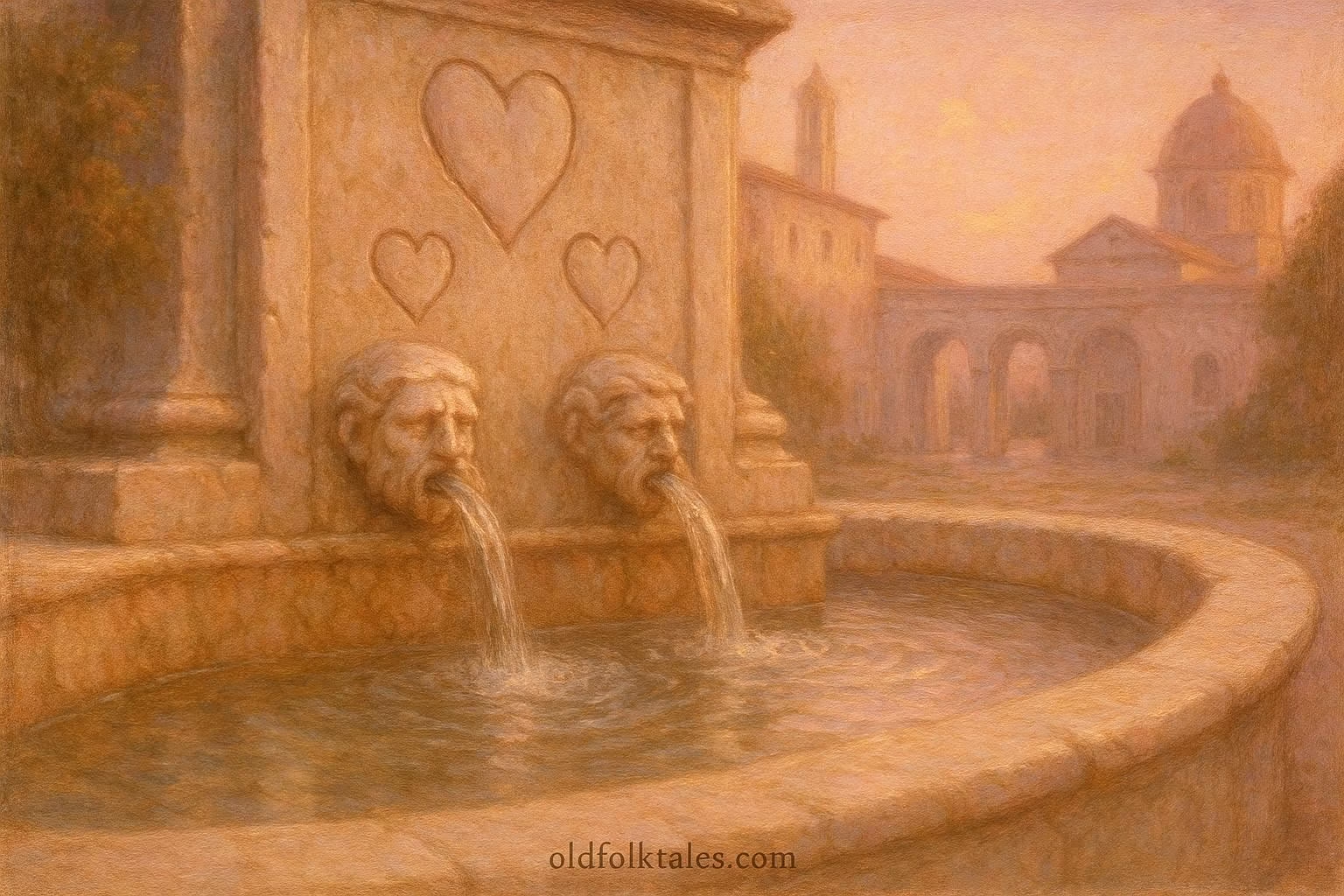
Italian culture has long celebrated love as both art and life, a force capable of shaping human character as water shapes marble. From the poetry of Petrarch and Boccaccio to the arias of opera, the intensity of human emotion has been a subject of reflection, instruction, and enjoyment. Proverbs capturing love, longing, and human nature function as distilled wisdom, guiding conduct, warning of folly, and elevating the heart through careful observation of passion’s power.
Love in Italy is never merely romantic; it encompasses friendship, familial bonds, loyalty, and the subtle interplay between desire and duty. These sayings recognize the tenderness and fragility of emotion, as well as its dramatic, sometimes destructive, intensity. They celebrate passion, advise caution, and reveal how relationships mirror human virtues and vices alike. By capturing these truths in concise, memorable forms, Italians preserve lessons about honesty, empathy, and emotional discernment.
Furthermore, Italian proverbs reflect a deep awareness of human impermanence and the transformative power of love. Emotions, like water, can carve paths through stone, leaving indelible marks even after they recede. This duality, the beauty and the danger of emotional depth, is central to the culture’s understanding of human nature. The following 100 proverbs offer reflections, warnings, and celebrations of love, intimacy, and the emotional currents that shape lives.
50 Italian Proverbs on Love, Emotion & Human Nature
- “Amore e desiderio sono acqua e fuoco.” – Love and desire are water and fire. (Passion is both vital and dangerous.)
- “Chi ama, soffre.” – He who loves, suffers. (Love entails vulnerability.)
- “Cuore innamorato non teme tempesta.” – A loving heart fears no storm. (True love persists through hardship.)
- “Amore segreto, cuore inquieto.” – Secret love makes the heart restless. (Hidden feelings bring inner turmoil.)
- “Chi trova un amico, trova un tesoro; chi trova l’amore, trova il cielo.” – He who finds a friend finds a treasure; he who finds love finds heaven. (Love and friendship are precious.)
- “Il cuore non ha ragione.” – The heart has no reason. (Emotions often defy logic.)
- “Amore è cieco, ma il matrimonio riapre gli occhi.” – Love is blind, but marriage reopens the eyes. (Idealized love may confront reality.)
- “Cuore geloso, mente turbata.” – Jealous heart, troubled mind. (Jealousy disturbs peace.)
- “Non si può amare e avere paura.” – One cannot love and be afraid. (Fear hinders connection.)
- “Dove c’è amore, c’è vita.” – Where there is love, there is life. (Love is central to human vitality.)
- “Amore e vento non si possono chiudere.” – Love and wind cannot be contained. (True emotion cannot be restrained.)
- “Il primo amore non si scorda mai.” – First love is never forgotten. (Early emotions leave lasting marks.)
- “Chi ama di cuore, perdona facilmente.” – He who loves sincerely forgives easily. (True love fosters mercy.)
- “Amore pazzo non conosce confini.” – Mad love knows no boundaries. (Passion often transcends reason.)
- “Cuore solitario, fiume profondo.” – Lonely heart, deep river. (Solitude fosters emotional depth.)
- “Il tempo guarisce, ma non cancella.” – Time heals, but does not erase. (Love leaves permanent impressions.)
- “Amore e fame non hanno regole.” – Love and hunger have no rules. (Strong desires defy convention.)
- “Chi ama, teme di perdere.” – He who loves fears loss. (Attachment brings anxiety.)
- “Cuore contento, occhi lucenti.” – Happy heart, sparkling eyes. (Joy manifests physically.)
- “Amore e pioggia arrivano senza invito.” – Love and rain arrive unbidden. (Emotions are unpredictable.)
- “Chi non ama, non vive.” – He who does not love, does not live. (Love is essential to life.)
- “Amore non si misura, si prova.” – Love is not measured, it is experienced. (Emotion cannot be quantified.)
- “Cuore in tempesta, mente in rovina.” – Heart in storm, mind in ruin. (Emotional turmoil disrupts reason.)
- “L’amore vero conosce sacrificio.” – True love knows sacrifice. (Commitment demands giving.)
- “Cuore spezzato, anima cresciuta.” – Broken heart, grown soul. (Pain fosters maturity.)
- “Amore e musica hanno corde sottili.” – Love and music have delicate strings. (Both require careful tending.)
- “Chi ama di notte, sogna di giorno.” – He who loves by night dreams by day. (Passion occupies the mind constantly.)
- “Cuore ardente non teme gelo.” – Burning heart fears no frost. (Strong emotions resist adversity.)
- “Amore taciuto cresce in silenzio.” – Silent love grows quietly. (Hidden feelings deepen over time.)
- “Chi ama con saggezza non perde mai.” – He who loves wisely never loses. (Balanced love preserves joy.)
- “Il cuore non chiede permesso.” – The heart asks no permission. (Love defies control.)
- “Amore senza rispetto è vento senza aria.” – Love without respect is wind without air. (Foundations are essential.)
- “Chi ama, spera sempre.” – He who loves always hopes. (Hope sustains attachment.)
- “Cuore innamorato, occhi ingenui.” – Loving heart, naive eyes. (Love clouds judgment.)
- “Amore tardivo, gioia perduta.” – Late love, lost joy. (Timing matters in relationships.)
- “Chi perde l’amore, trova la saggezza.” – He who loses love finds wisdom. (Pain teaches lessons.)
- “Cuore generoso raccoglie felicità.” – Generous heart gathers happiness. (Kindness attracts joy.)
- “Amore e arte fanno l’uomo immortale.” – Love and art make man immortal. (Emotion and creativity endure.)
- “Chi ama non calcola il tempo.” – He who loves does not count time. (Love transcends duration.)
- “Cuore leggero porta sorriso ovunque.” – Light heart carries smiles everywhere. (Joy spreads naturally.)
- “Amore che brucia, insegna a vivere.” – Love that burns teaches how to live. (Passion fosters growth.)
- “Cuore innamorato, mente tormentata.” – Loving heart, troubled mind. (Intense emotion is often challenging.)
- “Chi ama troppo, teme sempre il distacco.” – He who loves too much always fears separation. (Attachment brings anxiety.)
- “Amore e vento, nessuno li può fermare.” – Love and wind cannot be stopped. (Strong forces resist constraint.)
- “Cuore fedele non invecchia.” – Faithful heart does not age. (Loyalty preserves vitality.)
- “Chi ama vede l’imperfezione come bellezza.” – He who loves sees imperfection as beauty. (Affection reframes perception.)
- “Amore nascosto cresce silenzioso come un fiume.” – Hidden love grows silently like a river. (Secret feelings deepen over time.)
- “Cuore coraggioso osa ogni confine.” – Brave heart dares every boundary. (Love requires courage.)
- “Chi ama non conosce distanza.” – He who loves knows no distance. (Emotion transcends space.)
- “Amore e pazienza camminano insieme.” – Love and patience walk together. (Endurance is vital in relationships.)
Author’s Note
Italian proverbs illuminate love as both a transformative and challenging force. Emotion, like water, can carve and shape the hardest hearts, leaving marks of joy, sorrow, and growth. By observing these sayings, one learns to balance desire with wisdom, passion with patience, and tenderness with self-awareness. In embracing the drama and beauty of human nature, we cultivate understanding and empathy in our own relationships.
Knowledge Check
- Q: What does “Like water on marble” symbolize in these proverbs?
A: The lasting, shaping effect of love and emotion on the heart and character. - Q: Why is patience emphasized in romantic relationships?
A: Because enduring love requires time, understanding, and tolerance. - Q: What lesson does “Chi perde l’amore, trova la saggezza” convey?
A: Heartbreak teaches insight and personal growth. - Q: How do hidden emotions affect individuals according to the proverbs?
A: They deepen internal reflection but may also create restlessness. - Q: Why are courage and boldness often linked with love?
A: True love requires emotional bravery and willingness to risk vulnerability. - Q: How do these proverbs connect love with moral insight?
A: They show that affection and human relationships reveal virtues like loyalty, patience, and empathy.









