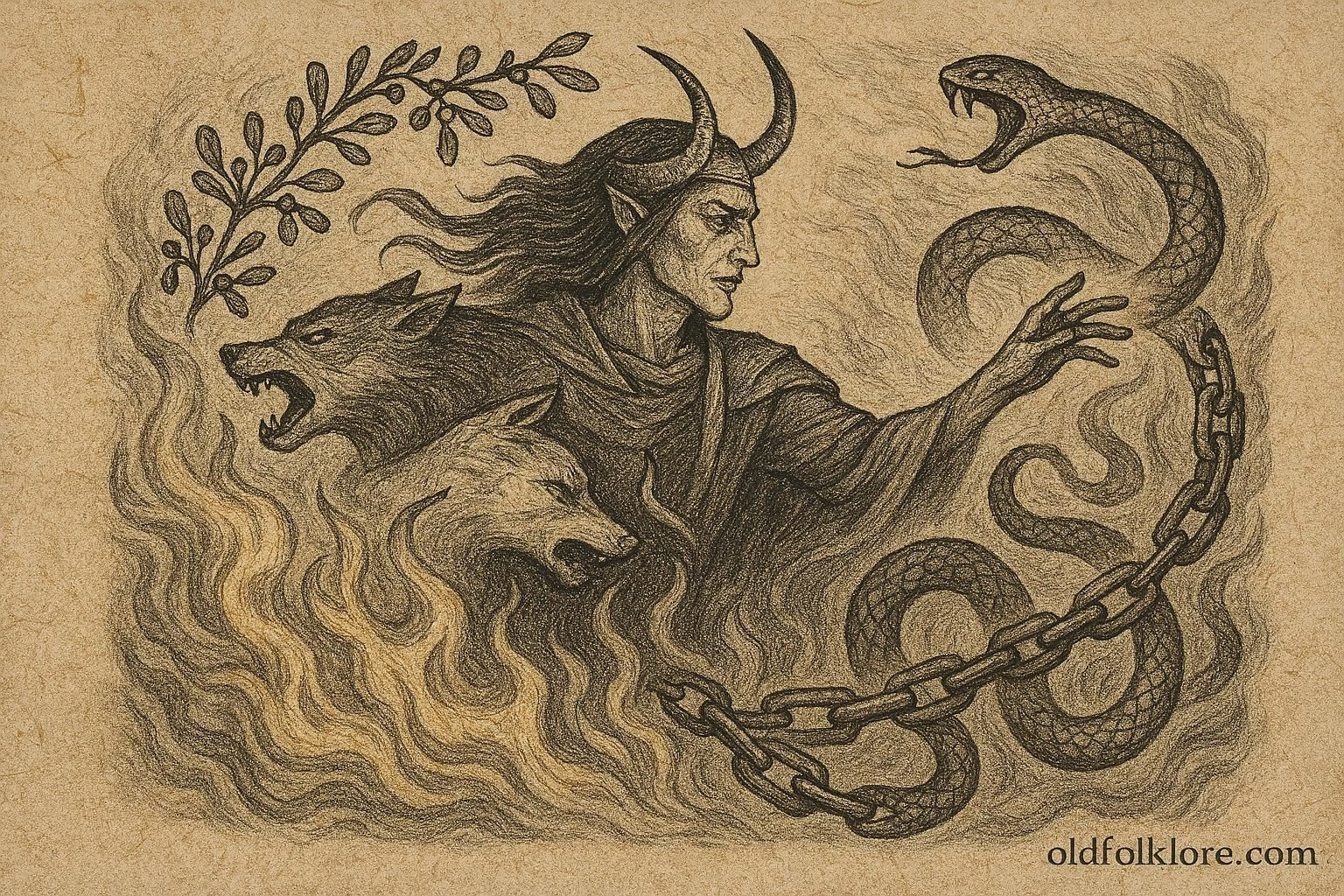
Loki, son of the giant Fárbauti and the goddess Laufey, stands at the heart of Norse myth as both companion and calamity to the gods of Asgard. Neither wholly divine nor demonic, he embodies the ambiguity of chaos itself. With hair of fire and eyes that glint like quicksilver, Loki is a master of guile, a shapeshifter who takes on any form, man, mare, salmon, or fly, to twist the threads of fate.
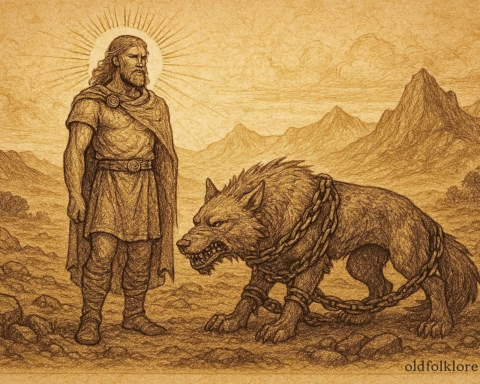
Loki is often counted among the Æsir, the principal Norse gods, though his blood ties link him to the jötnar (giants), the ancient adversaries of Asgard. His intellect is unmatched; his words can soothe Odin’s storms or ignite the wrath of Thor. He is a bringer of invention and disaster alike, father to monstrous offspring such as the wolf Fenrir, the serpent Jörmungandr, and Hel, queen of the dead.
Through his cunning deeds, Loki grants the gods their greatest treasures, yet he also seals their doom. His tale, preserved in the Poetic Edda and Prose Edda, reveals that even among immortals, deceit and destiny are intertwined.
The Mythic Story: The Death of Baldr
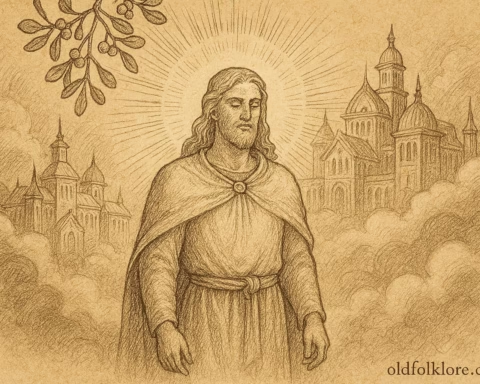
Once, in the shining halls of Asgard, laughter and peace filled the air. Baldr, son of Odin and Frigg, was the most beloved of all the gods, pure, radiant, and fairer than any bloom that touched the earth. Yet one night, Baldr’s dreams turned dark. He saw himself slain, his light extinguished, and his mother woke weeping.
Frigg, heart-struck with dread, swore that no harm should come to her son. She journeyed through the nine worlds, taking oaths from every being and thing, fire, water, stone, beast, and plant, that none would harm Baldr. All swore, save for one small plant deemed too young and harmless to bother with: the mistletoe, growing pale on the oak’s bark.
When the gods heard of Baldr’s invulnerability, they turned his gift into a game. In the meadow before Valhalla, they cast stones, spears, and axes at him, and every weapon turned aside. Baldr laughed at their sport, shining like the summer sun. But in the shadows, Loki watched, his heart curling into envy.
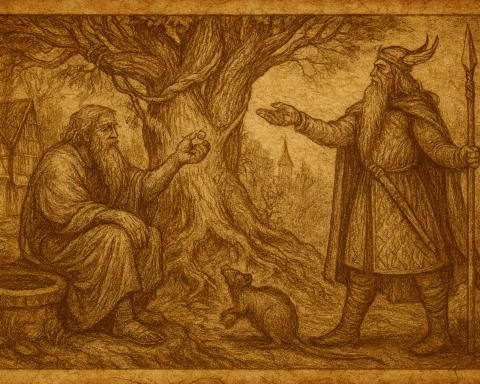
He disguised himself as an old woman and went to Frigg’s hall. “Is it true,” he asked in a trembling voice, “that every thing in the world has sworn not to harm your son?”
“Yes,” said Frigg, smiling. “All but one, such a tiny thing could never hurt him.”
“And what is that?” asked the old woman softly.
“The mistletoe,” Frigg replied.
When Loki left, his eyes gleamed like frostfire. He found the mistletoe, slender and green, and shaped it into a dart. Returning to the meadow, he saw the gods still laughing. Among them stood Baldr’s blind brother, Höðr, sorrowing that he could not join their sport. Loki approached him with a whisper:
“Why do you not honor Baldr as the others do?”
“I cannot see where he stands,” Höðr said, “nor do I have a weapon to throw.”
“I will guide your hand,” Loki murmured, placing the mistletoe dart in his grasp.
The throw was light as breath, yet the dart struck true. It pierced Baldr’s chest, and the god of light fell lifeless to the ground. Silence fell across Asgard. The laughter died; even the wind stopped in its course.
Frigg’s cry tore the heavens. Odin’s face hardened with sorrow deeper than rage. The gods lifted Baldr’s body and placed him upon his ship, Hringhorni, the greatest of vessels. When it was pushed to sea, the flames leapt high, and all of creation mourned.
Frigg begged for a messenger to descend into Hel’s realm and plead for Baldr’s release. Hermóðr, Odin’s son, rode for nine nights through darkness until he reached Hel’s gate. There sat Baldr, pale but unbroken, beside his dead horse. Hel agreed to release him, on one condition: that every living thing should weep for Baldr.
The word spread across the worlds, and all creation wept: men and beasts, stones and metals, even the trees shed dew like tears. All but one refused. A giantess named Þökk sat unmoved, her eyes cold as ash.
“Let Hel keep what she has,” she said.
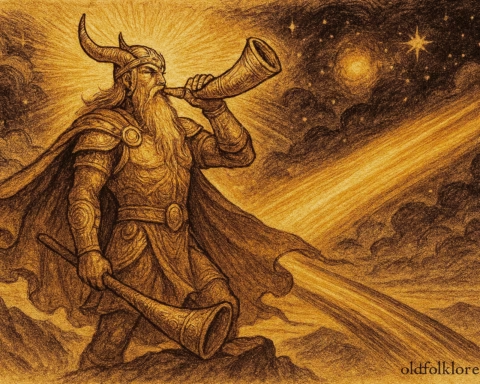
The gods knew then that it was Loki in disguise. For his deceit, they hunted him across the nine worlds. He fled as a fish and a bird, but Thor caught him in the shape of a salmon. They bound him with the entrails of his own son beneath the earth. Above him, a serpent dripped venom upon his face, and his wife Sigyn caught the poison in a bowl to spare him. When the bowl overflowed, the drops burned him, and his writhing made the earth tremble. So Loki lies bound until Ragnarök, when his bonds will break, and chaos will return to swallow the gods.
Learn the ancient stories behind deities of light, storm, and shadow from cultures across the world
Author’s Note
Loki’s story is the mirror of divine vulnerability. His cunning exposes the cracks within perfection, reminding us that even in the realm of gods, the seed of destruction grows beside love and laughter. He embodies both the spark of creativity and the ruin born of pride. In the Norse view, no act, however terrible, lies outside the web of destiny; even deceit serves the unfolding of fate. Loki is not merely evil, he is the chaos without which creation itself would stand still.
Knowledge Check
Q1. Who is Loki in Norse mythology?
A: A trickster god and shapeshifter, both ally and adversary of the Æsir gods.
Q2. Who were Loki’s parents?
A: The giant Fárbauti and the goddess Laufey.
Q3. What event marked Loki’s greatest betrayal?
A: His role in Baldr’s death by guiding Höðr’s mistletoe dart.
Q4. What punishment did Loki receive?
A: He was bound beneath the earth with venom dripping upon his face until Ragnarök.
Q5. What does Loki’s trickery symbolize?
A: The unpredictable power of change, creation, and destruction in the cosmic order.
Q6. In which texts are Loki’s myths preserved?
A: The Poetic Edda and Prose Edda, medieval Icelandic sources of Norse mythology.
Source: Poetic Edda and Prose Edda, Iceland (13th century manuscripts).
Origin: Scandinavia (Norse / Icelandic Tradition)