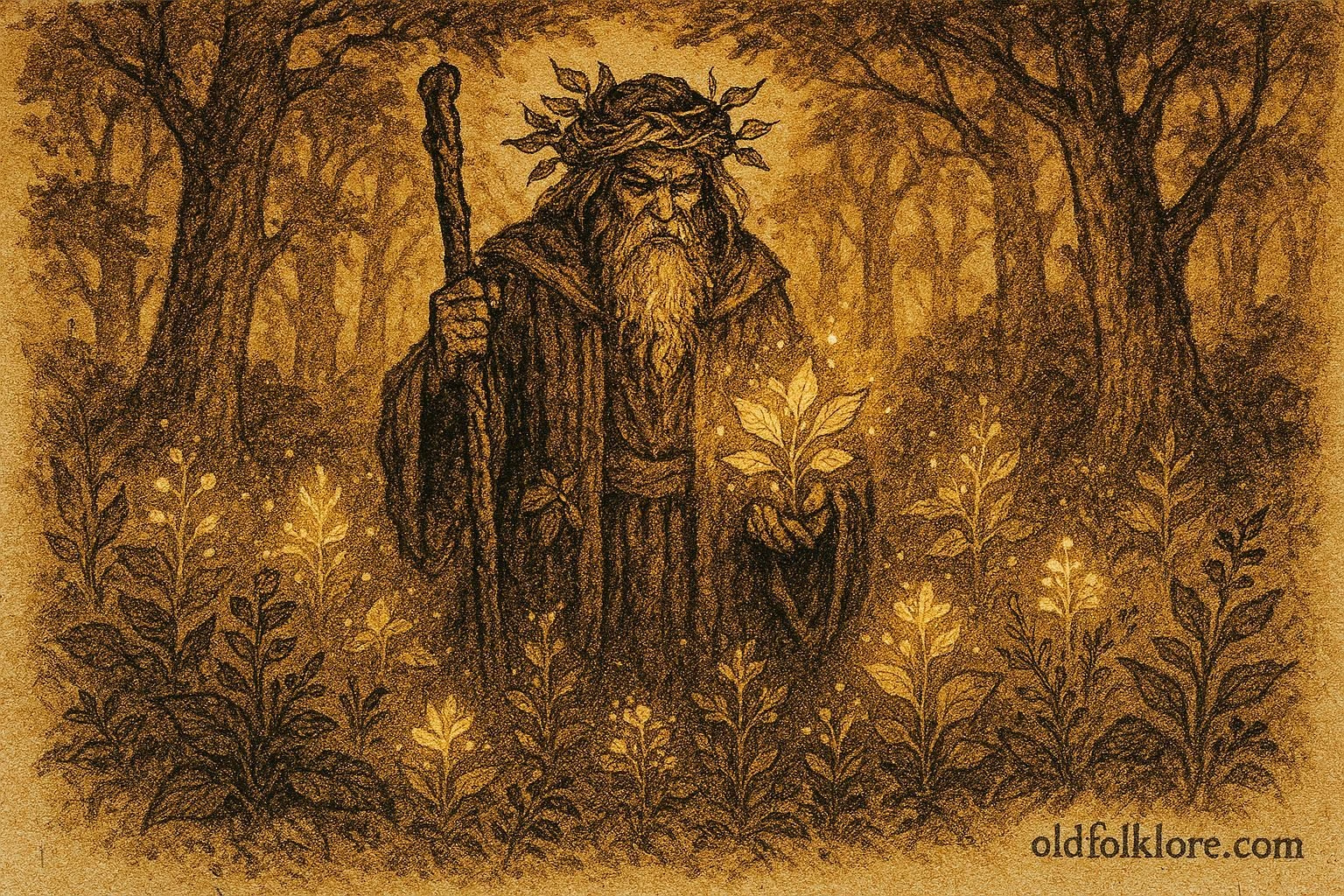
Loko stands among the most ancient and respected deities within the spiritual traditions of the Fon people in Benin and Togo. Regarded as the Master of the Forest, he presides over every tree, leaf, root, and herb that grows beneath the canopy. His domain is not merely the wilderness but the hidden knowledge within it, the curative essence of plants, the power of their spirits, and the rituals through which humans approach them with reverence.
Fon priests describe Loko as a guardian of initiation rites, especially those in which novices must enter the forest to receive teachings about medicinal plants. His presence is marked by calm wind, rustling leaves, and the sudden fragrance of herbs. Shrines dedicated to him often sit at the edge of sacred groves, decorated with vines, calabashes, woven talismans, and the offerings of herbalists who rely on his guidance.
Loko’s symbols include the ashe tree, forest staffs, bundles of medicinal leaves, and carved figurines representing plant spirits. He is a deity of healing not only in the physical sense but also in the moral and ritual sense, as he teaches balance, between humans and nature, between suffering and knowledge, between illness and restoration.
Though some regions associate him with Gu, the deity of iron and war, Fon oral traditions consistently maintain Loko’s unique identity as a teacher, herbalist, and forest sage who revealed the secrets of plants to humankind.
Mythic Story: How Loko Taught Humans Medicine
In the earliest days, when the villages of the Fon were still young and the forest stood tall and untouched, humans lived close to nature but did not yet understand it. They hunted, gathered, and built their homes from the wood they found, but when illness struck, they were helpless. Children fell sick, hunters limped home with fever, and the elders spoke of unseen forces that moved in darkness. The forest, vast and wise, watched them struggle.
Loko observed this suffering from deep within the groves where sunlight filtered through layers of leaves like threads of gold. He was the quiet heartbeat of the wilderness, the whisper in branches, the spirit in roots, the essence in flowering plants. For a long time, he said nothing, waiting to see if humans would seek the forest not only for food and wood but also for knowledge.
But their cries grew louder.
One evening, as a mother wept beside her feverish child, her voice carried through the trees. Loko heard her grief and decided the time had come. He stepped from the shadows in a form woven from leaves and light, his presence soft but unmistakably divine. That night, he visited the dreams of the village’s oldest man, a respected elder named Henu.
In the dream, Loko stood beside a great tree whose roots twisted like serpents and whose leaves shimmered with an inner glow. He spoke with a voice like rustling branches.
“Henu, you and your people suffer because you walk through the forest blind. The plants speak, but you do not know their language. Come to the groves at dawn. I will teach you.”
Henu awoke trembling, unsure if it had been only a dream or an invitation from a god. But at dawn, he walked into the forest alone. The air was cool and damp, the mist rising like spirits drifting toward the treetops. As he stepped deeper, he felt the presence of something ancient, a warmth that pulsed through the soil.
Then Loko appeared.
His form was tall as a palm tree but gentle in bearing, woven from vines, bark, and shimmering droplets of dew. Where he walked, the forest seemed to bow in recognition.
“You answered,” Loko said. “Now look.”
He led Henu to a patch of plants with small white flowers.
“This one cools fever,” he explained. “Its leaves hold the breath of water. Boil them gently, and the heat in the body will fade.”
They walked farther. Loko showed him a root that soothed burns, a vine that calmed spirits tormented by nightmares, and a cluster of bright red berries whose juice drew out infection but could poison if used unwisely.
“For every plant that heals,” Loko warned, “another tests the wisdom of the healer. Do not separate knowledge from respect.”
For many days, Loko taught Henu. Under the canopy of tall trees, he revealed secrets that no human had ever known, which herbs should be gathered at sunrise, which only at dusk; which leaves must be offered small prayers before cutting; which roots held both healing and danger; and how the forest spirits watched carefully how humans touched the land.
He guided Henu through rituals too: small offerings of water poured at the base of ancient trees, gentle songs sung to plant spirits before harvesting, and the understanding that healing was not merely a transaction but a relationship between humans and the living forest.
When Loko finished teaching, he placed a staff of carved wood, the first healer’s staff, in Henu’s hands.
“Share what you have learned,” he said. “Let healing be a bridge between your people and the forest.”
Then he vanished into the trees, leaving only the faint scent of herbs.
Henu returned to the village carrying new wisdom. He used the fever-cooling leaves on the sick child, and by morning, the child’s breathing had steadied. The villagers gathered around him in awe, listening as he shared the teachings of Loko.
Word spread from village to village. Soon, others joined Henu in the forests, learning how to prepare remedies, how to honor the plants, and how to walk through nature with humility rather than fear. Shrines were raised in Loko’s honor, simple structures of wood and leaves where healers left offerings of herbs, water, and gratitude.
From that time forward, whenever a healer entered the forest, they whispered a prayer to Loko, asking the Master of Herbs to guide their hands.
And the forest, alive with his spirit, continued to teach.
Author’s Note
This myth captures the heart of Fon spiritual philosophy: knowledge is sacred, and healing is a gift that requires humility. Loko’s teachings emphasize that humans are not separate from nature but participants in its wisdom. Illness becomes a doorway to understanding, and the forest becomes a teacher when approached with respect.
Knowledge Check
Q1: What culture worships Loko?
A: The Fon people of Benin and Togo.
Q2: What is Loko’s primary domain?
A: Forests, medicinal plants, and sacred healing knowledge.
Q3: Who did Loko first teach in the myth?
A: An elder named Henu.
Q4: Why did Loko choose to teach humans?
A: He witnessed their suffering and sought to guide them toward healing.
Q5: What object did Loko give to Henu?
A: A carved healer’s staff.
Q6: What is required when harvesting medicinal plants, according to Loko?
A: Respect, ritual offerings, and understanding of plant spirits.
Source: Fon Mythology, Benin & Togo.
Source Origin: Fon (Benin, Togo)