Lugh (Old Irish: Lug), often called Lugh Lámfada “Lugh of the Long Arm” is one of the most revered deities of the Irish Celtic pantheon. Celebrated for brilliance, mastery, and sovereignty, he embodies nearly every form of skill: craftsmanship, strategy, magic, poetry, music, healing, and warrior art. His identity is deeply connected to light, radiance, and excellence.
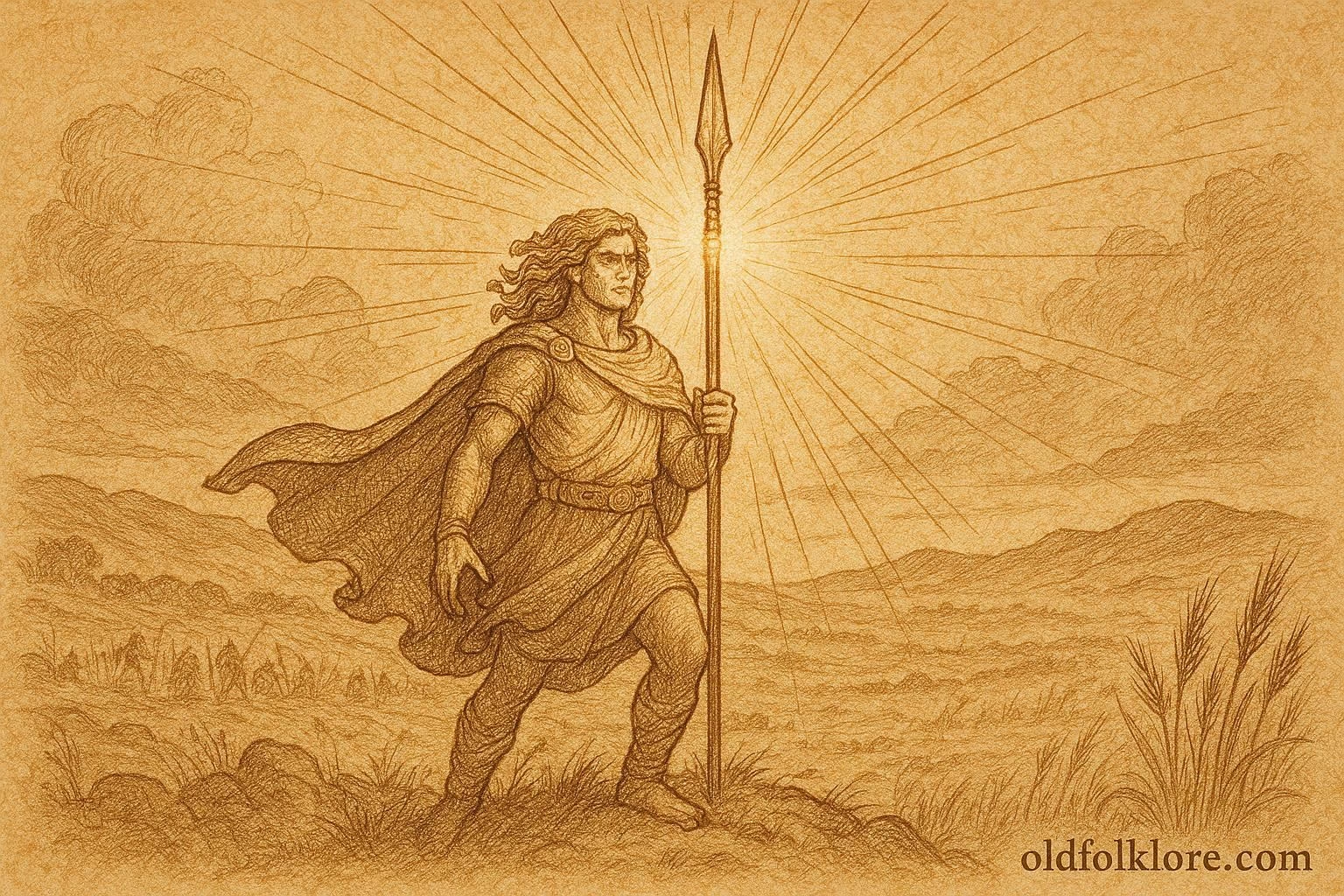
A central figure of the divine Tuatha Dé Danann, Lugh is often depicted carrying the Spear of Victory, a weapon said never to miss its mark. He is the foster-son of the sea-god Manannán mac Lir, and the maternal grandson of Balor, the monstrous Fomorian tyrant. Lugh’s sacred time is Lughnasadh, the great August harvest festival, traditionally founded in honor of his foster-mother Tailtiu.
Lugh stands as a champion of skill, justice, and renewal, bridging the worlds of gods and mortals through mastery and enlightened kingship.
Mythic Story
In the mythic age of Ireland, when the Tuatha Dé Danann had come into the land and the Fomorians held it under shadow, a child of extraordinary promise was born. His mother was Ethniu, daughter of Balor of the Evil Eye, the Fomorian king whose single baleful gaze could wither armies. But prophecy had warned Balor that his own grandson would be the one to bring about his death. To prevent that fate, Balor imprisoned his daughter in a tower of endless vigilance, guarding her from all contact with the outside world.
Yet destiny finds its path even through stone walls. Through circumstance guided by the gods, Ethniu encountered Cian of the Tuatha Dé Danann, and from their union, Lugh was conceived. When Balor learned of the birth, he sought to destroy the child, but Lugh was hidden away, spirited across sea and land until he was taken into the care of Manannán mac Lir, the sea-god, who fostered him upon the Isle of Beginnings. There the young god was taught every art: druidry, music, healing, warfare, craftsmanship, and kingship.
And in each skill, Lugh not only learned, he excelled.
When he reached manhood, Lugh journeyed to the great hall of Tara, where the Tuatha Dé Danann gathered under their king, Nuada of the Silver Hand. Lugh approached the gate and announced himself, seeking entry to the assembly. But the doorkeeper challenged him:
“What art do you bring? For none may enter Tara unless they possess a craft of service.”
Lugh replied, “I am a wright.”
“We have a wright already.”
“I am a smith.”
“We have a smith.”
“I am a champion.”
“We have a champion.”
“I am a harper.”
“We have a harper.”
“I am a warrior, a poet, a historian, a sorcerer, and a healer.”
“To each of these we have one.”
Then Lugh asked, “Has Tara one man who possesses all the arts together?”
The doorkeeper paused, speechless. For within Lugh shone mastery unlike anything the gods had seen. And so he was finally welcomed, given a seat and invited to demonstrate his many gifts. The hall of Tara glowed with awe as Lugh played the harp like the turning of seasons, recited lore with the clarity of stars, and wielded weapons with precision that stirred the wind.
Soon, a great need arose. The Fomorians, led by Balor and the oppressive Bres, demanded harsh tribute from the Tuatha Dé Danann. Their people groaned under taxation, and Nuada sought counsel on how to resist. It was then that Lugh stepped forward, radiant as dawn upon silver water.
He was appointed Chief Ollamh, the highest of Ireland’s learned ranks, and became the divine spear-point of strategy. In the days leading to war, he traveled across the island, gathering allies, crafting tools, and teaching the people arts that would strengthen their spirits and their hands. To the smith Goibniu he brought designs; to the healer Dian Cécht he brought herbs; to each artisan he brought new ways of forging excellence.
At last came the day of the Second Battle of Mag Tuired, when the Tuatha Dé Danann rose against the Fomorian host. The sky darkened with their meeting. Balor strode to the field, his monstrous eye bound beneath nine lids, each opened only with great effort. For when the final lid rose, whole legions perished at its gaze.
But Lugh, destined grandson, met him. The two faced each other across the shuddering earth. Balor’s eye, opening slowly, began to unleash its deathly force. Yet Lugh, swift as light, raised his great sling-stone, some say it was crafted by the god himself, and cast it with brilliant precision. The stone struck Balor’s deadly eye, driving it backward through his skull, turning its destructive gaze upon the Fomorian army. The enemy faltered, broken by the very power they wielded.
With Balor fallen, the Tuatha Dé Danann surged forward. Victory became theirs, and the land of Ireland knew renewal. Justice displaced oppression; prosperity followed the lifting of the Fomorian yoke.
After the battle, Lugh honored his foster-mother Tailtiu, who had died of exhaustion clearing the plains for agriculture. In her memory, he founded Lughnasadh, the harvest festival of games, feasting, and remembrance. Through this festival, Lugh’s influence became woven into the yearly rhythm of the Celtic world, honoring both skill and gratitude, mastery and the fruits of labor.
Thus Lugh shines in the ancient tales: a god who rises from prophecy and peril to become a beacon of mastery, sovereignty, and light for gods and mortals alike.
Learn the ancient stories behind deities of light, storm, and shadow from cultures across the world
Author’s Note
Lugh’s myth reflects the ancient Celtic belief that true sovereignty comes through mastery, not dominance. He teaches that excellence is a sacred offering, and that the harmony of a people depends upon the skills each person cultivates. Lugh is the divine reminder that light shines brightest when shared.
Knowledge Check
Q1: What is Lugh’s primary association?
A: Mastery of skills, light, and kingship.
Q2: Who fostered Lugh in his youth?
A: The sea-god Manannán mac Lir.
Q3: What is the name of the festival associated with Lugh?
A: Lughnasadh.
Q4: Which weapon is Lugh famously linked with?
A: The Spear of Victory.
Q5: Who is Lugh’s grandfather and adversary in the Second Battle of Mag Tuired?
A: Balor of the Evil Eye.
Q6: How did Lugh defeat Balor?
A: By striking his deadly eye with a sling-stone.
Source: Lebor Gabála Érenn & Metrical Dindshenchas, Ireland.
Source Origin: Ireland (Celtic)