Malangan ceremonies are among the most elaborate and spiritually significant rituals of New Ireland, Papua New Guinea, where ancestral veneration is central to social and religious life. Rooted in Melanesian cosmology, these ceremonies serve as a bridge between the living and the dead, ensuring that the spirits of departed clan members transition properly to the ancestral realm.
The word “Malangan” refers not only to the ceremonial event but also to the intricately carved figures that form its core. These carvings embody the spirits of the deceased and act as visible representations of invisible ancestors, integrating art, ritual, and social cohesion. Historical accounts and ethnographic research indicate that the practice predates European contact, likely evolving over centuries to maintain both spiritual and societal functions within clans.
Description of the Ritual
Malangan ceremonies are highly community-focused, combining visual art, performance, and feasting:
-
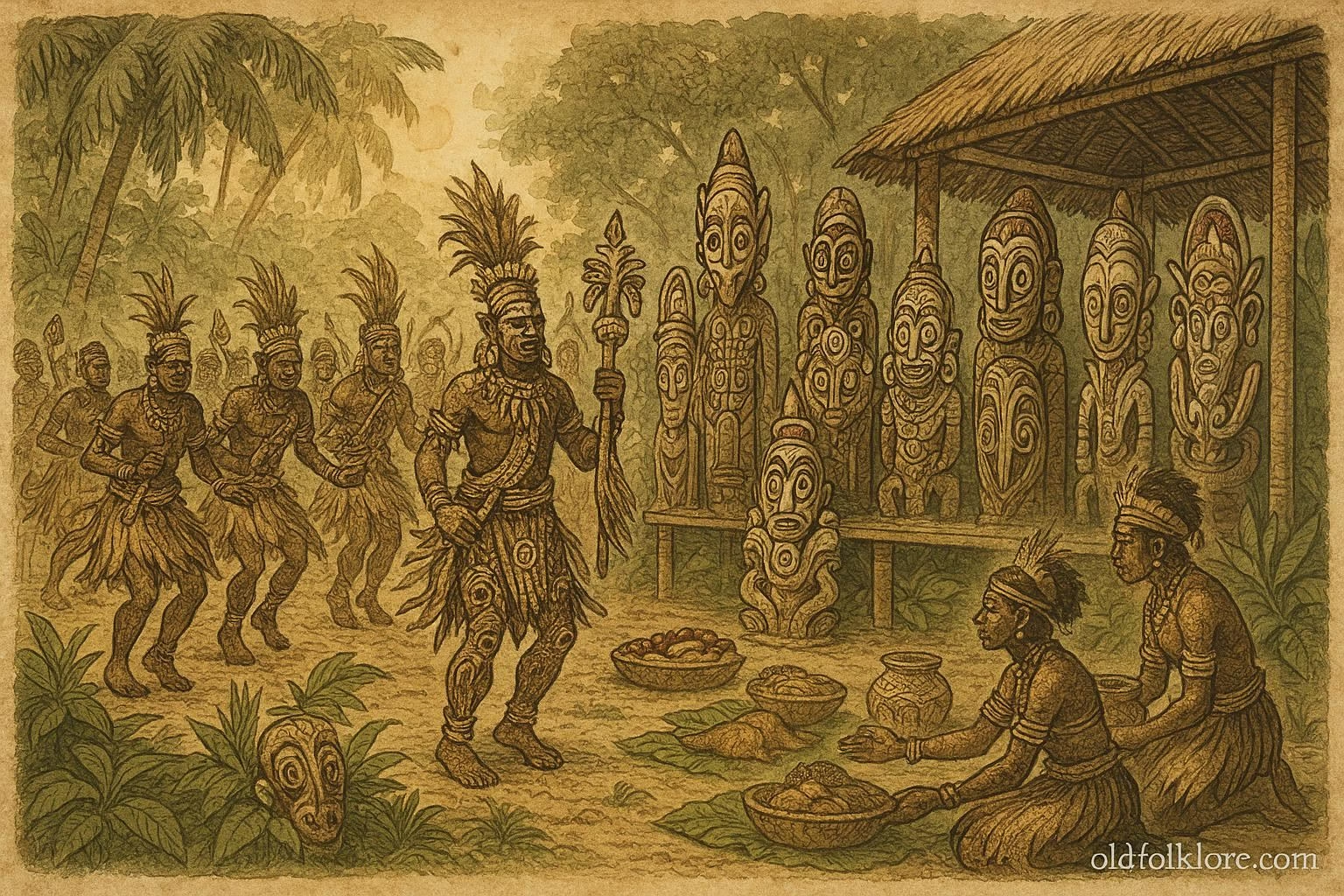
Ceremonial Preparation: The clan constructs a designated ceremonial space, often a communal house or cleared area, decorated with ritual objects. Preparations may last for weeks, as the carvings themselves require careful crafting and spiritual attention.
-
Malangan Figures: These carved wooden figures are the centerpiece of the ceremony. Each is distinct, clan-specific, and richly symbolic, depicting ancestral traits, mythical beings, or spiritually significant motifs. After the ceremony, the figures are often destroyed or ritually retired, a practice reflecting the belief that the carvings hold potent spiritual power temporarily.
-
Dance and Chant: Participants perform choreographed dances accompanied by chanting. The chants recount genealogies, ancestral deeds, and mythic narratives, simultaneously honoring the dead and educating the living about their lineage and social responsibilities.
-
Ritual Feasting and Gift Exchange: Feasts are shared to nourish participants and spiritually support the journey of the dead. Ritual exchanges of gifts, food, and valuables underscore social reciprocity, clan solidarity, and the spiritual acknowledgment of both living and departed members.
-
Sequence and Timing: While ceremonial sequences vary by clan, Malangan rituals typically last several days, with precise rituals performed in a specific order, emphasizing respect, ancestral guidance, and spiritual balance.
The destruction of carvings after the ceremony reflects the belief that spiritual energy is temporary in the physical object. Once the ceremony concludes, these tangible forms are no longer needed, and their careful disposal ensures that ancestral power is respected and not misused.
Mythic Connection and Symbolism
Malangan ceremonies embody a complex spiritual worldview in which the living, dead, and natural forces are intricately linked. The carvings themselves are not mere decorations, they are embodiments of ancestral spirits. By creating, displaying, and ceremonially retiring these figures, the living participate in the cosmic cycle of life and death.
Symbolically, Malangan rituals express:
-
Ancestral Continuity: The ceremonies connect generations, making genealogical knowledge tangible and reinforcing clan identity.
-
Spiritual Guidance: Chants, dances, and ritual gestures guide the souls of the deceased safely to the ancestral world.
-
Social Cohesion: By engaging the entire community in preparation, performance, and feasting, Malangan ceremonies strengthen alliances, distribute wealth, and reaffirm social hierarchies.
-
Impermanence and Power: The destruction of carved figures reminds participants of the transient nature of life and the sacred potency of spiritual objects, reflecting Melanesian metaphysics about material and spiritual worlds.
Through these practices, Malangan ceremonies manifest the intimate dialogue between humans and the spiritual realm, blending artistry, myth, and morality into a living cultural performance.
Author’s Note
Malangan ceremonies are a profound testament to the ways communities integrate spirituality, art, and social structure. Each carving, chant, and dance is imbued with ancestral significance, guiding both the living and the dead within a cosmological framework that honors continuity and balance. The temporary yet potent presence of the carved figures reflects a worldview in which spiritual energy must be respected, activated, and carefully released. Observing or learning about Malangan ceremonies offers insight into the rich interplay of myth, ritual, and communal identity in Papua New Guinea.
Knowledge Check
1. What is the primary purpose of Malangan ceremonies?
To honor deceased ancestors and guide their spirits to the ancestral world.
2. What are Malangan figures, and why are they important?
Carved wooden figures embody ancestral spirits and serve as central ritual objects.
3. How is dance integrated into the ceremony?
Dances recount ancestral stories, genealogies, and mythic narratives.
4. Why are the carvings often destroyed after the ceremony?
To release their spiritual power and reflect the temporary nature of material objects.
5. What social functions do Malangan ceremonies serve?
They reinforce clan identity, distribute wealth, and strengthen communal bonds.
6. How do chants contribute to the ritual?
Chants transmit genealogical knowledge and ensure proper spiritual guidance for the deceased.