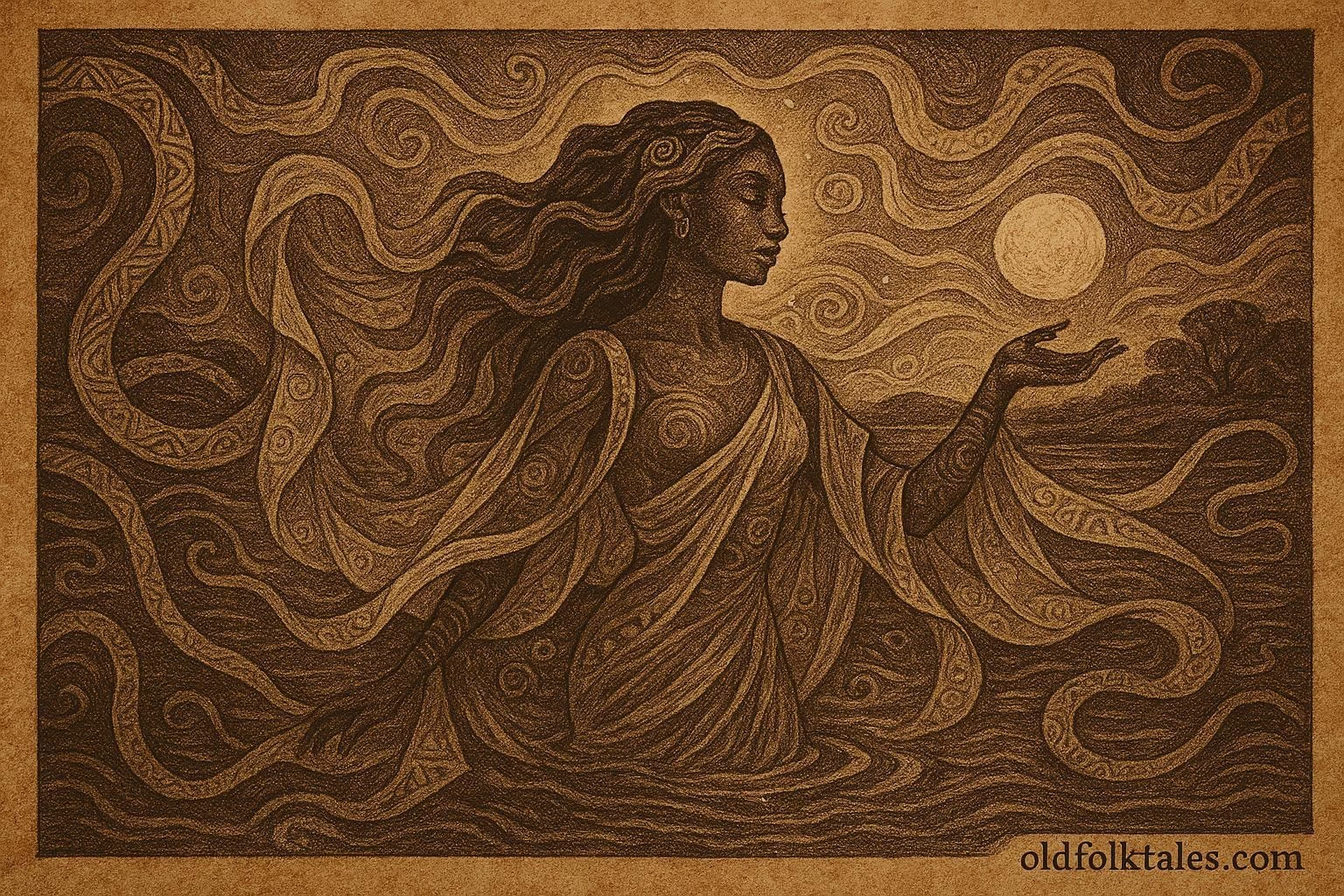
Mami Wata, literally “Mother Water,” is a widely recognized family of water spirits across West, Central, and Southern Africa and the African diaspora. She is most frequently depicted as:
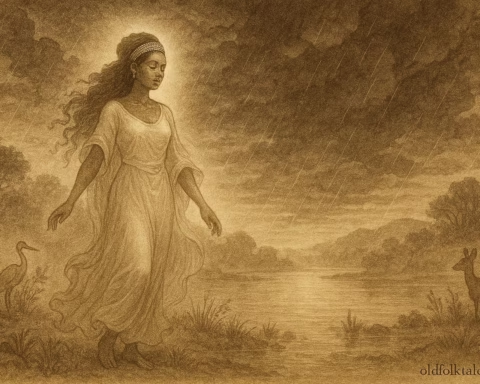
- Mermaid-type: A half-woman, half-fish being, often portrayed with flowing hair, radiant skin, and luminous eyes, either perched on river rocks or gliding gracefully in lakes and coastal waters.
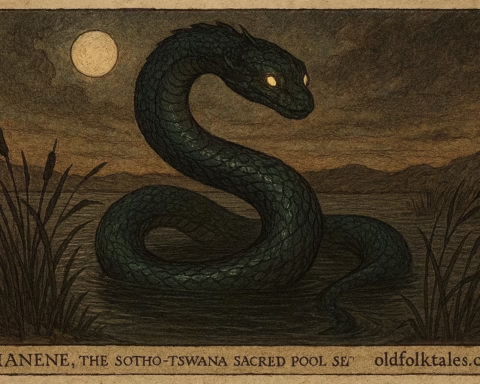
- Serpent-woman: A human female entwined with snakes, which symbolize both divine power and hidden danger. In some traditions, she carries a mirror or comb, emphasizing beauty, self-reflection, and spiritual awareness.
- Snake-charmer motif: A form derived from 19th-century Indian prints imported into Africa via trade, showing her in dynamic, theatrical poses, sometimes with instruments, performing hypnotic dances that mesmerize humans and spirits alike.
Her appearance is designed to evoke fascination and reverence. She embodies both seductive beauty and spiritual power, highlighting the liminality of water as a site of life, danger, and transformation.
Discover the gods, goddesses, and divine spirits who ruled the heavens and shaped human fate
Powers and Abilities:
- Water mastery: She controls rivers, lakes, and seas, bringing calm or storms at her discretion. Some myths describe her raising floods to punish disrespectful humans, while others recount her protecting the aquatic ecosystem.
- Healing and divination: Rituals in her honor often include trances and spirit possessions, during which devotees receive guidance, healing, and insight into the future.
- Wealth and prosperity: Followers who honor her with offerings of perfumes, jewelry, or food may be blessed with material success or social status.
- Seduction and testing: Legends warn that those who succumb too easily to her charm may be taken underwater or otherwise spiritually tested, emphasizing moral vigilance.
Behavior and Beliefs:
Mami Wata exhibits ambivalence, alternating between benevolence and capriciousness. She is often described in ethnographies as a spirit who rewards devotion but punishes arrogance, greed, or disrespect. Rituals invoking her presence are often communal, with offerings, dance, and music designed to attract her favor. Trance possession enables worshippers to communicate directly with her, sometimes receiving prophetic visions or directives on personal or community matters.
Historical and Cultural Context
The historical development of Mami Wata reflects centuries of cross-cultural interaction. Indigenous African water spirits have long been revered for their ability to sustain life, provide fertility, and punish transgressors. In the 18th and 19th centuries, as Atlantic trade expanded, chromolithographs, imported prints, and trade goods introduced new visual elements that merged with local water-deity traditions. Anthropologists debate the degree to which these imported images transformed her cult, but there is consensus that Mami Wata exemplifies cultural syncretism: a spiritual system integrating indigenous cosmology with foreign visual and ritual motifs.
Across Africa, she is known by many names and local adaptations: Mama Dlo in francophone West Africa, La Sirène in coastal areas influenced by European trade, or syncretically merged with Yemanjá in the diaspora. Her iconography varies widely: from a serene mermaid offering gifts to humans, to a coiled serpent-woman who demands strict devotion.
Cultural Role and Symbolism
Mami Wata functions as a moral and ecological guardian. Her worship reflects several recurring themes:
- Mediator between worlds: She bridges the human, natural, and spiritual realms. Respecting her waters mirrors broader ethical obligations toward nature and communal harmony.
- Wealth and desire: Her gifts of prosperity teach that material blessings are intertwined with moral responsibility. Excessive greed or neglect of ritual obligations invites misfortune.
- Fertility and family: She is invoked by childless couples or women seeking reproductive blessings, demonstrating her association with life-giving forces.
- Syncretic lens: Her visual diversity illustrates how African religious practice adapts and incorporates external influences, showing resilience in the face of colonial and global pressures.
- Spiritual mirror: Mirrors she carries symbolize reflection and self-knowledge, followers are reminded to examine motives, character, and moral choices.
In diaspora communities, Mami Wata is central to identity formation, connecting African heritage with contemporary cultural practices. Festivals, masquerades, and rituals continue to honor her, reinforcing community cohesion, moral instruction, and environmental respect.
Ethnographic Evidence and Ritual Practices
Field studies, museum collections, and exhibition archives (e.g., Fowler Museum) provide primary documentation:
- Offerings: Perfumes, alcohol, jewelry, and fish are placed in rivers or streams.
- Possession trances: Worshippers may become possessed by her spirit during ritual ceremonies, receiving advice, prophecy, or healing powers.
- Dance and music: Specific rhythms and movements emulate water’s fluidity and are believed to attract her attention.
- Visual motifs: Prints, carvings, and paintings often depict her in dramatic, seductive poses, emphasizing both beauty and power.
Such practices highlight the living, dynamic nature of her cult and the ongoing dialogue between tradition and adaptation.
Explore the mysterious creatures of legend, from guardians of the sacred to bringers of chaos
Author’s Note
Mami Wata is a compelling example of pan-African spiritual continuity and innovation. While her imagery absorbed foreign influences, her role in African societies remains deeply authentic, encompassing ecological, moral, and social functions. Researchers should approach her cult as a lens for understanding African cosmology, syncretism, and diaspora identity, while respecting local knowledge and ritual practice.
Knowledge Check (Q&A)
- Q: What does “Mami Wata” literally mean?
A: Mother Water. - Q: Name two visual forms of Mami Wata.
A: Mermaid-type and serpent-woman. - Q: How did global trade influence her imagery?
A: Chromolithographs and Indian snake-charmer prints introduced exotic poses and motifs. - Q: What moral lessons does Mami Wata convey?
A: Respect for water, moral reciprocity, and moderation in desire. - Q: Which regions worship Mami Wata?
A: West, Central, Southern Africa, and the African diaspora in the Americas. - Q: What ritual functions does she serve?
A: Bestowing blessings, divination, fertility, prosperity, and testing devotion.
Source:
Drewal, Henry J., et al., Mami Wata: Arts for Water Spirits in Africa and Its Diasporas. African Arts special issue / Fowler Museum exhibition (2008).
Fowler Museum at UCLA. JSTOR access.
Origin:
Pan-African; historically traced from Senegal → Nigeria → Congo → Angola and extending into the African diaspora in the Americas. While water-spirit concepts are ancient in African cosmology, Mami Wata crystallized as a specific trans-regional cult in the 18th–20th centuries. Her imagery and rituals were influenced both by local traditions and by global trade, including 19th-century chromolithographs and Indian snake-charmer prints.